


I don’t even want to think about how much money I’ve spent on gaming headsets over the years. The answer is way too much, and all because it took me far too long to give up.
I’m not here to tell you to never buy yourself a gaming headset. I’m just here to say: don’t expect it to be good, because it most likely won’t be.
Why can’t gaming headsets keep up
It’s all about priorities

Most gaming headsets are a result of some sort of compromise. That doesn’t inherently make them bad, but it does mean that they can almost never be as good as a standalone product.
You’re paying for a pair of headphones and a microphone built into one. Many gamers prefer wireless headsets, but then, audio quality takes a hit. Add to that software bloat, fancy gamer branding, and an audio profile that’s meant to be decent for just about everything … and you’re often left with a mediocre product. It makes sense: something has to give if you’re trying to build a product that can do everything all at once.
Gaming headsets are built for a very specific type of gamer, and unless you are that exact person, you’re likely to find them wanting. Some do it right, others don’t, but the point is that the focus is hardly ever on overall sound quality; it’s all about ticking certain boxes.
Audio aside, headset mics are also physically limited, and thus often don’t sound amazing. Capsule size and placement combined with noise suppression techniques often trade clarity for anti-noise artifacts, sometimes ending up with muffled audio.
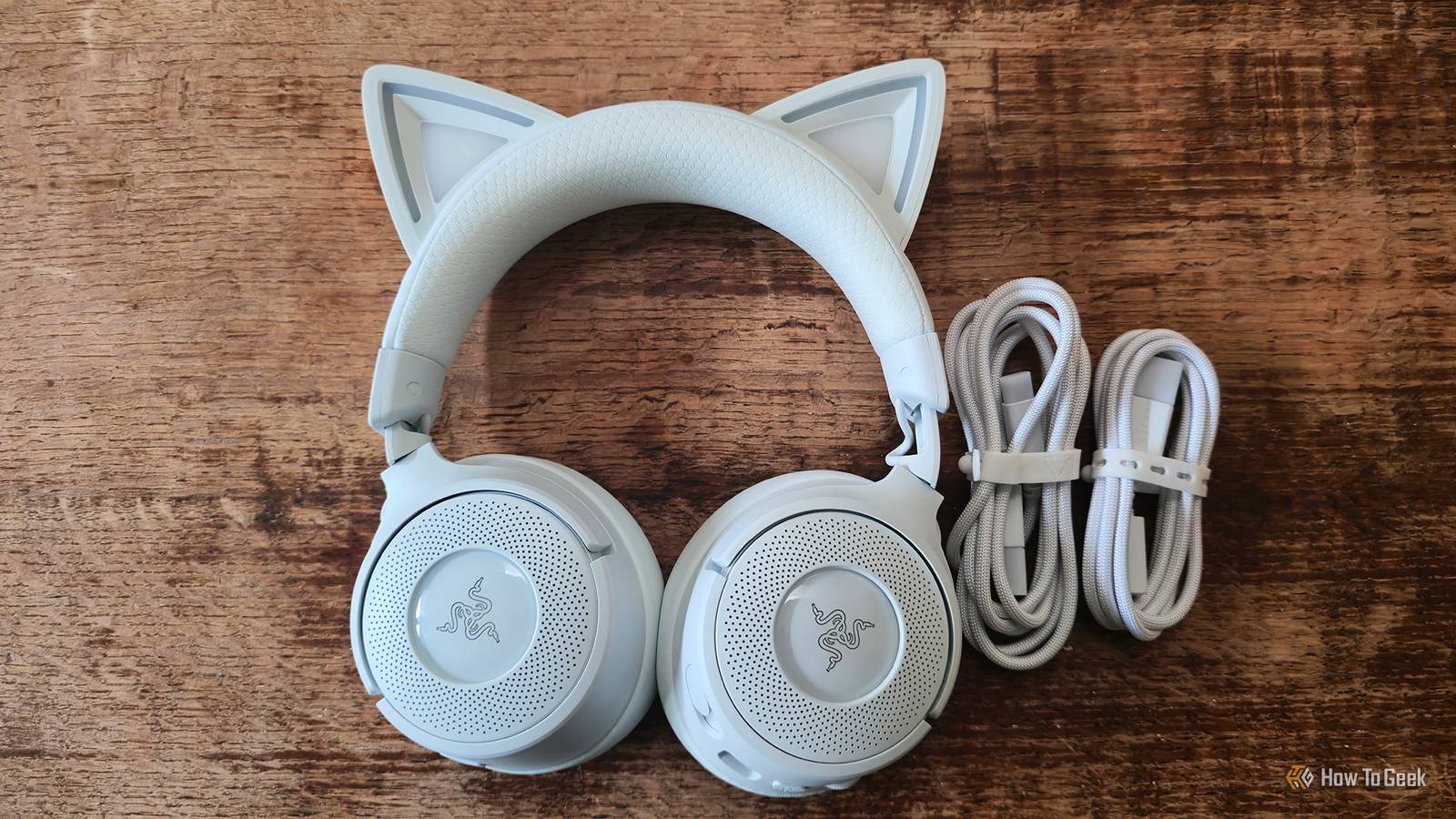
Some headsets are made for competitive gameplay, such as the Razer BlackShark V3 Pro, and some are more of a “jack of all trades” type of headset. Others, like the Razer Kraken Kitty V3 Pro, focus on aesthetics and streamer appeal. No matter the priorities, they all have to compromise to be comfortable for gamers.
There are plenty of alternatives to gaming headsets
You don’t need to have a streamer-worthy setup to get good audio

There’s an easy way to avoid the problem of headsets not sounding as good as you’d like. You just need a separate pair of headphones and a microphone.
I personally use a pair of decent Audio-Technica headphones and an Antlion Modmic, which is an attachable microphone that turns your headphones into a headset without sacrificing audio quality on either end. There are wired and wireless versions available, and both are much easier on the ears than most gaming headset mics.
If you do decide to get a standalone mic, you can either buy a microphone arm or let it sit on your desk. Keep in mind that environmental factors come into play here. Placement is critical for some models, and the choice of cardioid/supercardioid/omni plays a part in how much background noise the microphone will pick up.
No matter the mic or the headphones, proper EQ is your free upgrade. Spend a bit of time tweaking sound settings to match your exact tastes.
The prices are going to surprise you
You can actually save money by going down this route.

Having tested my fair share of headsets and headphones, I’ll tell you one thing: my $50 Audio-Technica headphones outperform the vast majority of the gaming headsets that I’ve tried, including ones that cost $150-$250.
It’s hard, if not impossible, to compile objective data on this, though. Audio that’s perfect to me could be awful to someone else. However, it’s a fact that you can build a headphone and microphone combo for less than the price of a gaming headset. Often, it may even be better quality.
I’ll use my own hardware as a point of comparison:
- One headset I actually liked was the SteelSeries Arctis Nova 7, priced at $200 for the Gen 2 version; the older model can be found for $110-$125 these days.
- The Audio-Technica ATH-M20x usually costs around $50, and to my ears, they sound better across both games and music.
- Finally, a wired ModMic costs $55 and up, but you can also pick up a microphone like the Razer Seiren V3 Mini for $36 (on sale) or $60 (MSRP) and still get a better setup.
Bottom line is: You don’t have to spend a fortune to get a good audio setup.
Need a headset? Pick a good one
Don’t go in unprepared.

Look, there’s a reason I kept trying to find a good headset. I, too, appreciate the comfort of just having one thing that’s easy to use and does the job.
Out of all the headsets I’ve tried, my favorite was the Razer BlackShark V3 Pro, and before that, the aforementioned SteelSeries Arctis Nova 7. I know that better headsets exist, but I can only speak about my own experience. That’s the problem with headsets—a lot of what you’ll find online will be at least a little bit subjective.
If you really need a headset, do lots of research beforehand. Read reviews that include actual microphone recordings, not just written opinions. Look for tests that measure how well the mic rejects background noise, such as keyboard clicks, while keeping your voice sounding natural.
Read user reviews, too. Some will not be real, and most will be biased, but you’ll be able to identify running themes.
It’s not a matter of being an audiophile
You don’t need to be an expert.

You don’t need to be obsessed with audio to want to aim for something good. I’m not an audiophile, but over the years, I learned to expect more than the bare minimum, which is what made me distrust gaming headsets.
The most audible stuff is basic: voices that feel muffled or sharp, wireless that feels out of sync, or soundtracks that fall so flat that they might as well not be there. It’s about your own enjoyment and spending your money in a way that brings you the best audio quality you can get.
If you do need or want a headset, do your research, and don’t be afraid to return it and try again if you don’t like the end result. But if you’re willing to try a headphone and microphone combo, I’m pretty sure you’ll be happier with it, all the while potentially saving money for some other upgrades.
