


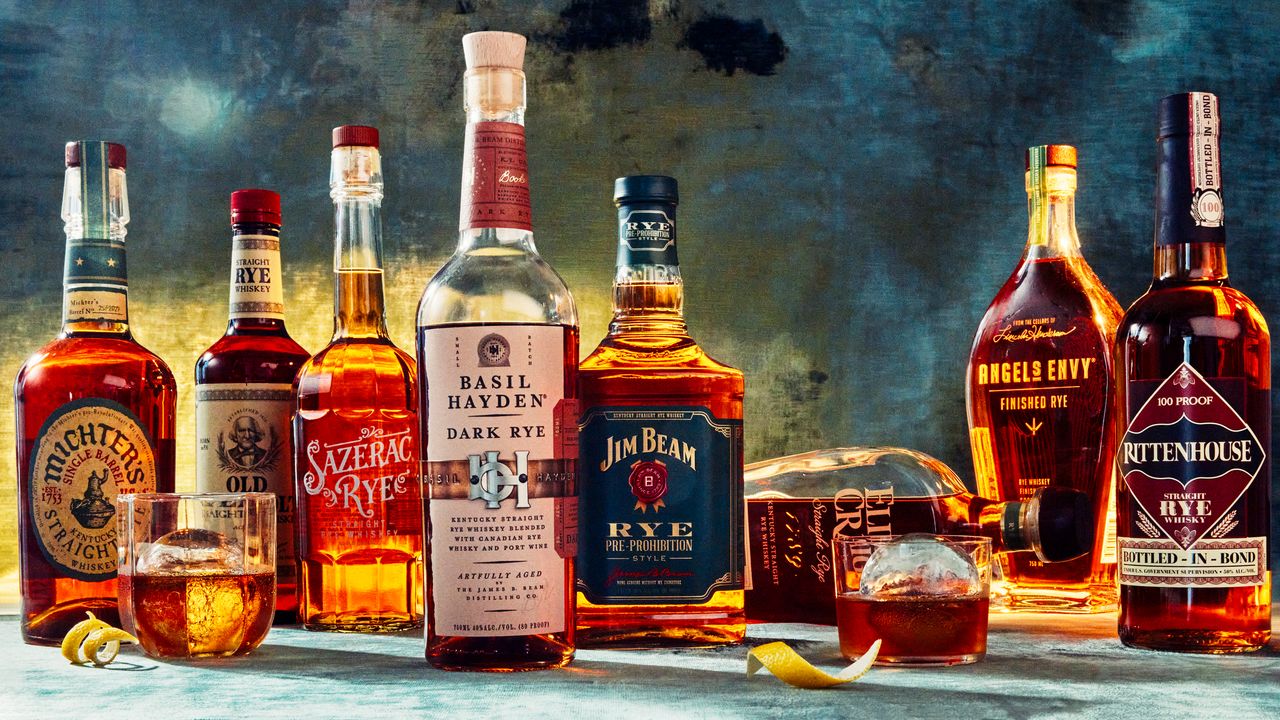
Rye is the one of the oldest whiskeys on record in North America, dating back to 1648 near Salem, Massachusetts, so it should come as no surprise that the world of rye whiskeys is vast. There are bottles to be discovered at every price point, but the best rye whiskey should be the spicy-sweet backbone of your bar cart, holding together classic cocktails like a Manhattan or a Sazerac.
Rye is a cousin to bourbon—we named our top three here—which is another spirit that falls under the umbrella of “whiskey.” The difference between the two is their mash bills, that is, the makeup of the grains fermented to create the spirit. Where bourbon must be made with at least 51% corn, rye whiskey must be made from at least 51% rye. Aside from that, the process behind both whiskeys are just about the same; the spirit must be aged in a new barrel of charred oak, and, though there aren’t any aging requirements, most rye’s are aged for at least two years.
But as Lew Bryson, author of American Whiskey Master Class, explains, there are some naming requirements for rye. “Once it’s [been aged] over two years,” Bryson explains, “you can call it straight.” Also, rye younger than four years old must have a statement of age on the label. A rye aged three years, for example, can be called straight rye whiskey, and will need to state its age on the label. “Once it’s four years old,” Bryson says, “you don’t have to put an age statement on it at all.” Those whiskeys will simply be labeled “rye whiskey.”
Although they have some similarities in their production processes, rye and bourbon are distinct spirits with unique characteristics. Bourbon has a corn-fueled sweetness, but rye takes on a more peppery, herbal flavor, in addition to the toasty caramel notes it picks up during barrel aging. But Bryson says the yeast used in rye’s production has a big impact on the final flavor as well. Rye has a high amount of ferulic acid, which converts to a nifty compound called “4-vinyl guaiacol” when the right type of yeast is added to the mash. That compound, Bryson says, is where you get the clove and spice flavors in rye. “If you don’t have the right yeast, your rye is going to taste different.”
If you ask a hundred people what they want in a great rye whiskey, you’d get a hundred different answers. Some want a zippy peppery kick, while others are looking for a sleeker caramel flavor. We put 12 rye whiskeys through a blind taste test to find the bottles that would appeal to everyone. Here are our three favorites.
How we set up our blind taste test
We kept each of our 12 bottles at room temperature so that we’d have the best chance to taste and smell as many aromas and flavors as possible. We poured a sample of each rye into labeled tasting glasses.
