


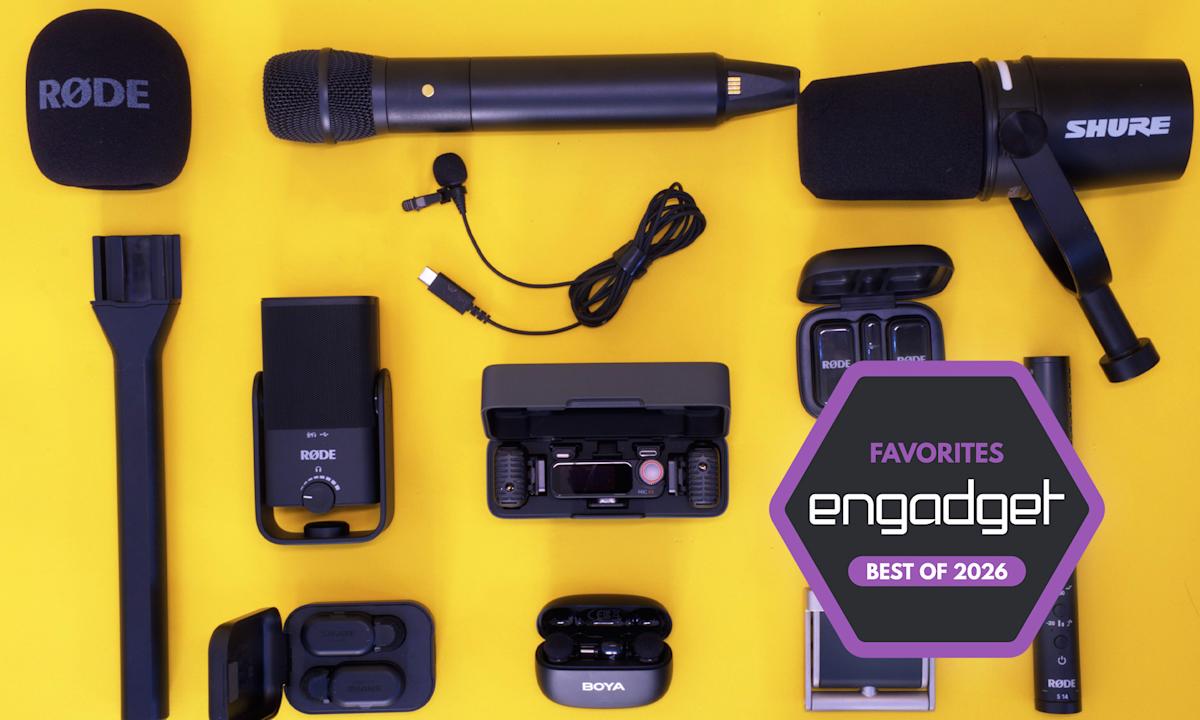
There’s nothing more frustrating than shooting the perfect reel only to realize that the audio sounds like garbage. For budding creators, it’s a frustration; for those looking to make more professional content, it’s a dealbreaker. Fortunately, the world of mobile-specific (or phone-friendly) microphones has exploded with great options in the last few years. Whether you’ve been tasked with recording candid moments at a relative’s wedding, shooting a friend’s dance moves or are a journalist out in the field traveling light — there’s an option out there that will be perfect for you.
We’ve tested a wide range of popular microphones with a mobile focus so that you don’t have to. Below is our hand-picked list of the very best options for a variety of use cases. Some microphones — the wireless lavalier kind, for example — will be more versatile and convenient, useful for a number of different applications. Others, such as our musician or field-recording picks, are where we explore more exotic form factors such as shotgun mics and mobile-friendly desktop options. As always, above everything else is sound quality and general performance. The good news for you is that we’ve done all the hard work for you. Happy recording!
Best phone mics for 2026: Best wireless mics for creators
“Creator” is a broad term, but for the purposes of this guide, it’s anyone that wants to make videos or recordings to share on the internet. This is possibly the most exciting category right now with excellent options from brands such as Rode and DJI, but also some compelling budget options too. Once the domain of TV and pro productions, wireless lavalier mics are now the go-to choice for anyone creating in front of (or even behind) the camera. They usually sound great, offer hands-free flexibility and premium models come with extra features that will streamline your creative process.

DJI
DJI’s first wireless mic kit was a hit with YouTubers, and now the third generation is here, building upon the success of the first two models. Our previous pick here was the DJI Mic 2, and now it’s the DJI Mic 3. The company improved upon the second-gen by making strides in sound quality, noise reduction and increasing the number of subjects you can record at once. The Mic 3 has a smaller, lighter transmitter that’s easier to attach to any shirt or hat, and its charging case holds a receiver and two transmitters. The Mic 3 supports four transmitters and eight receivers at once, giving you more options when you have multiple subjects to record. When fully charged, transmitters can run for about eight hours, and you’ll get roughly 10 hours from each receiver.
The Mic 3 adds two adaptive gain control modes, Automatic and Dynamic, and it supports two-level noise cancelation for reducing background noise. The biggest downside is that DJI remove the 3.5mm mic port for wired lavs and other microphones from the transmitter here, so if that’s a necessary piece of hardware for you, you may want to stick with the Mic 2 instead.

Rode
Rode strikes a good balance between features and value with its third-generation Wireless Go kit. The mics offer pro-grade sound and match DJI’s advanced features like onboard storage, 32-bit float and universal compatibility with iPhones, Android, cameras and PCs — and all of that here costs less than the DJI Mic 2 and Mic 3. The kit even offers more onboard storage than its rival. There’s no Bluetooth here though (if that’s important to you), but the Gen 3 Go does connect wirelessly to other devices, such as the Rodecaster 2, giving you added flexibility if you’re already using the company’s other products.
Perhaps most importantly — to creators with a visual eye, at least — this version of the Wireless Go comes in various vibrant colors to match your channel’s theme or branding. I’m still a fan of DJI’s solid charging case and the way the receiver connects directly to the phone (the Rode’s either need a cold shoe mount accessory/case or they just dangle on the cable), but the Wireless Go is hugely popular for a reason.

BOYA
Boya may not be a name as familiar as Rode or DJI, but the company has gained popularity with creators for making budget-friendly gear that blends essential features with decent performance. The Boya Mini 2 offers two teeny-tiny wireless mics with a receiver and a charging case for less than $50. Despite the price tag, the Boya Mini 2 offers noise cancellation that is effective enough without introducing any noticeable change to your voice. There’s also a companion app where you can tweak the EQ and switch between mono and stereo modes — a feature usually reserved for more expensive models.
The claimed range is over 300 feet (100 meters), but in our testing it’s less reliable after about 200 feet (60 meters), but that’s still plenty for most use cases. With six hours battery life, extendable to 30 with the charging case, there’s a lot to like with the Boya Mini 2 for the price.

Sennheiser Pro Audio
If you prefer the reliability or aesthetic of a classic wired lavalier (“lav”) mic, our go-to pick is still the Sennheiser Pro XS. The convenience of a USB-C connector makes this a seamless choice for newer iPhones, most Androids and even PCs without the hit-and-miss experience of headphone adapters. Lav mics are strictly business and don’t tend to offer features such as gain control or noise reduction, but the Sennheiser Pro XS offers a pleasing neutral sound, which should work well for most standups, vlogs and spoken-word recordings. For the price point, it’s a more professional option than some of the rival 3.5mm offerings — but if you do prefer the more traditional connector, there’s also a “mobile” edition with a TRRS jack for $10 less.

James Trew for Engadget
This was the first mic I bought when I started creating videos and podcasts and I still have it in my kit bag today. Ignore the unfamiliar brand name; this mic provides great sound and reliability at a price that’s hard to argue with. In the box, you’ll also find a six foot (two meter) extension cable, a magnetic lapel clip, an adaptor for cameras (TRRS to TRS) and a pouch to put it all in, making this even more of a bargain. The only downside for mobile users is that you’ll need a headphone adapter to connect this to your phone’s USB-C port.
James Trew for Engadget
Of all Rode’s numerous shotgun mics, the VideoMic NTG is the one I keep going to when I need something that will get almost any job done. The USB connection makes it mobile friendly with included cables for iPhones and Android, but there’s a secondary analog output so it can be used with cameras or anything else with a 3.5mm input (including PCs and mixing desks). On-device controls include a high-pass filter, pad (to record at a lower level to avoid distortion), high-frequency boost and an option to record two versions at different volumes so you can maximise your gain but also have a back-up should that go into the red. The shotgun format makes it great for vlogs and social media creators but the VideoMic NTG is versatile enough to also be the main mic for your laptop or PC that you can throw in your bag for an on-the-go podcasting option.

Deity
For those looking for a mobile shotgun, the V-Mic D4 is easy to like thanks to its blend of portability, simplicity, excellent audio quality and affordable price. While there’s no native USB/Lightning connection, a headphone adapter is all you need — although Deity also sells a bundle with a 3.5mm-to-USB-C cable that will tidy things up a bit. Despite its small form factor, the V-Mic D4 sucks up your voice with surprising ease, making this a great option to keep in your bag for short videos and even field recording. I love the addition of a 3.5mm input, which allows for adding in a second wired mic or even a wireless receiver. With that, you have plenty of creative options for multi-person recording or recording ambient sound with voice in a way that can be mixed and edited easily in post.
James Trew for Engadget
The Shure MV7+ is essentially a more affordable version of the company’s industry-standard SM7B microphone, but it’s a far better choice for phone recording thanks to its USB connectivity. Older iPhones will need a USB-C to Lightning cable, but everyone else can plug right in and start recording. Shure’s companion app also puts handy features such as tone control, reverb and a high pass filter right at your fingertips. Best of all, the settings you change on the mic here will carry over to any other app if you choose to record with something else. It’s a little higher-priced than other USB options, but as a dynamic mic it’s perfect for recording in less than ideal settings such as hotel rooms or cafes. The MV7+ is also a great choice for home recording, too, so you only need to invest in one microphone to have a consistent podcast experience wherever you are.

Rode
Originally conceived as a more laptop-friendly version of the Rode NT-USB, the Mini fast became a popular option in its own right. The modern-but-classic design looks great on camera, and its physical strength is, well, it’s strength — it’s built like a tank. Handily it comes with its own magnetic desk stand, making it the perfect microphone to throw in a bag. A built-in headphone port and an easy USB connection to phones and tablets make the Rode NT-USB Mini a compelling choice. Factor in that it’s a third of the price of the MV7+ and that might just swing it for most people. I say most as the NT-USB Mini has a condenser capsule, which means it’ll pick up more of the “room” noise in hard-walled, high ceiling environments — but for most people most of the time, this workhorse microphone is hard to pick fault with.
James Trew for Engadget
When musical inspiration strikes, the Tula mic is what you want in your back pocket. The retro-inspired design is certainly cute, but it’s the all modern features that will push your creativity forward. The onboard microphone capsule is perfect for recording both vocals and instruments, and there’s a 3.5mm input so a fellow artist can plug into this to be recorded at the same time. Importantly, the Tula has built-in storage so you don’t even need a phone with you to capture ideas. The included fold-out desk stand is perfect for recording hands-free on the go and it’s compatible with most mic stands via an adapter, so the Tula can be part of your process from concept right through to concert hall. The company often adds new features through firmware updates, too.
James Trew for Engadget
Unlike many options on this list, the Interview Pro from Rode has laser-like focus on doing pretty much one job (the hint is in the name). There’s something reassuring about the sturdy build and classic handheld design when talking to camera or interviewing someone on the street. There’s enough onboard storage for a generous 40 hours of 32-bit float recordings, making the Interview Pro completely functional without your phone. It can connect to mobile devices and cameras, too, but you’ll need one of Rode’s wireless kits to do so (such as the Wireless GO mentioned above), which is why we’re pegging this as a “pro” option. Speaking of which, the Interview Pro also connects wirelessly to the latest Rodecasters, perfect for public presentations and there’s Timecode capability, too, so your video-editor will have a much easier time cutting up your videos.

RØDE
The Interview Go isn’t a microphone; it’s an accessory for Rode’s , and . Slot one into the handle, add the windscreen et voila you’re a roving reporter for only $30. That’s assuming you already own one of those wireless kits. The cheapest of those is the Wireless ME if you don’t have one already. But here’s a little secret — although not listed as compatible, Rode’s even-cheaper Wireless Micro transmitters fit just fine. The trick is to slide the Micro’s included magnet into the handle and then attach the transmitter to that. I’ve tested this with vigorous shaking and it’s never come loose or added any noise to the recording. The Wireless Micro is a decent two-mic wireless kit in its own right that you can use for sit-down interviews and standups to camera, making this a versatile, pocket-friendly combo.
James Trew for Engadget
Field recording with a phone comes with an inherent problem: you either need to steadily hold your phone and microphone near your subject, or leave your devices unattended and hope for the best. Shure’s MoveMic 88+ is wireless, so it side-steps these problems completely. The four built-in polar patterns make recording a sparrow’s chirp or the whole forest around you in stereo as simple as picking the right one for your needs. It’s nice to see a 3.5mm headphone port here, as monitoring your audio in real-time can save lots of frustration further down the line. The mic-only kit is slightly limited as it only works with Shure’s own MOTIV recording app, so if you have a preferred workflow or need to be able to connect this to something without Bluetooth, it’s worth considering upgrading to the bundle that includes a wireless receiver.
How we test mobile microphones
The world of mobile microphones has exploded in recent years thanks to affordable, high-quality wireless systems, the popularity of social media and content creation and, of course, Apple’s reluctant switch to USB-C on the iPhone which has removed connectivity complications for manufacturers.
When it comes to testing, my experience as a journalist, podcast producer, YouTuber and (failing) music producer has given me a lot of real-world experience with a wide variety of products all aimed at different jobs. When compiling this guide for Engadget, I filter that experience down to a few simple criteria that allows us to focus on what’s important to you, the reader and whatever it is you’re trying to record.
The main criteria for mobile microphones are simple: Does it sound great? Does it connect to a phone directly and reliably? And, is it good value for its intended purpose? A hobbyist and a professional have different budgets after all.
What every microphone endures is repeated recording in treated, non-treated and outdoor environments. I’ll also A/B test each one against its rivals and usually a suitable reference microphone — Shure’s SM7b for podcasting microphones or Rode’s NTG 5 for shotgun/video mics, for example.
Some sub-categories of microphone require a slightly different approach. For wireless systems, I test how far I can walk from the receiver before recordings degrade, along with a standard battery life test by setting them to record until they power off. For podcast and vocal-focused microphones, I record in different spaces to see how they cope with different environments and measure self noise (recording “silence”). Lastly, I test how they sound when recording at different distances from the microphone.
