


:max_bytes(150000):strip_icc():format(jpeg)/20251125-SEA-SweetPotatoeGnocchi-VyTran-HERO-65c6a57d90a646d2be6f672fb2905bc1.jpg)
Why It Works
- Starting the sweet potatoes in a cold oven and roasting them at 300°F (150°C) keeps them in the enzyme-active range long enough for starches to convert to maltose, which deepens their natural sweetness.
- Returning the mashed potatoes to the oven drives off excess moisture. This allows the dough to come together with less flour, preventing the flavor from being muted and the texture from becoming dense.
- Parmigiano-Reggiano adds savoriness to the gnocchi and helps balance the sweetness of the potatoes.
- An optional splash of lemon juice at the end brightens the brown butter sauce.
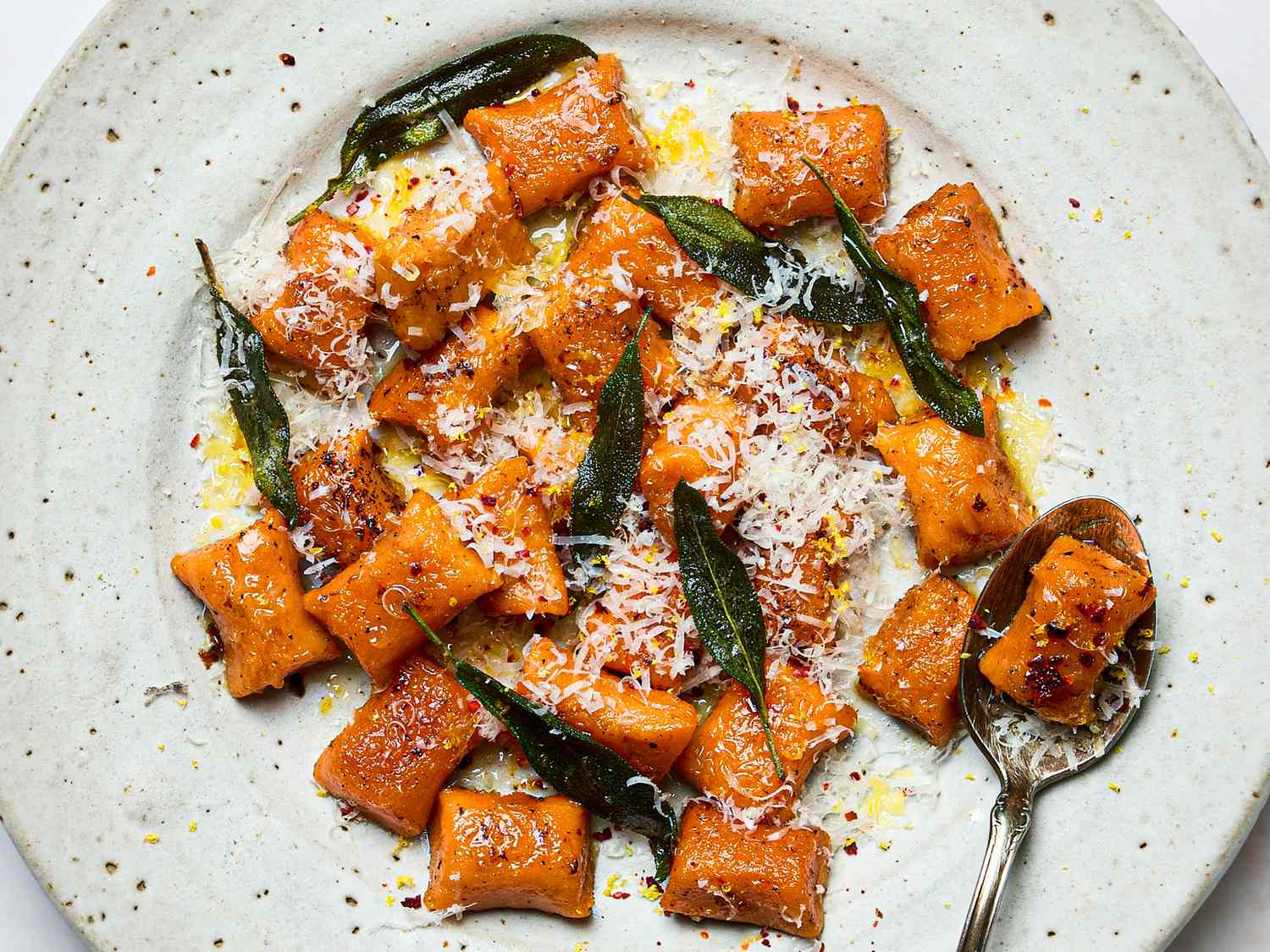
Pillowy yet rich, gnocchi with brown butter and sage is a staple on fall and winter menus. It’s familiar and maybe even predictable, but for good reason: It’s a comforting dish that’s built on flavors that define the season. A natural next step for this already autumnal dish is to lean even further into fall with a sweet potato version.
Classic northern Italian gnocchi is typically made with low-moisture potatoes, such as russets or other starchy varieties found across Europe, such as patata della Sila. Making gnocchi dough with low-moisture potatoes—instead of waxy, high-moisture ones—means you won’t need as much flour to bring the dough together, which in turn keeps the gnocchi light and tender rather than dense and gummy. Sweet potatoes, however, hold much more moisture than regular potatoes—and for tender, springy gnocchi, I knew I needed a different approach to manage the excess.
For More Flavorful Gnocchi, Slow-Roast Your Sweet Potatoes
To concentrate the sweet potato flavor, I use a slow-roasting method that builds on how the potato’s natural enzymes behave. I wrap the potatoes tightly in foil and start them in a cold oven set to 300°F (150°C), which gradually warms the potatoes and allows those enzymes to convert some of the starches into maltose, deepening the vegetable’s sweetness—a process unique to sweet potatoes and, to a lesser extent, some winter squashes. This low temperature keeps them in that gentle temperature range long enough for the sweetness to develop.
When the potatoes are almost tender, I unwrap them and increase the oven temperature to 400°F (205°C). This caramelizes the surface of the sweet potatoes, further intensifying their flavor. What you get is a sweeter, more complex potato than one you’d get from a standard high-heat roast.
If time is of the essence, you can take a more straightforward route. Simply preheat the oven to 375ºF (190ºC), prick the potatoes all over with a fork or paring knife, set them on a wire rack over a baking sheet, and bake until fully tender and the skins are lightly browned, about 1 hour and 15 minutes.
For an even faster option, the microwave works too: Pierce the potatoes four or five times, microwave for five minutes, then continue in one-minute bursts until they’re soft. These faster methods don’t give the potatoes much time in the 135 to 170ºF (57 to 77ºC) range where enzymatic sweetening happens, so there’s very little to no starch-to-maltose conversion. The standard oven method moves through that window quickly, while the microwave method skips past it almost entirely. That doesn’t mean your gnocchi won’t be delicious—it just won’t have quite the same depth of sweetness as the slow-roasted version.
Drying the Sweet Potatoes
After the slow roast, I scoop and mash the potatoes and spread them into an even layer on a sheet pan, then return them to the oven for about 15 minutes to drive off excess moisture. I weighed the potatoes before and after this step and found they lost roughly 15% of their weight due to moisture loss. This step further concentrates the spuds’ flavor, and also helps the dough come together easily with minimal flour during shaping. Incorporate too much flour, and you risk having dense, heavy gnocchi with a muted flavor. In side-by-side testing, this drying step made a noticeable difference in both flavor and texture: The batch with undried sweet potatoes turned out much denser, since I had to add significantly more flour to get the dough to hold together.
Serious Eats / Vy Tran
Making and Shaping the Dough
Once the potatoes are dried, the dough comes together directly on the work surface. I spread the mashed sweet potatoes into an even layer, top them with Parmigiano-Reggiano, and drizzle them with egg yolks. The Parmesan adds more than richness—its saltiness and savoriness balance the natural sweetness of the potatoes. Once I sift flour over the mixture, I use a bench scraper to fold it all together until it forms a loose mound that can be gently patted into a cohesive dough and formed into a log.
From there, I roll the log into ropes and cut them into small pieces. A fair amount of flour is needed for shaping, but it’s important to add it only when the dough starts to stick, and only enough to help it hold together so it shapes easily. It becomes a bit of a conversation with the dough—feeling when it needs a light dusting and when to leave it alone. This intuitive back-and-forth is part of what makes shaping gnocchi an intimate process.
Cooking the Gnocchi
With the gnocchi shaped, the next step is boiling them. They only need a couple of minutes—just long enough to float and so they no longer taste raw, but not so long that they start to break down. Properly cooked gnocchi should be tender throughout with a light, springy bite. While the water heats, the sauce comes together quickly in a single skillet: Butter is cooked with sage until the milk solids brown and smell nutty while the leaves crisp, infusing the butter with their piney aroma.
Once the gnocchi is cooked, all that’s left to do is drop them straight into the brown butter and toss them until coated and glossy. An optional splash of freshly squeezed lemon juice adds brightness, and a small knob of chilled butter at the end helps emulsify the sauce so it clings to the pasta more evenly. A final sprinkle of Aleppo pepper adds a subtle, warm kick, and plenty of freshly grated Parmesan ties everything together.
Whether you’re cooking for a date night or looking for a dish that captures some of fall’s most iconic flavors, this is the one to make right now. It’s worth every bit of effort to celebrate the season.
