



The content you post on social media can turn your brand into a household name and your followers into fans. But that’s not all; a well-managed social media account gives you a one-to-one communication channel with your followers, and a means of tapping into niche communities where your brand can reach entirely new audiences.
This kind of impact only comes from having a solid social media content strategy. The best way to stand out on social media is to identify specific goals, create valuable posts that align with them and distribute the right content on the right platforms.
There isn’t one cookie-cutter social media strategy that’ll guarantee success. There are, however, specific ways to build a long-term plan that grows your brand and business. We’ll outline 12 steps you can follow to build a social media content strategy from scratch, including how to tailor it for the uniqueness of your brand and its audience.

1. Identify and set goals
A common mistake brands often make when developing their social media content strategy is assuming that content goals only impact growth on socials. In reality, the most effective strategy is to align your social media objectives to wider business goals.
This doesn’t just include marketing, though building awareness, reach and new customer bases are all important aims. It also includes customer care, product feedback, driving sales and more.
Start by identifying which of your business objectives social media should support, then create measurable targets for each goal and platform.
This process involves digging into how social media contributes to your overarching company goals, along with some audience research. Think about how social can not only support marketing but also the wider business, such as customer care or product improvements for better customer satisfaction.
Leaders agree. According to the 2025 Impact of Social Media Report, executives believe social drives awareness, customer acquisition, loyalty and more.
For Le Creuset, they set the clear objective of building followers, engagement and reach alongside marketing a new product through this giveaway content.

2. Research your audience
You can’t create great social media content without knowing who it’s for. Having buyer personas for social—or representations of your ideal customers—will help guide your social media content plan. Create multiple distinct personas, and use them to guide you when you start creating.
With social intelligence, you can gather detailed audience insights across all your accounts. Social intelligence is the process of using social media data to learn more about your audience, and it’s gatherable in a few ways.
Social analytics offer you insights into current audience preferences, interests and other data points. These are accessible through each social network’s internal analytics tools, or a more comprehensive social media management solution, like Sprout.
Customer care feedback also gives you direct insight into customer opinions on products, care processes and more through your DMs and comments. Through social listening, using a dedicated tool like Sprout’s Social Listening, you can take insight gathering one step further by tapping into conversations and sentiments happening across channels.
All of this insight provides clarity on who your audience is, what they want and what they expect from you. It might also uncover new audiences to target. For example, LEGO operates several brands that appeal to different demographics. A recent TikTok video showcases their World Cup set and features football celebrities to speak to this niche market. This level of targeting is only possible if you fully understand your audience.

3. Analyze your social media competitors
To understand how your social media content strategy is performing, you need to look beyond your own data. A competitive analysis will help spark ideas for your content and create better benchmarks and goals for your strategy.
Identify who your competitors are by listing local/regional competitors, as well as global brands. Analyze these competitors’ social profiles to inform your social media plans by focusing on the following questions:
- How active are your competitors on social? What platforms are they most active on?
- What types of content do they publish?
- How would you describe their brand’s social persona?
- What are their audience engagement practices?
Remember to analyze across different platforms, as each has its own expectations and content styles. Some of your competitors might also be more prolific on certain networks, which will be useful data when you need to prioritize your own social accounts.
For quantitative data, the right competitive analysis tool will simplify the process of gathering insights from your competitors—such as average engagements, growth rates and top content—by automating data collection. This helps you establish data-driven goals and strategies for creating better content.
4. Audit your current social content
Once clear on your audience and goals, it’s time to conduct a social media content audit.
A content audit is one of the best ways to know how to create a performance-optimized content strategy for social media. This will help you substantiate what you think is working well with quantitative data that shows you how each post performs.
Review which posts performed well, which didn’t and what you shared on each platform during a specific reporting period. The metrics you present in your social media report should align with your content goals. For example, if one of your goals is to improve overall brand awareness online, focus on the posts that generated the highest and lowest impressions or reach on each platform.
You can analyze your data using a social media tool, or by exporting each platform’s analytics into a spreadsheet. Facebook, X, Pinterest Business and LinkedIn Business accounts let you easily export your post and page analytics directly from the platform.
Key audit insights to analyze include:
- Voice alignment: Does your underperforming content match your established brand voice?
- Audience relevance: Are you addressing topics your audience cares about?
- Resonance: Are you aligned with current user preferences, like prioritizing human content? Review the latest trends in Sprout’s 2026 Social Media Content Strategy Report to see what audiences want to see most on each network.
- Platform optimization: Which platforms deliver your highest engagement rates?
Some posts serve to help you meet bigger marketing goals. But even promotional content should be on brand and true to your voice. Remember: Your audience began following you for a reason. Stick with your unique voice and style as much as possible and create content that authentically markets your brand. This example from Dr. Pepper shows how brands can speak to niche audiences through a well-realized brand voice.
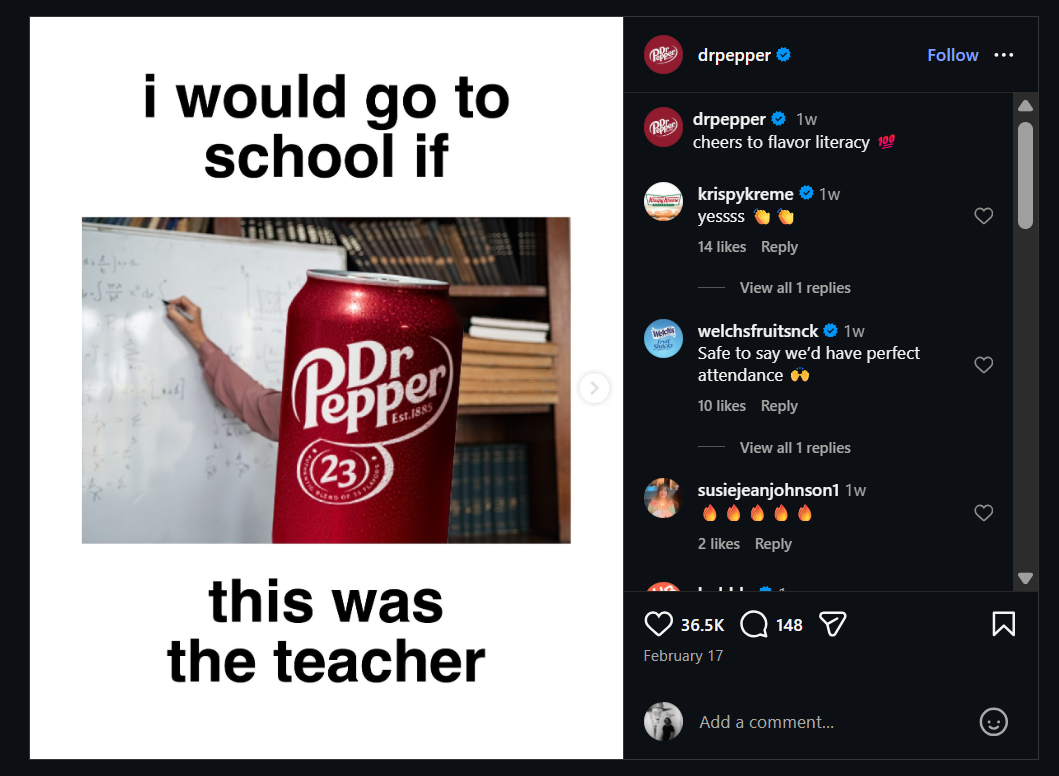
If you’re not sure what your brand voice is, learn more about fine-tuning your brand’s social persona.
5. Choose the right platforms and content types
A winning strategy isn’t about being everywhere, it’s about being where it counts. Your audience and competitor research tells you which social media platforms matter most to your brand.
Focus your energy on the platforms where your audience is most active and engaged. This data-driven approach ensures your content reaches the right people, maximizing your impact without stretching your resources thin.
| Platform | Best Content Types | Optimal Post Frequency | Key Features to Use |
|---|---|---|---|
| Short-form video (<60 seconds), UGC, Influencer content | 1-2 posts daily | Stories, IGTV, Shopping tags | |
| Text Posts: Professional insights, industry news, thought leadership | 1 post daily | Articles, polls | |
| TikTok | Short-form video (<60 seconds), trending audio | 1-3 videos daily | Trending hashtags, effects, sounds |
| YouTube | Short-form video (<60 seconds), Long-form video (>60 seconds) | 1 post weekly | Shorts |
| X (Twitter) | Short-form video (<60 seconds), Text posts | 3-5 posts daily | Threads, polls, Spaces |
| Short-form video (<60 seconds), text posts | 1 post daily | Reels, Facebook Live |
Remember that your choice of platforms should also be based on your brand’s uniqueness. Since they sell products used for creating videos, GoPro invests heavily in their YouTube account, where they have over 11 million subscribers, and tons of videos that regularly attract millions of views.
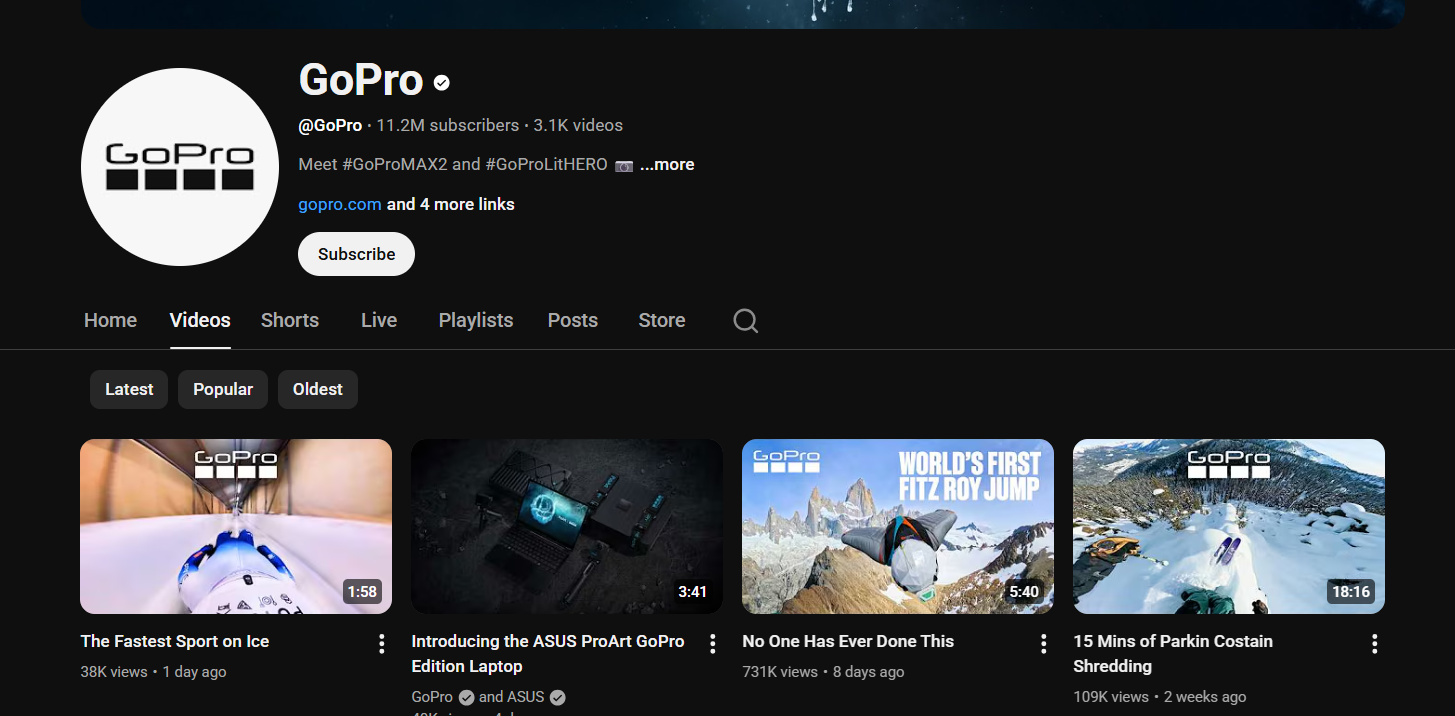
They prioritize this type of content over text posts or images (both on YouTube and across other networks) because it’s the best way to communicate their brand and products. YouTube is also where a lot of their audience, like video content creators and creatives, can be found. Base your platform choices on your own analysis of content performance, and what makes sense for your brand and audience.
6. Develop a social media content plan
This is where you can have fun with data-driven creativity. Develop your content plan based on the audience preferences and performance data you collected. For example, video remains the most popular method for most platforms, but not all of them, so make sure to adapt your plan to each network.
Change up the types of content you’re publishing, as well. According to the 2026 Content Strategy Report, consumers want brands to prioritize human-created content, personalized moments and social commerce more this year. Building audience engagement in small digital spaces, and collaborating with other companies, are also significant content trends in 2026.
Whatever you do, be sure to keep things fresh. Repetitive posts may turn fans away. So change up your content. Here are some examples in different areas:
Educational content:
- How-to tutorials and educational videos
- Industry insights and trend analysis
- Behind-the-scenes content showing expertise
Engaging content:
- User-generated content and customer stories
- Interactive polls, quizzes and Q&As
- Live streaming and real-time engagement
Brand-building content:
As you develop your content plan, consider how each piece contributes to your overall owned media value. One effective approach is to build it around several core social media content pillars, which are the key themes you’ll consistently talk about.
The best way to know what content types and formats will work for you is to dig into your data. Looking at your most successful posts will help you decide what to create. For example, Sprout’s Post Performance Report enables you to analyze your most successful posts across all of your channels, sorted by your top metrics.
7. Build a content calendar
Once you’ve developed a plan, it’s time to build a social media content calendar. A calendar will let you take a big-picture approach to your social media content strategy without losing the details. It’ll help you visualize your ideas and organize them, making your strategy easier to execute. Your content calendar will be a hub for everything you post.
When deciding where to post what content, also consider what performs well on the platform based on your audit.
Utilizing a specialized social media planner can make your entire content strategy easier to execute across channels. Including keeping track of the best times to post on each platform.
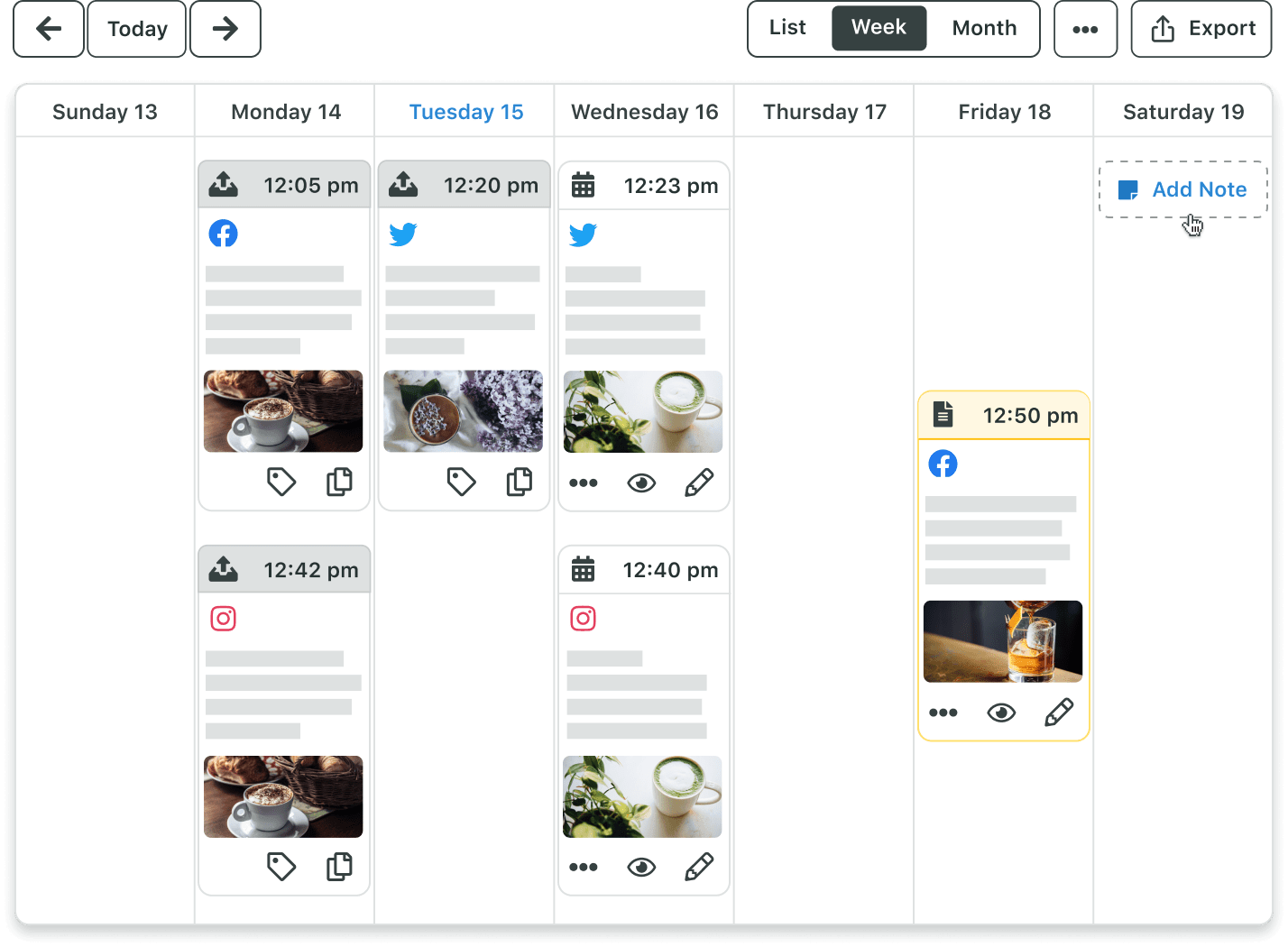
If you want to make finding the right posting times easier, try Sprout’s Optimal Send Times tool. It collects data from your followers to tell you the ideal times to post to achieve the most reach.
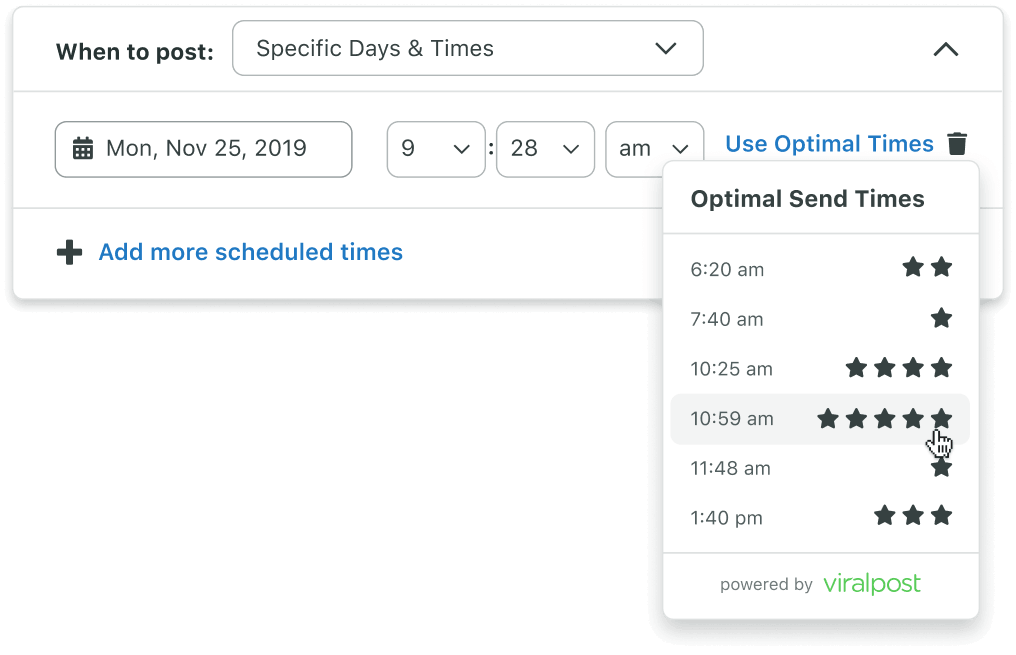
Your strategy will involve the collective knowledge of a lot of different people within your organization. A content calendar makes it easier to collaborate on social media posts with different people across your company. This also aids in cross-team collaboration to create a more well-rounded plan.
Many teams find that starting with social media templates for common post formats helps maintain a consistent output while freeing up time for more strategic tasks.
Establishing a sustainable publishing cadence is essential not just for your brand’s reach, but also for preventing social media manager burnout among your creative team.
8. Integrate influencer partnerships
Influencer marketing remains one of the most important aspects of an effective social media content strategy. On Instagram, for example, influencer content is the second most likely content type to attract engagement after short-form videos.
Influencers don’t just offer you an opportunity to expand your brand’s reach. They also allow you to tap into authenticity—all influencers have curated their own brand and audience based on authentic collaborations and interactions with their audiences. By working with them, you can also speak directly to this audience, while understanding what makes them tick.
Influencers are also an effective way to approach niche communities, where you can speak to unique audiences with tailored content. An influencer campaign can instigate your interaction with a new community or bolster your connection with an existing one. Finally, they help your brand remain culturally relevant, both online and off.
It’s important that any influencers you work with are the right choice for your brand. They should align with your overall strategy, and your brand’s audience and key principles. Create a dedicated influencer marketing strategy, but make sure this is aligned with your wider content strategy. Look at how both strategies benefit each other, and align their goals.
The most successful influencer partnerships are two-way, long-term collaborations, where influencers can become ambassadors for your brand. Here’s a recent example from Haribo, which posted partnership content with the band Linkin Park during their recent tour.
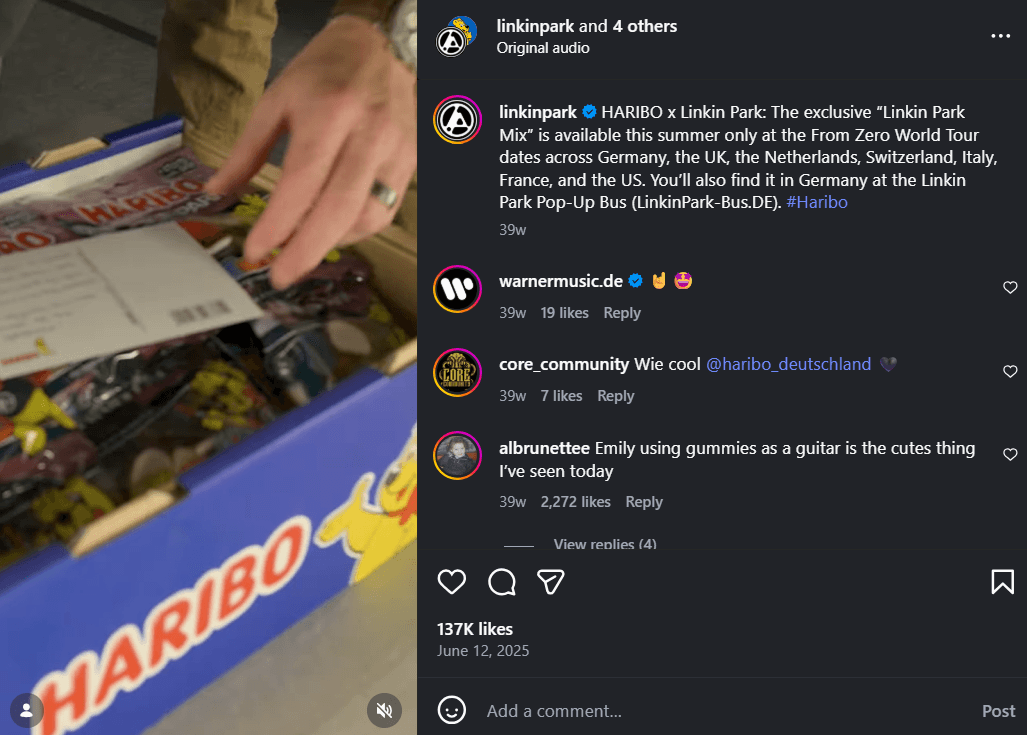
This campaign gave Haribo an opportunity to market their products at key events across Europe. They didn’t just increase their physical presence in these regions; through creating collaborative social posts with the band they got four of their social media accounts in front of hundreds of thousands of potential new followers.
9. Promote and distribute your content
Your overall social media strategy goes beyond what you post on your social channels. A good strategy involves finding ways to actively distribute your content to maximize brand awareness. Here are a few ways to plan your distribution:
Schedule your content ahead of time
Social media tools, like Sprout’s scheduling and publishing features, make content distribution a no-brainer—especially if you post multiple times a day, like Netflix does on X. This helps you post at the right time, and makes your content calendar easier to manage.

Recognizing when your audience is active and sharing posts at the right time will help you reach more people. If you’re only posting on social media the minute content goes live, you’re missing out on a massive opportunity to optimize your reach.
Encourage others to share your posts
Other people sharing your content is excellent social proof as well. Your social media content strategy should include responding to or reposting people who share your content. Encourage your audience to engage with your content by asking a question and encouraging them to share their answers, on social media or in the comments section of a blog post.
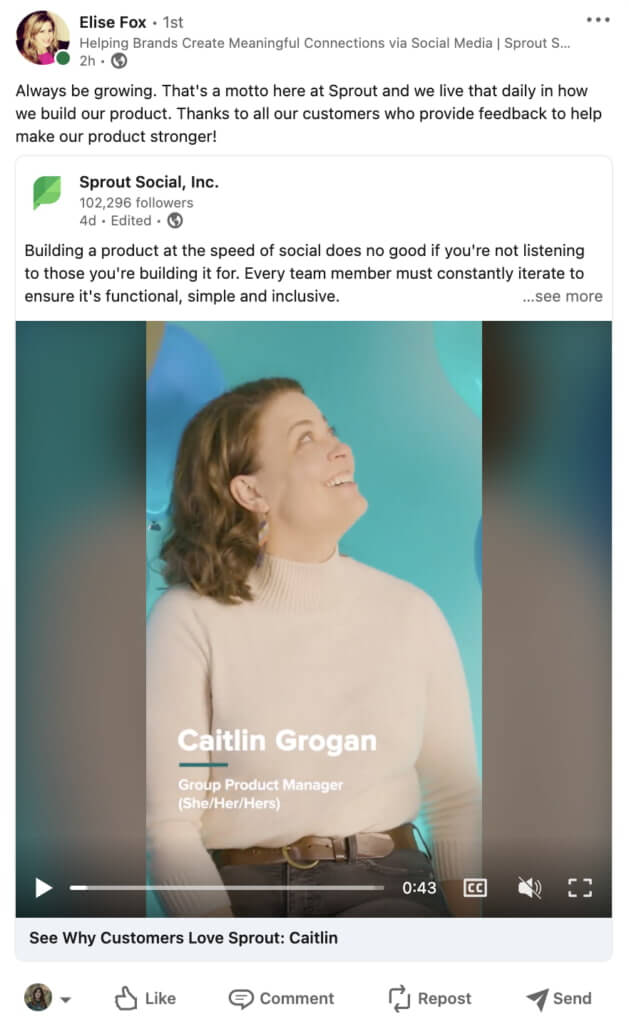
And leverage your company’s employees to spread the word. An employee advocacy strategy can drastically increase the reach of your company’s content. Employees are, in a way, “influencers” for your brand. A tool like Sprout’s Employee Advocacy platform enables you to scale your program, and integrates your advocacy workflow into your social workflow seamlessly.
Use platform-specific features
Individual social media platforms have ways to help you maximize reach, as well. On platforms like X and Instagram, using hashtags is a great way to distribute your content further. Hashtags help you reach people who not only follow you but are following a specific trend or interest. On LinkedIn and Facebook, join groups related to your industry and share content when it relates to the conversation.
Repurpose content across networks
Repurposing your content is an effective way of managing social content across several networks at once. For content types like videos, look at how you can segment what you’ve created so it can be reposted in short-form across different accounts. This is an effective way of turning YouTube videos into Instagram or TikTok content, for example.
This means you don’t have to create entirely new content for every platform you’re managing. However, make sure you consider the unique audiences and network requirements of each account before you post. Tweak your content to appeal to these distinct audiences, and make sure to add accessibility features like subtitles.
10. Measure results
The last step to an effective social media content strategy is measuring the results. Proper tracking is vital to creating a strategy with longevity. Keeping detailed metrics will help you optimize your plan over time.
You’ll also want to focus on some of the most common metrics social marketers track regularly, which, according to The 2025 Sprout Social Index™, include engagement metrics, conversions and follower growth.
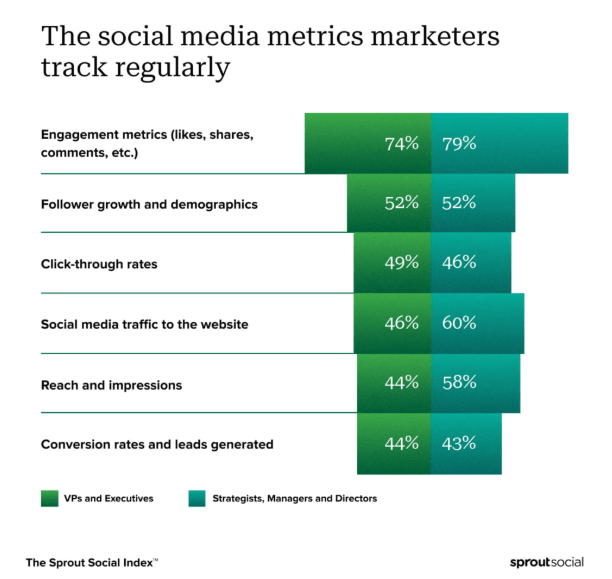
Think about how you can link each metric to one (or multiple) business goals. For example, connect your conversion and lead generation rates to your company’s sales objectives. Or, ladder up the traffic your socials have sent to your website to your overarching website and digital marketing objectives. By linking these targets to other aspects of your brand’s marketing and business strategies, you can demonstrate how your social media content is benefiting the entire company.
You can also use your results to A/B test content, directly tracking and comparing the performance of content variations. This helps determine which content formats or topics are performing well for your brand right now.
Analyze your content every month to keep track of what’s working. Take a top-level view of how each piece of content performed and the variables that contributed to it. Assess how well the content supported the goals you set in step one.
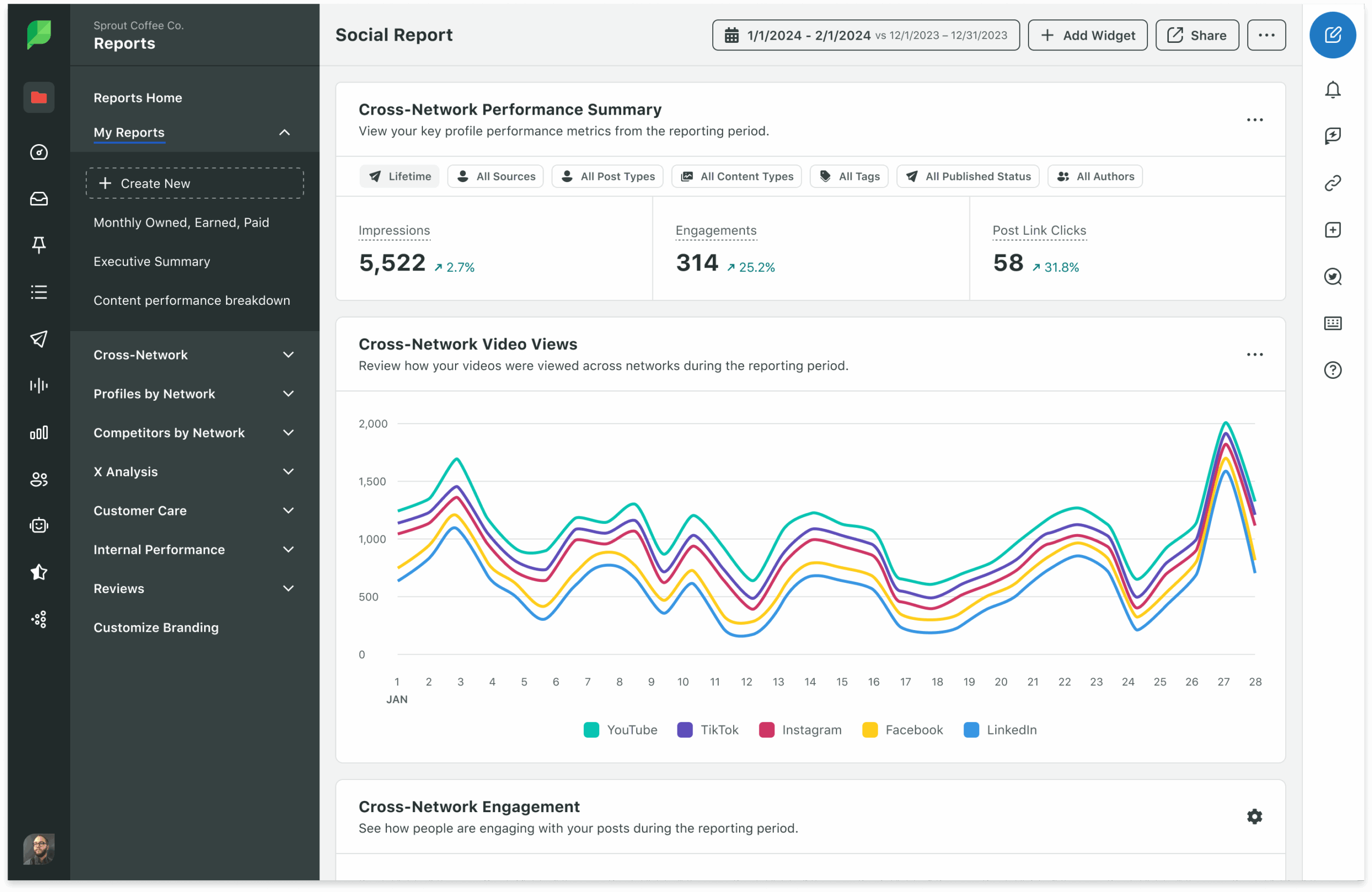
If you’re using a social media management platform like Sprout Social, you can look at all of your social media data and analytics in one place. My Reports, part of Sprout’s Premium Analytics, lets you add multiple charts, tables and visualizations such as bar and line charts, to a single report, so you can compare performance across a number of networks and deep dive on the metrics that matter to you most.
11. Use free social media content strategy templates
When it comes to enhancing your strategy or building an entirely new one, getting started is the hardest part. So we have a number of social media content strategy templates to help you dive in right away.
Use these templates to grow your strategy:
Content strategy templates
Content templates
Reporting and analytics tracking templates
12. Putting it all together: Craft your social media content strategy
Effectively planning a social media content strategy is an ongoing cycle, but it doesn’t have to be overwhelming. Plan your process with the ideas and resources above and stick to these essential strategic steps to develop great content.
By regularly leveraging your social intelligence from audience interactions, listening and past performance, you can start crafting content that resonates and deeply connects. Applying these steps regularly also keeps your brand relevant on social, because you’re staying tapped into your audience.
After following these steps, you’ll have a foundational content strategy you can keep building on as your brand and its following grows.
Create and manage your social media content strategy using Sprout Social
There’s one more tip that can help you create a detailed, reliable content strategy, and that’s using dedicated social media management tools. With a solution like Sprout Social, you can track all your accounts across a single interface, manage content calendars, schedule and post content, and surface social intelligence that informs your strategy and the wider business.
Streamline your entire strategy and set yourself (and your channels) up for long-term success by trying Sprout Social free for 30 days. From measuring content performance and optimizing content to collecting deeper audience insights, Sprout will help you manage and scale your strategy end-to-end.
Social content strategy FAQs
What is the 70/20/10 rule for social media?
The 70/20/10 rule is a content strategy framework that allocates your social media posts into three categories: 70% of content should be educational or entertaining to provide value to your audience; 20% should be curated content from other sources to nurture connections; and 10% should be dedicated to direct brand promotion.
What is the difference between a social media strategy and a content calendar?
A social media strategy is the overarching, big-picture plan that defines your goals and how you’ll achieve them. The content calendar is the tactical, day-to-day schedule of what to post, when to post, and on which platform.
What is the 50/30/20 rule for social media?
The 50/30/20 rule is a content balancing guideline. The more widely accepted definition is: 50% of content is for audience engagement and entertainment, 30% is for informing and educating the audience, and 20% is for direct brand promotion.
How do I measure the success of my social media content strategy?
You can measure success by tracking metrics that align with your goals. This could include engagement rate (likes, comments, shares), reach and impressions, click-through rate to your website, and conversion rates from social media.
What’s the ideal content mix for B2B versus B2C brands?
B2B (business-to-business) content excels with informative, data-driven material like case studies and webinars, as the goal is to build long-term trust and establish expertise. B2C (business-to-consumer) content thrives on emotional connections and quick engagement through short-form videos, memes, and user-generated content.
