


Straight to the Point
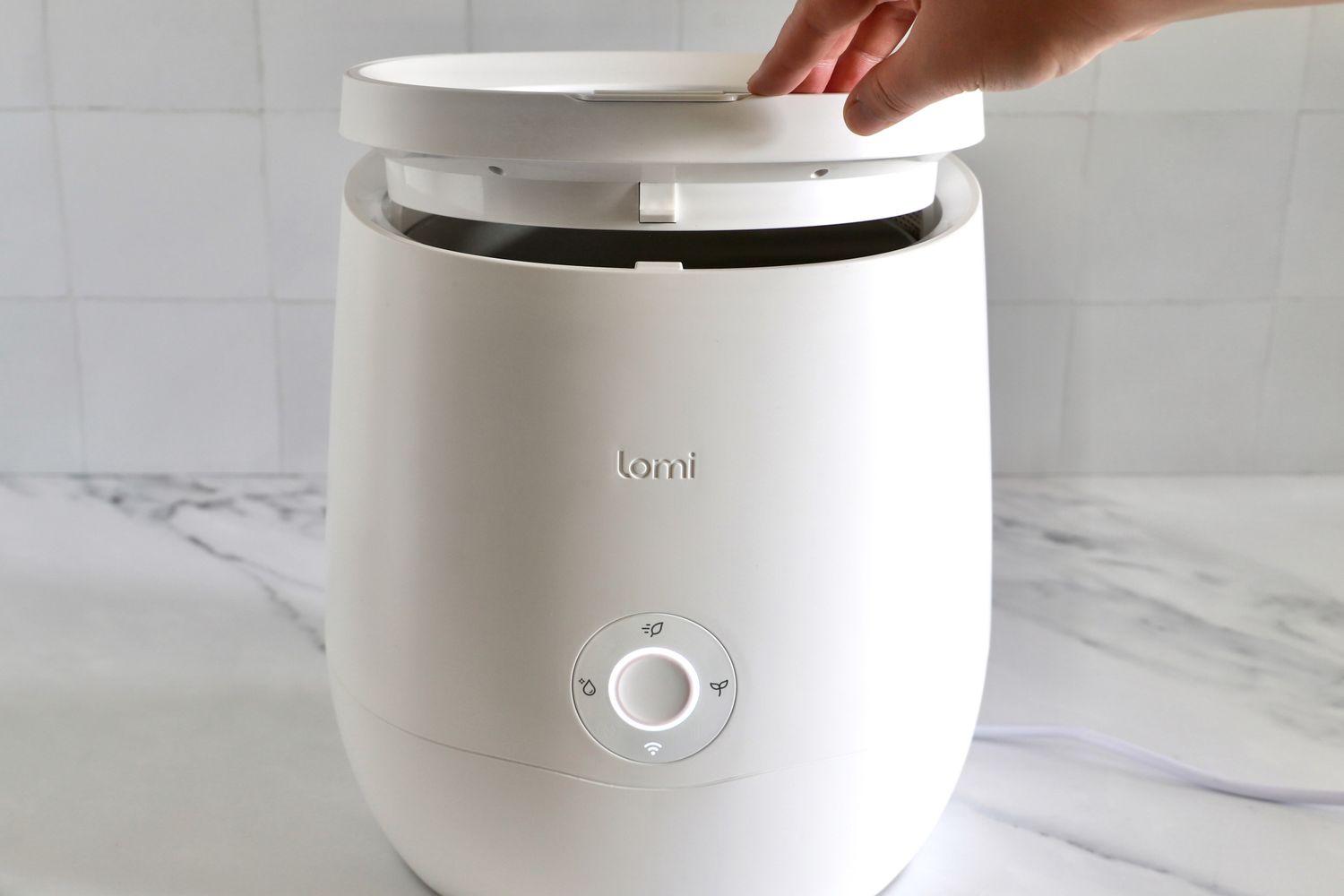
The Lomi 3 Food Recycler is more of a scraps dehydrator than a countertop composter. It’s also bulky and pricey. I’d only recommend it to people who need to find a way to preserve food waste in a compact, odorless form before composting it in another way—say, through a municipal drop-off service or worm bin.
I’m not an angry person, and I don’t hold many grudges. But when my townhome homeowners’ association removed the recycling bins from our trash service several years ago, the entire HOA organization became my enemy. While making biweekly trips to my city’s recycling center and fostering mutiny among my neighbors in the years since, the idea of going one step further and composting our food waste, too, started to feel all but unattainable.
The issue of what to do with my household’s food scraps is made harder by the fact that my town doesn’t offer any sort of composting service, a predicament I’m not alone in. Research from the Sustainable Packaging Coalition estimates that more than 70% of the US population goes without access to municipally run curbside composting programs. That leaves the rest of us to compost in our backyards (if we’ve got ’em), coordinate drop-offs with community gardens or non-profits, or pay private companies hundreds a year for the honor of handing over our apple peels and eggshells (again, if we even have that option). As luck would have it, this is exactly the problem that the Lomi 3 promises to solve.
:max_bytes(150000):strip_icc()/lomi-3-smart-waste-system-food-recycler-4fa9c5e9f1d6413da15285e754b853e2.jpg)
The Lomi Food Recycler, also known as the Lomi Composter, is a countertop appliance aimed at reducing waste by turning food scraps into nutrient-rich, soil-like Lomi Earth (yes, that is trademarked). But, does it actually divert food from landfills as actual composting does, and can you use the Lomi Earth to enrich your garden and houseplants? I used it daily for six months to answer those questions—and found myself on a surprising composting journey along the way.
The Tests
Serious Eats / Ashlee Redger
- Daily Use Test: My partner and I piled coffee grounds, eggshells, vegetable peelings, and other scraps into our Lomi 3 every day for six months. I ran it on either its Express or Grow mode a few times a week, which took three to six hours or 11 to 17 hours, respectively. I evaluated the machine on its odor levels, how loud it was when it ran, and any issues that I encountered.
- App Test: I analyzed the functionality of the Lomi smart app by using its food look-up tool, managing my machine through its interface, and starting cycles remotely.
- Cleaning and Usability Tests: Throughout my testing period, I made notes on how intuitive the Lomi Food Recycler was to use and any difficulties I had following the manufacturer’s guidelines. I also cleaned the Lomi bucket regularly, washing it by hand, running it in the dishwasher, and using the machine’s cleaning mode in turns.
What We Learned
First of All: What is Compost?
Serious Eats / Ashlee Redger
Composting is the process in which food scraps and other organic materials (think plant cuttings, wood chips, and natural paper products) are decomposed by microorganisms, including bacteria and fungi, as well as insects, arthropods, and worms. They break down the nutrients in the raw materials to make them more accessible (i.e., more bioavailable) to plants and other ground dwellers. It can also help improve water retention and hamper the growth of soil-borne pathogens. Under proper conditions, processing food scraps this way also produces less potent, easier-to-manage greenhouse gases than organic waste thrown into landfills. Outside of commercial processing facilities, composting has typically been accomplished at home through backyard compost piles, tumblers, and bins, or vermicomposting, aka worm bins.
The Lomi Food Recycler Does Not Create Compost
Serious Eats / Ashlee Redger
That is, backyard and worm composting were the primary methods of composting at home until appliances like the Lomi hit the scene in the last few years. While the Lomi’s and its competitors’ (like the Mill Food Recycler) status as “countertop composters” was tossed around somewhat freely when it was first launched, you’ll notice that mentions of composting in their marketing materials have been carefully replaced with the term “food recycling.” That’s because the Lomi simply doesn’t produce compost. Rather, it’s a combination dehydrator and grinder that breaks food down into a dried and granulated, soil-looking mixture (that’s the Lomi Earth) that will resume its march toward rot the moment it gets wet again.
On its own, Lomi Earth doesn’t have the industrious microorganisms (or moist conditions) needed to break down the nutrients—even if you run it on the lower temperature 11-plus-hour Grow Mode cycle that Lomi promises will preserve more microbial content than the faster, hotter Express Mode. Nor is the Lomi Earth typically going to be in the right carbon-to-nitrogen ratio to support healthy decomposition if added to soil on its own. Lomi sells bacteria and fungi-infused Nutrient Activator pods you can toss into your scraps before cycling them to jumpstart the biological part of decomposition, but that won’t automatically solve the problem at hand. Without enough carbon-rich materials (often called “browns” by composting enthusiasts because they include things like shredded cardboard and dried leaves) to balance nitrogen-heavy food waste, adding Lomi Earth to your garden or indoor plant soil (even in the suggested 1:10 ratio) will more than likely cause bad smells, encourage mold, and attract annoying pests like fruit flies, especially as you produce more over time (ask me how I know).
What Can You Use Lomi Earth For?
Serious Eats / Ashlee Redger
Okay, so Lomi Earth shouldn’t be used like compost or added directly to plants. Even if it could, garden-less apartment and townhome residents like me would get overwhelmed unless they converted their homes into indoor greenhouses. Though I only averaged a cup or two of desiccated food bits every week, I quickly realized I’d need another outlet if I didn’t want my food trash to turn into…dehydrated food trash. Enter: the worms.
Since Lomi Earth is just broken-down, dried-out food scraps, it can be added to backyard compost piles or fed to earthworms in vermicomposting bins the same way fresh food scraps can. It does have perks, though—namely that it takes up less space, doesn’t smell bad as long as it stays dry, and can be stored until you can actually compost it. With that in mind, I procured an indoor worm bin starter kit (though I’ve since learned you can easily make your own from cheap plastic storage totes) and crowd-sourced worm names from friends (favorites include Wormney Houston and Mr. Wormwide). It’s a new hobby I’ve quite enjoyed. Having a small bin of powdered food I can scoop from to feed my worms, while admittedly an unnecessary part of vermicomposting, has made the process feel more manageable and controlled in my small space.
If you don’t want to become a worm farmer yourself (I get it), the Lomi 3 Food Recycler is still a convenient way to process food waste and store it short-term due to limited access to aforementioned curbside or drop-off composting programs. Without access to one of those, though, or the willingness to start your own composting project, using a Lomi to dehydrate your scrapings is just a more expensive, time-intensive, and energy-wasting journey to the landfill.
What Kinds of Foods Can Go in the Lomi?
Serious Eats / Ashlee Redger
I’ve established that whatever cycled in the Lomi 3 won’t magically turn into compost, but I’ve left you hanging on what can go into it in the first place. Legumes, untreated plant trimmings, fruit and vegetable scraps, coffee grounds and tea leaves, eggs, and eggshells all get the green light. Starchy items like bread, grains, and potatoes, as well as cooked food, should be added in moderation (up to two cups per cycle), as they can cause clumping in the machine. Liquid or wet foods, compostable plastics, oils, high-sugar foods, or hard bits (think fruit pits, animal bones, shells, or popcorn kernels) are no-gos as they can damage the machine, burn, or otherwise hinder the cycle. While the Lomi Food Recycler can manage small quantities of bleached paper products, animal proteins, and dairy, these products aren’t generally suitable for composting.
During my half-year testing the Lomi 3, I made regular use of its smartphone app to look up any food I wasn’t sure about. The search function was impressively built out; I searched for foods like lasagna, sourdough discard, and vegan cheese, and even if the Lomi couldn’t process the item in question, I never came up empty-handed. Most of our buckets consisted of coffee grounds, eggs, fruit peels, and vegetable scraps, since neither the machine nor my worm bin could take large quantities of cooked/processed foods or meat trimmings.
For the best results, food should be chopped into one-inch pieces before adding it to the Lomi. This was sometimes a hassle, such as when I wanted to try processing corn cobs. (The app said I could, and it’s called stress testing, thank you very much. It worked, by the way.) I usually ran our machine overnight, but I didn’t need to—it was quiet, its hum lower than that of our dishwasher. It did make occasional groaning noises, especially early in its cycles as it did its preliminary breakdown. I only ever encountered one error message: a grinder jam, evident via a warning light. I had added a pineapple’s worth of chopped core and leaves before turning on Express Cycle, and the fibrous mixture was too dense for the paddle to push it past the blade. I unjammed it, broke up the clumps with my fingers, and restarted it without further incidents.
The Verdict
The Lomi 3 isn’t for everyone, but not because it’s not effective. It breaks down fresh food quietly and consistently, and its charcoal filter effectively contains smells before and during processing. Still, it’s the premise of the machine itself that is flawed, and I’d only recommend it to people with $650 to spare and who want an option to store food scraps odorlessly and compactly before composting them through another method. I implore you to consider what you’ll do with that first bucket of Lomi Earth before you’re faced with the temptation to trash it, or to sprinkle it on your plants and give yourself odor, mold, and pest problems to deal with.
The Pros
Ignoring all the marketing promises and evaluating the Lomi 3 purely on what it actually did—grind and dehydrate food scraps—it was a quality product. It broke down waste surprisingly quickly; just a few minutes into each cycle, most items would be browned and broken down. Some visible fibers and small bits of egg shells were common in the final output, but I never needed them to be finer. Except for its occasional little grunts, it ran quietly. The charcoal-filled filter compartment did its job wonderfully; I never smelled any odors, even when I forgot to run the recycler for a few days. The Lomi was simple to operate and could be started either on the machine or through the app when connected. Speaking of the app, it was helpful and intuitive. Throughout my test period, I kept my Lomi Earth in a large, airtight storage container and doled it out as needed to my worm bin, which thrived on the varied mixture I built up over time.
The Cons
Other than the fact that it’s not a composter and costs over $600, my qualms with the Lomi were relatively minor. It’s bulky, but once I found a spot for it on our breakfast bar, it became a normal fixture. I often forgot to cut food into smaller pieces until after I had tossed it in, meaning I had to fish it back out to chop it up later. The restrictions on meat, processed foods, and starches were understandable but regrettable whenever I found myself tossing fatty trimmings or green baby potatoes. Once I got used to the food limitations and had my composting practice in place, the most frustrating aspect of the Lomi was the prospect of paying for quarterly charcoal refills, especially at a time when seemingly every new product comes with some form of subscription to manage.
Key Specs
- Dimensions: 11 x 11 x 12 inches
- Weight: 16.6 pounds
- Wattage: 500 watts
- Express Mode duration: Three to six hours
- Grow Mode duration: 11 to 17 hours
- Cleaning Mode duration: 1.5 hours
- Stated capacity: 0.75 gallon (3 liters)
- Accessories: Odor-neutralizing Lomi Filter activated charcoal refills; microbial Nutrient Activator LomiPods
- Care instructions: Wash bucket by hand with soap and water or place in the dishwasher on hot cycle. Alternatively, fill the bucket with half a gallon of water and run Cleaning Mode to deep clean. Refill filter compartment with fresh activated charcoal pellets every three months or 45 cycles, whichever comes first.
Why We’re the Experts
- Ashlee Redger is a writer for Serious Eats. She’s been testing kitchen equipment since 2022 and has written dozens of reviews for Serious Eats, including mixing bowls and kitchen scales.
- She tested the Lomi 3 Food Recycler for six months, adding food to it daily, running it several times a week, and cleaning it monthly.
- In the process of testing the Lomi composter, Ashlee researched the science of composting and started an indoor worm farm to use up the Lomi Earth her food recycler model produced.
