


:max_bytes(150000):strip_icc():format(jpeg)/the-best-caesar-salad-recipe-06-40e70f549ba2489db09355abd62f79a9.jpg)
Though it sometimes gets a bad rap for being a boring or bland dish, a well made salad is a thing of beauty—refreshingly crisp and delicious, especially when thoughtfully prepared with an assortment of lettuces and other greens (and purples and reds, for that matter). In the world of lettuce, there are true lettuces, such as iceberg and romaine, and then there are all the things that get lumped under the category of salad greens. In that broader category, there are chicories such as endive and radicchio, which bring crunch and a pleasant bitterness, and leafy vegetables such as watercress and arugula, which provide a kick of peppery flavor. As delicious as lettuce is, there’s so much more to salad than iceberg and romaine, and knowing which to use when—as well as how to best prepare them—will help you make the most of your greens.
In an effort to demystify lettuce and other salad greens, I spoke with Emilie Symons, a chef-instructor who helped develop the plant-based culinary arts program at the Institute for Culinary Education in New York, and Jenn Frymark, the chief green house officer for Gotham Greens, a Brooklyn-based company that sells greenhouse-grown salad greens.
What Is True Lettuce?
Though “lettuce” is often used as a catch-all term for salad greens, true lettuces come from the Lactuca sativa species, which are a member of the Asteraceae family—also known as the daisy family (which includes the flower of the same name). Egyptians were reportedly the first to cultivate the vegetable in the late 2600s. Lettuce then made its way to Greece and Italy, where, according to chef Deborah Madison’s cookbook Vegetable Literacy, it was believed to have soporific properties in both countries, before arriving in what is now the Americas with Christopher Columbus in the 1490s.
Serious Eats / Getty Images
In her book, Madison notes that today, grocery stores carry “pitifully few” lettuce varieties, many of which are “flat and boring.” Though many people think of true lettuces as flavorless they can range from mildly sweet to subtly bitter and grassy, and fresh lettuces are rich in water and have a wonderful crisp texture. While in the U.S. people most commonly use lettuces raw in salads and sandwiches, sturdier lettuces can also be grilled. .Braising is a common preparation for lettuces in France, and in China, the greens are boiled and seasoned with oyster sauce.
Types of Lettuce
Iceberg
Getty Images / mikroman6
Appearance: Large, round heads with thick, tightly packed pale green leaves
Texture: Crisp, crunchy
Flavor: Fresh with a mild sweetness
Other Names: Crisphead
With more than 1.6 million tons of iceberg lettuce grown and harvested each year, the variety is one of the most widely grown salad greens in the United States. Iceberg lettuce is in nearly every major supermarket across the country, likely because its thick, sturdy leaves make it easy to transport long distances without significant bruising. Iceberg has high water content and is refreshingly crisp. The versatile green can be eaten raw, and its robust structure helps it withstand creamy dressings, which is one reason it’s so popular in sandwiches, burgers, and burritos, as well as Halal cart–style street food. Iceberg lettuce can easily be halved or quartered and remain intact, making it the go-to green for wedge salads.
Romaine
Getty Images / Richard Clark
Appearance: Elongated large heads with wavy, dark green outer leaves and light green inner leaves
Texture: Crunchy, firm
Flavor: Cool, mild, with the tiniest hint of earthiness
Other Names: Cos
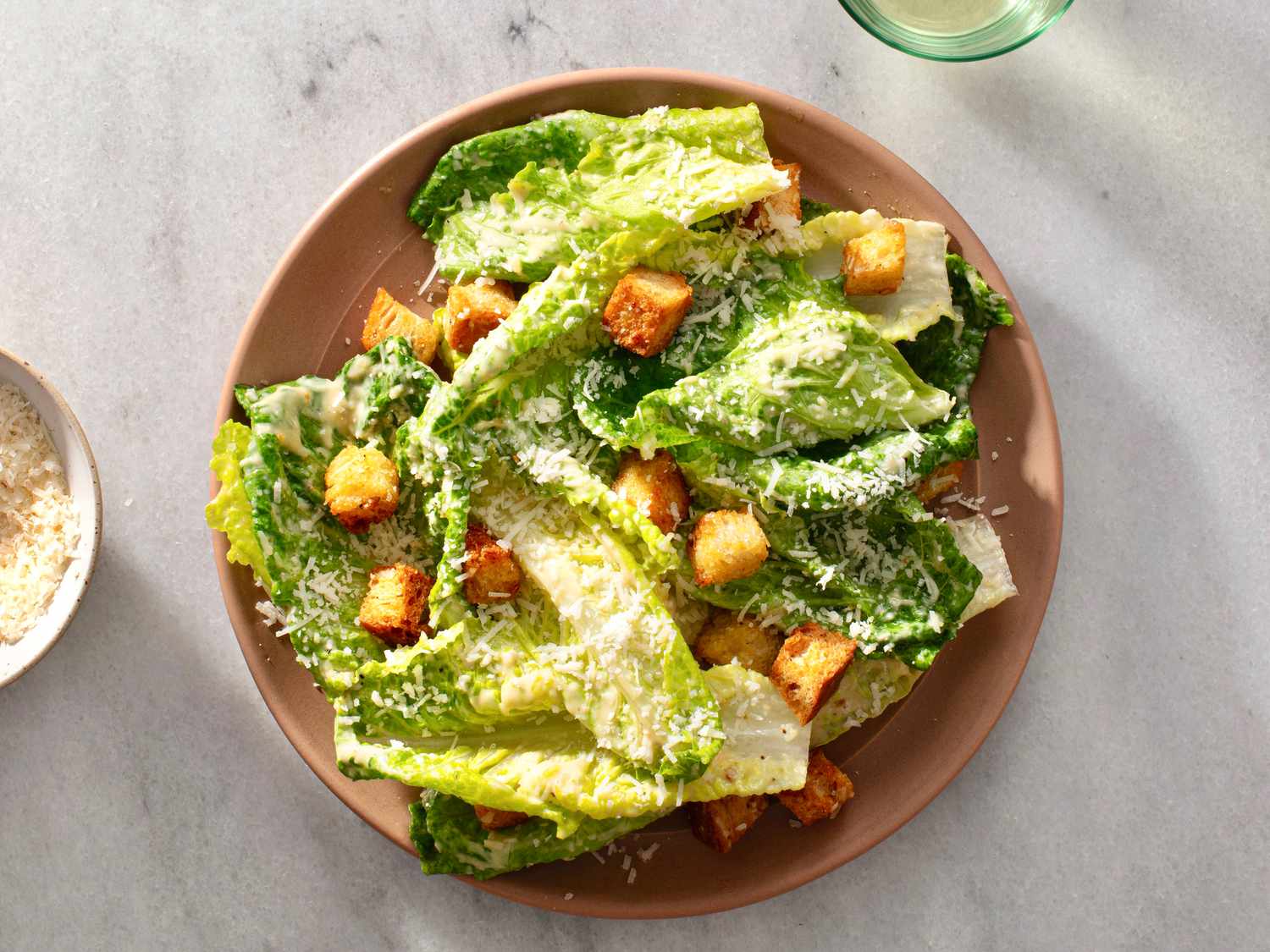
Romaine lettuce is a top-selling variety in the U.S. (According to the United States Department of Agriculture, sales of the green totaled $1.54 billion in 2023.) Like iceberg lettuce, romaine lettuce is crunchy and firm, with a high water content. The variety is earthy and slightly bitter. While romaine is typically served raw, its hearts—the lettuce’s tightly packed inner leaves—are sturdy enough for a quick kiss on the grill, which imparts a sweet, smoky flavor. Romaine’s hardiness means it can be tossed with thick, creamy dressings without easily wilting or breaking, making it a popular choice for Caesar and cobb salads.
Butterhead
Getty Images / Westend61
Appearance: Loosely formed medium-size, round heads with vibrant green, cup-shaped leaves
Texture: Velvety, buttery, and soft
Flavor: Mild, sweet, and nutty
Other Names: Butter, bibb, Boston, Boston bibb
Butterhead lettuce gets its name from the soft, velvety texture of its leaves. “It’s so delicate, I actually don’t even use utensils when I toss butterhead or Boston,” Symons says. “I just use my hands for a more delicate touch.” While the names Butterhead, bibb, and Boston are often used interchangeably, bibb and Boston are actually subsets of butterhead—the former is larger and the latter is more petite. Butterhead leaves are ideal for delicate salads and wrapping various fillings, such as spiced ground meat or bean salads Originally native to the Mediterranean basin, butter lettuce is popular in French cuisine, where it’s often dressed with light vinaigrettes for a simple salad or used as the base of classic salade Niçoise. You’ll also find it as a wrapper for Korean ssam, and in Vietnamese cuisine, butterhead is often used to wrap fried spring rolls and grilled meats and fish.
Little Gem
Getty Images / Richard Clark
Appearance: Small, compact, elongated heads, crisp-tender and pale green leaves on the outside and greenish yellow leaves on the inside
Texture: Crunchy and crisp but soft
Flavor: Sweet and earthy
Other Names: Baby romaine, baby gem
Little gem is not its own variety at all, but rather an early harvested romaine, which is why it’s also known as baby romaine. Lettuce contains lactucin and lactucopicrin, naturally-occurring compounds that give the green an increasingly bitter flavor as it matures; because little gem is harvested before those compounds have had a chance to fully develop, it isn’t as bitter as mature romaine. Rather, it’s sweeter and more mild, with leaves that are crunchy yet tender. A zesty vinaigrette can help highlight the lettuce’s delicate flavor, but the green also goes well with bold, savory ingredients such as anchovies, olives, and capers.
Loose Leaf
Getty Images / PotaeRin
“Loose leaf lettuce” is more of a catch-all term than a specific variety, and refers to lettuces with leaves that grow into a loose rosette rather than a tight head. This makes it less difficult for farmers to pick individual leaves: Rather than harvest the whole head, they collect the mature outer leaves by trimming them off, which leaves the younger, smaller inner leaves and base intact so the plant can continue growing. There are three varieties you’re most likely to encounter in the U.S.
Green Leaf
Appearance: Frilly green, medium-size leaves
Texture: Lightly crunchy
Flavor: Mild, clean, and fresh
Green leaf is crunchier and a bit more rough and tumble than butter lettuce, but doesn’t have quite the same textural bite as romaine or iceberg. Its crisp, tender leaves are still great for salads and wraps and as an addition to sandwiches and burgers.
Red Leaf
Appearance: Similar to green leaf in size and frilliness, with deep burgundy tips
Texture: Light with a slight crunch
Flavor: Fresh with just a hint of bitterness
Red leaf lettuce is very similar to green leaf, just slightly more bitter thanks to anthocyanins—pigments that give plants vivid blue, purple, and red hues (it’s the same pigment found in eggplant and berries). Like its cousin, green leaf lettuce, red leaf lettuce is great in salads, as a bed for sturdy proteins such as chicken breasts or salmon filets, and as a garnish. We recommend reaching for red leaf lettuce anywhere you’d use green leaf, including when eating bánh xèo (crispy Vietnamese rice pancakes) or serving Armenian eetch, a hearty vegan salad of bulgur, tomatoes, and herbs.
Oakleaf
Appearance: Leafy green or red lobed leaves shaped like those on an oak tree
Texture: Tender, sometimes slightly buttery
Flavor: Nutty with a mellow bitterness
Oakleaf can be easily identified by its unique shape, which resembles an oak leaf: elongated with wavy edges. Oakleaf lettuce is soft and delicate, has a mildly nutty flavor, and is great for pairing with other greens and chicories.
What Is a Chicory?
Chicories are leafy, bitter vegetables that are often lumped together with lettuces. Though chicories are also in the daisy family, they belong to the chicorium genus—not lettuce’s lactuca sativa. Chicories are perennial plants that come into season in the late fall, making them a staple in winter salads, soups, and braises. Some chicories, such as radicchio and endive, have thicker leaves, while others, like castelfranco, are more delicate. The roots of common chicory (cichorium intybus) are roasted and ground, then combined with coffee to make New Orleans’ signature chicory coffee.
Types of Chicories
Frisée
Getty Images / OSINSKIH AGENCY
Appearance: A loosely-packed head of green curly leaves
Texture: Feathery with a light crunch
Flavor: Bitter and peppery
Other Names: Curly endive
Frisée is known for its bitter taste and fluffy texture. In the U.S., the green is common in salad mixes, where its biting flavor can be balanced out by other mild greens. Frisée is the star of French salade Lyonnaise, where its bitterness cuts through the richness of the bacon and poached egg.
Radicchio
Serious Eats / VICUSCHKA
Appearance: Thick, hearty crimson leaves in a tightly packed round or elongated medium-size head
Texture: Crisp and robust, similar to cabbage
Flavor: Bittersweet
Other Names: Chioggia, red chicory, Italian red chicory
Few “greens” are as impressive on a plate as radicchio, thanks to its majestic burgundy leaves. This member of the chicory family is in season from October to January, and is a bright spot at winter farmers markets. The sweetness of fruit such as apples, pears, or winter citrus helps cut through the bitterness of raw radicchio, especially when balanced with salty cheeses such as gorgonzola or ricotta salata. Radicchio’s sturdy leaves are great for roasting and grilling, which brings out the vegetable’s natural sweetness. In Italy, radicchio is also incorporated into pastas and risottos.
Escarole
Getty Images / Brand X Pictures
Appearance: Medium green, wavy-edged leaves in a loose, leafy, medium-size bunch
Texture: Crisp leaves; outer leaves are tender but crunchy, with tender inner leaves
Flavor: Bitter with a subtle earthiness
Other Names: Batavian endive, broad-leaf endive
Escarole (or ‘scarole, if you’re from New Jersey like me), is a winter staple common in French and Italian cuisine. Its sturdy leaves make it ideal for braising and simmering, such as in Italian wedding soup. When cooked, escarole’s bitterness mellows out substantially. When eaten raw, escarole is lovely paired with fresh or dried fruit to balance the vegetable’s bitterness. The green is also commonly braised with white beans to make “‘scarole and beans,” an Italian classic.
Endive
Getty Images / Clubfoto
Appearance: Light yellow-green, thick, boat shaped leaves in an elongated, tightly packed, medium-size head
Texture: Thick, dense leaves that are crisp and crunchy
Flavor: Bitterness in outer leaves that mellows out in inner leaves or when cooked
Other names: Belgian endive
Like other members of the chicory family, endive is a bitter winter vegetable. In the United States, dense, crisp Belgian endive is typically the variety you’ll find at grocery stores and farmers markets. Its concave leaves make it ideal for scooping up dips and spreads, and the vegetable is especially delicious when paired with ingredients that balance the vegetable’s bitterness, such as sweet, tart fruits and creamy cheeses. Serving endive with deeply savory ingredients such as anchovies or salt cod can amplify the vegetable’s sweetness, and like radicchio, endive mellows out substantially when cooked. In France and Belgian, it’s often used in creamy gratins or braised.
Other Leafy Greens
Though the following vegetables aren’t lettuces, they’re often used as salad greens and, when combined, can provide plenty of texture and flavor. As Serious Eats editorial director Daniel touched on in his Roman-inspired mixed-green salad recipe, choosing a mixture of whatever greens are in season means your salad will always be the freshest and most flavorful. So instead of reaching for the bagged stuff, consider making your own custom blend with some of the greens below.
Mesclun Mix
Getty Images / Richard Villalon
Appearance: A mix of baby greens typically less than five inches in length, with a mixture of rounded, wavy, and frizzy leaves that vary in color, with some greens, deep reds, and purples.
Texture: Typically soft and delicate
Flavor: Depends on the mix of greens, but usually sweet and mild with pops of spice or bitterness.
Other names: Spring mix, salad mix
In the Provençal dialect, “mesclun” means “mixture,” and the term “mesclun mix” literally translates to “mixture mix.” In the 1980s, the chef Alice Waters popularized mesclun—grown by Andrea Crawford, the owner of Kenter Canyon Farms in Fillmore, California—at her famous farm-to-table restaurant in Berkeley, Chez Panisse. (In 2007, the Los Angeles Times called Crawford the “mesclun magician.”) Since then, mesclun has become a popular prepackaged salad. Mesclun, which also goes by spring mix, typically contains baby greens such as spinach or kale, alongside arugula, romaine, radicchio, and frisée. The exact combination, however, will vary depending on the brand or producer. Mesclun’s convenience makes it ideal for speedy salads, and its versatility means it goes well with a variety of mix-ins and dressings.
Tatsoi
Getty Images / Kitri Wulan Wijaya
Appearance: Deep green with rounded leaves and a pronounced, thick stem
Texture: A slightly more delicate bok choy
Flavor: Mustardy when raw, sweet and earthy when cooked
Other names: Spinach mustard, spoon mustard, rosette bok choy
Tatsoi is native to China and comes from the same family as bok choy, but has slightly thinner stems. Symon says it’s delicious both raw or cooked: “You can slice it in half and roast it or grill it, but you can also chop it really finely and make a slaw with it.” That said, baby tatsoi—which is harvested before it’s fully mature—is often the go-to for salads, as its leaves are smaller and have a milder flavor.Tatsoi is often utilized in quick stir-fries, as its sweet, earthy flavor goes well with garlic, ginger, and savory condiments like soy sauce.
Arugula
Getty Images / MirageC
Appearance: Small and elongated green leaves with wavy edges
Texture: Delicate but chewy
Flavor: Bitter with a peppery kick
Other Names: Rocket, roquette, Italian cress
Arugula is herbaceous, peppery, and packs a powerful punch. According to The Big Book of Greens by Jenn Louis arugula was considered an aphrodisiac in ancient Rome, and during the Middle Ages, monasteries were forbidden from growing the vegetable. While the green is often found in spring mix and is great in a salad, arugula can be used numerous ways. The vegetable is often incorporated into Italian pastas and beef carpaccio and potato salads in eastern Europe, and can be used alongside (or in place of) spinach in dishes such as spanakopita or borani-yeh esfenaj, a Persian spinach and yogurt dip. In northern India, arugula seeds are pressed to make taramira oil, which is used in pickling. Even though arugula is relatively delicate, its bold flavor allows it to shine when it’s cooked, too. Arugula’s spicy flavor also works well in sauces and spreads.
Watercress
Getty Images / Isabelle Rozenbaum
Appearance: Stemmy with small, rounded green leaves
Texture: Delicate, almost herb-like
Flavor: Spicy, mustardy, peppery
Other Names: Cress
Symons calls watercress “arugula amplified.” Watercress shares a similar flavor to the other mustards in the family, including wasabi and mustard greens. While not as spicy as wasabi greens, watercress has a kick that helps it punch up salads and dips. Symons recommends trimming the long stems if you plan on using the green in a salad, otherwise you may end up with what she describes as “watercress dental floss.” She also frequently tosses it into a blender (stems and all) and combines it with crème fraîche, olive oil, and chives to make a dip or spread for sandwiches or—thinned with a little water—a dressing for salads.
Kale
Getty Images / Suzifoo
Appearance: Large ruffled, rounded, or curly leaves; deep green, blue green, or purple (depending on the variety) with visible veining and a thick stem
Texture: Firm, fibrous
Flavor: Ranges from deep, nutty, and earthy to bitter, depending on the variety
Kale’s tough leaves can be roasted, air-fried, juiced, sautéed, or stewed, making it a versatile ingredient. In the U.S., you’re likely to find curly kale and Lacinato kale, a flat-leaf variety with more earthiness and less bitterness than curly kale. While both are delicious raw or cooked, curly kale is especially great when massaged with olive oil for salads or turned into kale chips.
Symons like to turn curly kale into kale chips, as the vegetable’s ruffled edges act as nooks and crannies for spices and seasonings. Lacinato kale can be thinly sliced and used in salads, but its large, thick leaves make it particularly good for including in soups and stews, as its hardiness helps it stand up to long cooking times without disintegrating completely. It’s what Symons reaches for when making ribollita, Portuguese caldo verde, or a kale Caesar salad. Kale’s robust nature makes it one of the few greens that can withstand being dressed up to a day in advance without losing much of its integrity. Kale’s tough exterior also makes it a go-to in warm fall or winter salads (when it’s season) in which it’s paired with hearty vegetables such as roasted squash and carmelized mushrooms.
Spinach
Getty Images / R.Tsubin
Appearance: Broad, oval leaves with pointed tips in dark green, bunches form a medium-size rosette shape
Texture: Soft and tender
Flavor: Sweet, mild, and grassy
Spinach can be served raw or cooked, and its mildness allows it to easily meld into myriad dishes: cheesy lasagna, warming chickpea masala, and even green smoothies. “I kind of think of spinach as the gateway green,” Symons says, explaining that it’s usually the first green people reach for when they start expanding from iceberg or romaine lettuces. “It’s not overwhelming or offensive, and doesn’t have an extremely strong flavor as compared to some of these other greens.” Spinach is used in many cuisines around the world: In India, it’s used to make palak paneer, and in Korea, it’s blanched and marinated in doenjang, fish sauce, rice vinegar, and spices for banchan. Japanese ohitashi is prepared similarly.
Because regular spinach is harvested when fully mature, it’s best to reach for baby spinach when making salads, as it’s picked when younger, with leaves that tend to be sweeter, milder, and more tender. Spinach’s one fault might just be that it shrinks greatly when cooked, though that’s easily solved by choosing frozen spinach if you need a large volume for a recipe.
Mache
Getty Images / Isabelle Rozenbaum
Appearance: Small green, rounded leaves on thin stems; grows in a tiny bunch
Texture: Delicate, velvety, similar to butter lettuce
Flavor: Slightly sweet with a bit of nuttiness
Other names: Lamb’s lettuce, corn salad
Mache is typically described as a smaller, more delicate version of butter lettuce. It has an almost sweet, nutty flavor, which is why Symons typically only eats it raw. (It can, however, be sautéed or steamed.) Because the leaves are fragile, Symons recommends using a light vinaigrette—like a lemon or champagne vinaigrette—that allows the green’s natural flavor to shine. Mache also pairs well with the bitter chicories like endive for a more complex salad.
How to Shop for Greens
Choosing locally grown greens is your best bet, as they tend to be fresher. Most lettuce and greens sold in American grocery stores are grown in California and Arizona, but local varieties can easily be found at most farmers markets. While bagged and boxed mixes are convenient, making your own blend will result in the most flavorful salad. When picking your greens, you’ll want to avoid wilted, discolored greens and make sure that the leaf structure is still intact, Frymark says.
How to Store Lettuce
According to the USDA, lettuces and other salad greens should be refrigerated between 32° and 41°F (0° to 5°C), and kept farthest from the door so they aren’t subject to fluctuating temperatures. Frymark recommends loosely packing greens in a plastic bag, as greens need a humid environment to maintain their freshness. As the plants sit in the bag, they will continue to release moisture. “The plant itself is creating the humidity because it’s still alive,” Frymark says. “Even after you’ve cut it, it’s still transpiring and giving off water vapor, so you want that to be captured in something.”
The smaller the container, the higher the humidity will be, sogreens should be sealed in a tub or plastic bag that gives the greens some wiggle room, but doesn’t have a lot of extra space. (If you’ve finished half a box of greens, she recommends moving the remaining half to a gallon-size zip-top bag.) In both cases, the container should be fully sealed. To prevent excess condensation, you can also add a layer of paper towel to the bag. While most triple washed, packaged varieties do not need to be washed again at home, any lettuce or green you do wash should be thoroughly spun and dried before refrigerating.
