


:max_bytes(150000):strip_icc():format(jpeg)/20260112-SEA-Homemade-Phyllo-Dough-Qi-Ai-HERO1-79bf8c63a34148899d30f69b947c8085.jpg)
Why It Works
- Letting the dough rest for at least 30 minutes (or up to one day) before rolling relaxes the gluten, making the dough easier to stretch and less prone to springing back.
- Wrapping and stretching the dough around a long, thin wooden dowel applies even pressure, allowing the phyllo to be rolled thin without tearing.
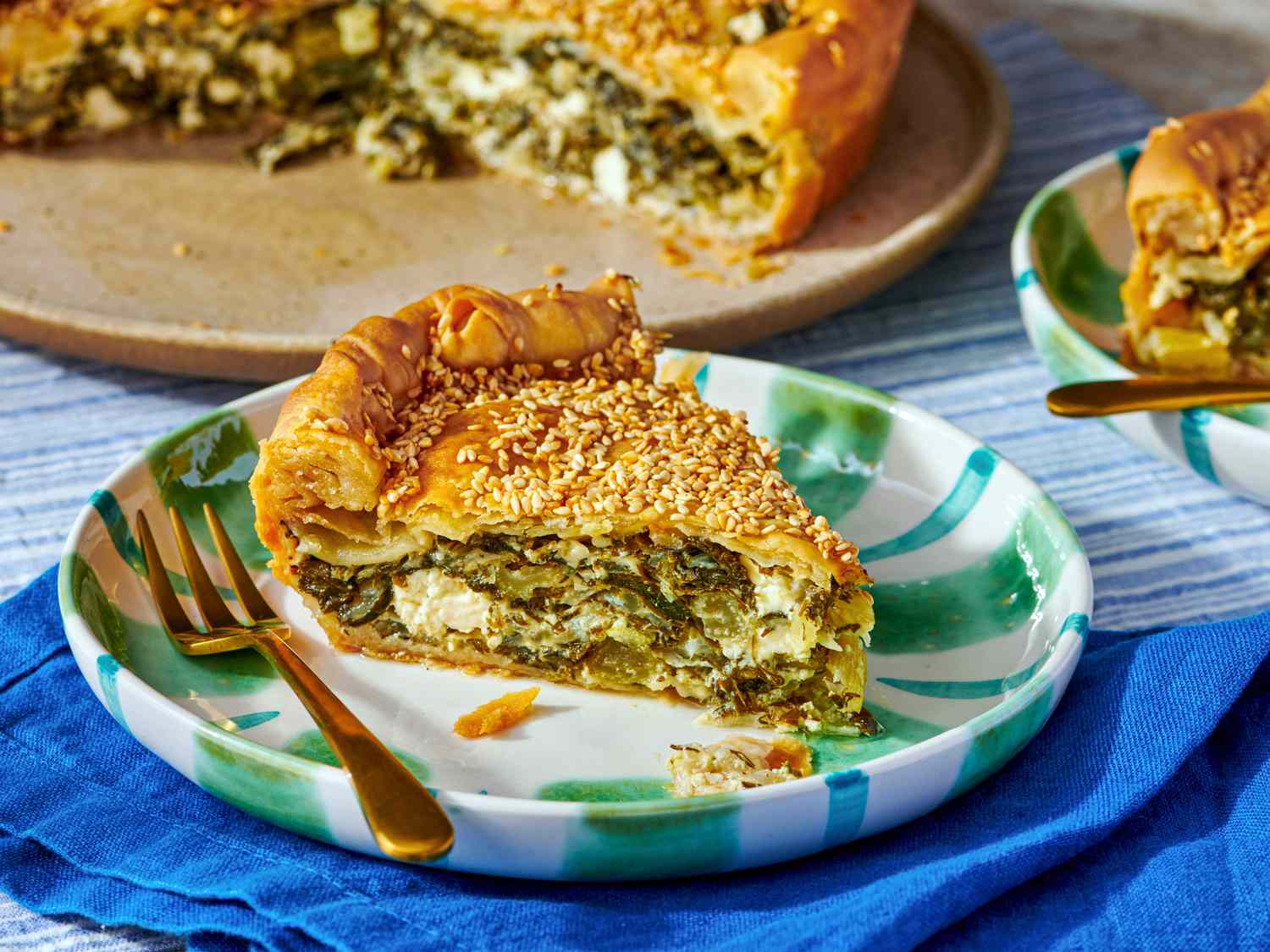
Homemade phyllo is one of the most enjoyable—and underrated—cooking techniques I know. Despite its delicate appearance, it is far more approachable than most people expect. While it’s not a quick weeknight project, learning how to make phyllo dough at home can become a satisfying weekend ritual, a reliable dinner-party skill, and a foundational technique that opens the door to an entire category of Greek cooking.
When I first started making phyllo at home, I was intimidated. I assumed that Greek pies made from scratch were the domain of professional bakers and grandmothers with decades of experience. Before living in Greece, my exposure to Greek pies was largely limited to frozen spanakopita triangles and boxed phyllo. While spanakopita may be the most recognizable Greek pie outside of Greece, it represents only a small slice of a much broader culinary tradition.
Thinking of Greek pie as synonymous with boxed phyllo and spinach filling would be like assuming Italian pasta begins and ends with dried spaghetti and Bolognese sauce. Greek pies—pites—span countless regions, fillings, thicknesses, and techniques. Spanakopita just happens to be the breakout star.
Serious Eats / Qi Ai
What Is Phyllo?
In Greek, the suffix pita simply means “pie.” Spanakopita is a compound of spanaki (spinach) and pita (pie), and nearly all Greek pies follow this naming convention. Phyllo (or filo) means “leaf” or “sheet,” a reference to the thin layers of dough used to encase these fillings. Rolling the dough is often described as “opening the leaves.”
Phyllo for Greek pies is dough that is rolled or stretched into sheets of varying thickness, then filled, shaped, and baked—or in some cases, fried. While commercial phyllo is typically rolled paper-thin, homemade phyllo ranges from translucent to thicker, more rustic sheets, depending on the style of pie and regional tradition. My version below strikes a balance between ease and authenticity. It’s thin enough to layer and crisp, but sturdy enough for first-time phyllo makers to roll and stretch with confidence.
Serious Eats / Qi Ai
Why Make Phyllo at Home
In the US, most frozen boxed phyllo contains stabilizers and other additional ingredients beyond flour, water, and oil. In Greece, it’s common to find frozen phyllo from local bakers made with far simpler ingredient lists. Boxed phyllo absolutely has its place, but once you’ve tasted homemade phyllo—the flavor, the texture, the tenderness—it’s difficult not to notice the difference.
More importantly, making phyllo at home is about developing a skill. The ingredient list is short; the real work and fun is in learning how the dough feels, stretches, and responds to pressure—knowledge that comes with practice. Confidence and repetition matter just as much as the flour and water. Rolling—or “opening”—the dough requires physical familiarity. You learn what properly kneaded dough feels like, when it needs rest, when it needs moisture, and how far it can be pushed.
After teaching many people how to make phyllo, I’ve found that the biggest obstacles are fear and over-delicacy. The finished sheets may be thin and elegant, but the process does not require a gentle hand. This dough is forgiving and surprisingly difficult to ruin. Treat your first few attempts like first dates—you’re getting to know each other. With time, even novice cooks become comfortable reading the dough and responding to it.
Serious Eats / Qi Ai
The Tools You’ll Need
This recipe serves as an entry point to traditional phyllo-making with a long, thin wooden dowel, known in Greek as a plastis. This tool allows the dough to be wrapped and stretched evenly, producing thin sheets that can become nearly translucent. In commercial settings, phyllo is often stretched across large tables or padded surfaces by hand, similar to strudel dough, but the dowel method is far more practical for home cooks.
While it’s possible to use a standard rolling pin, shorter or thicker pins make wrapping and stretching more difficult. A French rolling pin with tapered ends is particularly ill-suited here, as it encourages uneven stretching. A long, straight pin gives you the most control. (Check out Serious Eats’ review of rolling pins for suggestions.)
A Note On the Olive Oil
This recipe uses a generous amount of olive oil, both in the dough and throughout the pie-making process. That’s intentional. Greek cooking embraces abundance, especially when it comes to olive oil. Use a good-quality everyday olive oil—one that tastes buttery and clean—but save your expensive finishing oils for another application. Peppery or aggressively floral oils can overwhelm the dough.
Serious Eats / Qi Ai
How to Use This Recipe
My recipe focuses on making phyllo dough and learning the technique of rolling and stretching it by hand. Once you’re comfortable with the process, the dough can be used for a wide range of Greek pies with both savory and sweet fillings.
I’ve structured the recipe to allow for advance preparation. The dough can be rested for as little as 30 minutes or held for up to one day, which helps make the rolling process easier and more manageable as it relaxes the gluten in the dough. Fillings can also be prepared ahead of time, allowing you to focus entirely on stretching and assembling the phyllo when it’s time to bake.
For first-time pie makers, a round metal baking dish (9 to 11 inches) is the easiest shape to work with. As your comfort level grows, the dough can be scaled up and adapted to larger pans or different shapes.
Making phyllo at home is deeply rewarding. It’s a technique that improves with repetition and invites creativity once you’re proficient. With time, you’ll be able to improvise fillings, adjust thickness, and explore the vast, varied world of Greek pies with confidence.
Serious Eats / Qi Ai
