


:max_bytes(150000):strip_icc():format(jpeg)/20251118-SEA-BEEFTALLOW-AmandaSuarez-HERO-24c3422c29154da2ad282b9df4438f3b.jpg)
Over the past few years in the US and elswhere, beef tallow has become a buzzy ingredient for home cooks and restaurant chefs alike. Of course, the use of this fat is not new. The culinary use of beef tallow in dates back to Ancient Rome, where it was used in the northern regions of Gaul and Britannia, as well as in Egypt. In Apicius’s 4th-century cookbook Cooking and Dining in Imperial Rome, the ingredient is used as a substitute for caul fat in a hamburger-like Roman dish called isicia omentata, and as a frying fat for various foods. The Yale Babylonian Tablets indicate that Egyptians used beef tallow in recipes still recognizable today, such as a Babylonian beef stew similar to kabab halla, and reveal that animal fats, including tallow, were regularly used alongside vegetable oils for cooking.
Many 18th century British recipes, including Yorkshire pudding and meat pies, used tallow and it remains a key ingredient today for those dishes. It’s also used for frying fish and chips, as well as a rub to preserve meats and add an extra punch of flavor to them. In northern France and Belgium, beef tallow has long been used to cook french fries, and it has been popular for centuries in France, where cooks use it to braise meats, make pastries, prepare confit, and build the roux in gravies.
The Beef Tallow Renaissance
For modern cooks, however, the conversation around beef tallow is increased shaped by questions about the health effects of animal fats versus seed oils and neutral oils, along with considerations of flavor and whole-animal use. A trend among social media influencers and podcasters has emerged, casting beef tallow as a healthier alternative to seed oils. The “trad wife” movement—whose adherents seek out rural lives on farms and ranches in a return to a so-called traditional lifestyle—plays into it, too. In its most extreme forms, the movement has pushed a full agrarian revival, complete with cattle herding, butter churning, and tallow rendering. Some restaurants have adopted seed oil-free menus, which Health and Human Services Secretary Robert F. Kennedy, Jr. endorses as a “healthier” choice.
The current renaissance around beef tallow follows its decline in the late 1980s and early 1990s, when Phil Sokolof, founder and president of the National Heart Foundation, campaigned to replace it with vegetable oils to reduce the nation’s saturated fat consumption and lower cholesterol levels. Fast-food spots, including McDonald’s and Wendy’s, made the switch and subsequently faced long-running criticism thattheir fries weren’t as good. Now, shifting preferences—and evolving health research—may be setting the stage for the return of crispy french fries and animal fats to our diets.
Is Beef Tallow the Ideal Cooking Fat?
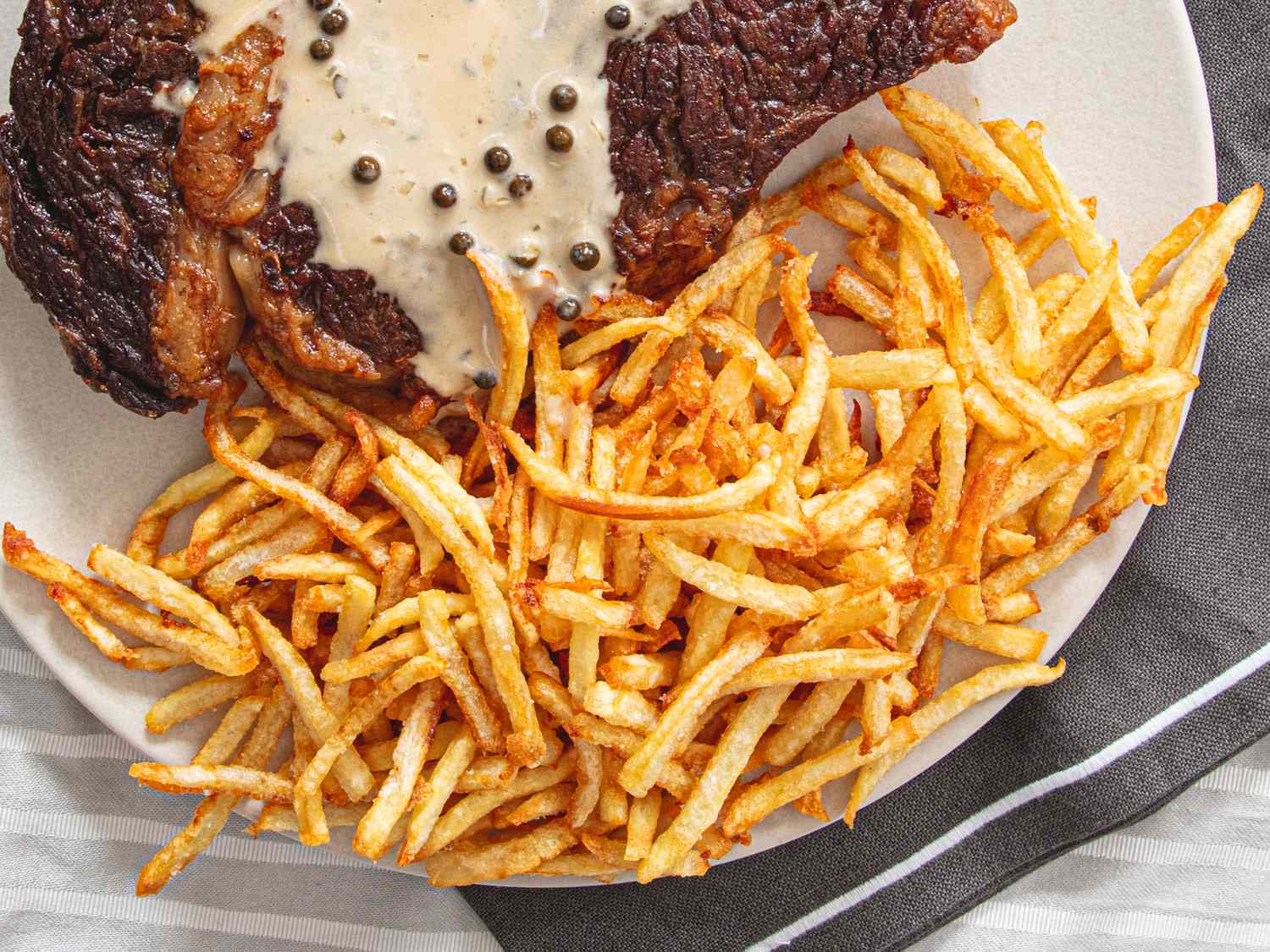
First, the fries. According to Dr. Eric A. Decker, a food scientist at the University of Massachusetts, Amherst, flavor is the most compelling reason to cook with beef tallow. Its high smoke point, around 480°F (250°C), makes it ideal for frying. “When you throw [a potato] in the fryer, the temperature is so high that water evaporates right away,” Decker says. “When you take it out of the fryer, water actually leaves the cell,” and as the potato sits and cools, it continues to absorb the tallow, infusing it with rich, meaty flavor.
For Jacob Williamson, former chef at the Dallas Italian steakhouse The Saint, fries are among the least interesting uses for beef tallow—and they aren’t even on the menu. While running the Saint, Williamson—whose résumé includes stints in kitchens run by legendary chefs Wolfgang Puck and Jean-Georges Vongerichten—developed a beef tallow rendering program and nearly eliminated butter in favor of it.
“It has more umami, and if you want to intentionally impart flavor into food rather than using just a regular oil, that’s definitely the way to go,” Williamson says. His favorite uses include roasting and searing root vegetables, brushing it on steaks before serving, and incorporating it as a solid fat in baked goods. His menu featured a snickerdoodle cookie made with wagyu tallow instead of butter.
Cost, Quality, and Health Considerations
Decker says that most grocery store beef tallow is unlikely to match the quality of freshly rendered tallow made from suet, the fat that surrounds a cow’s kidney. The cow’s diet, whether grass- or grain-based, plays a critical role in flavor. “When McDonald’s stopped using tallow [in 1990], the value of tallow just plummeted,” he says, explaining that the market became saturated with lower-quality beef tallow—a trend that continues today. “So if you’re buying a glass jar of tallow in the grocery store, you’re not necessarily getting that flavorful tallow,” he says.
Food scientist Allison M. Kingery, managing director of Purdue University’s Food Entrepreneurship and Manufacturing Institute, notes that the high price point can be a barrier to entry for people to use beef tallow. “I think it does feel like a splurge,” she says, noting beef tallow is significantly more expensive than butter and far pricier than seed oils and neutral oils. “I think [its biggest] drawback is the limitations on who can afford to use this as a regular product.”
Another consideration before adding beef tallow to your diet is its high saturated fat content—about 52% of its total fat. “That makes an impact just for cardiovascular disease risk and possibly increasing cholesterol levels,” says Theresa Gentile, MS, RDN, CDN, and coordinator of the home enteral nutrition program at Maimonides Medical Center in Brooklyn.
For Gentile, the number one reason to use beef tallow is as part of whole-animal butchery—for sustainability. “I think people love to jump on different trends,” she says. “True proponents of beef tallow, I think they want it because it is a return to a whole natural food, because we are using the whole animal…in nose-to-tail cooking.” But she notes that for those sourcing fat from the supermarket rather than utilizing tallow as one component of a whole animal, butter is an equally natural animal fat that’s just as good and flavorful—and much more affordable. Plus, it’s lower in saturated fat.
