


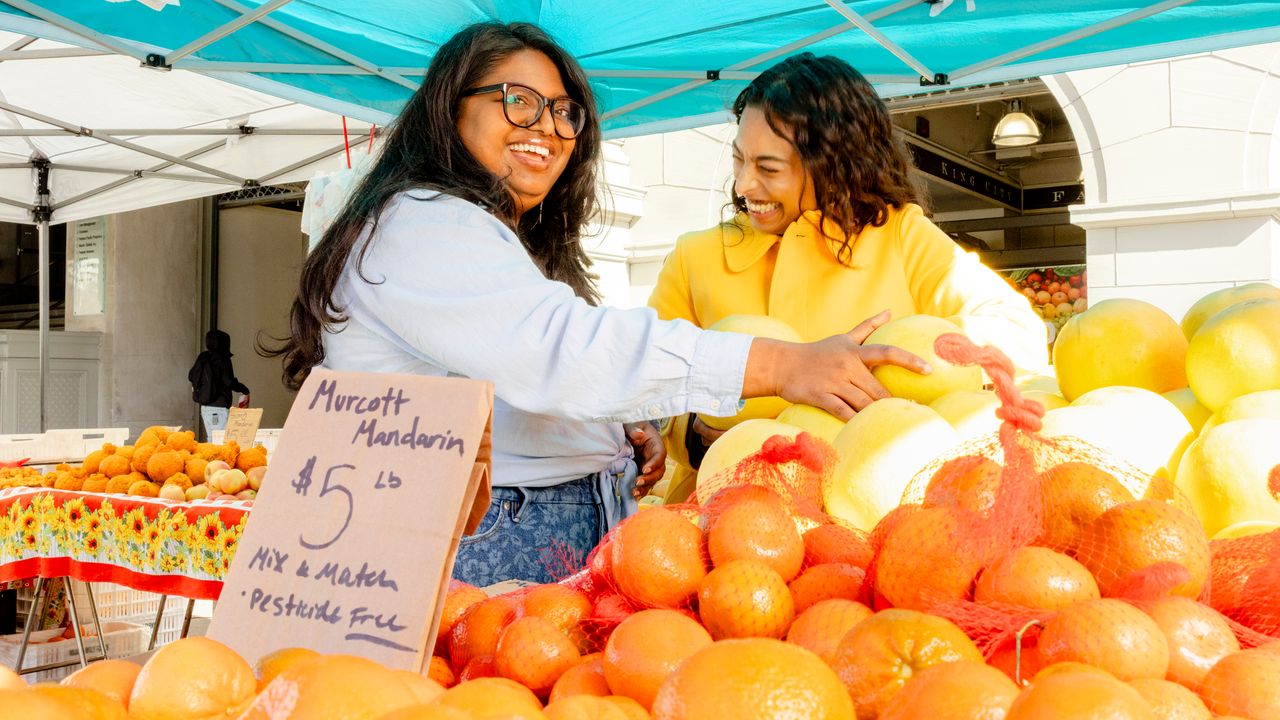
You may recognize Diaspora Spice Co. by its tins, each one more colorful than the last: neon pink, glowing orange, bright turquoise. Beyond the labels are single-origin, hyper-fragrant spices: floral saffron threads from Kashmir, sticky vanilla pods from Kerala, and sharp fennel from Gujarat. The brand recently published its first cookbook. Its aim, writes founder and CEO Sana Javeri Kadri, “is to reveal the depth and complexity of South Asian cuisine, and perhaps for the first time in recent history, to center South Asia in our understanding of how to cook with spices.”
To develop The Diaspora Spice Co. Cookbook, Kadri, coauthor Asha Loupy, and photographer Melati Citrawireja traveled across India and Sri Lanka, visiting the brand’s 22 farm partners and the home kitchens of 35 women. Since professional cooking across the subcontinent is a male-dominated industry, it was vital to Kadri to highlight the women who feed their families. The result is something “deeply feminist,” preserving heirloom South Asian recipes and techniques through the authors’ California-ish lens.
We caught up with Kadri and Loupy to hear about their travels, the culinary techniques they learned along the way, and what makes their spices stand out.

The Diaspora Spice Co. Cookbook: Seasonal Home Cooking from South Asia’s Best Spice Farms
Bon Appétit: You’ve published recipes online using Diaspora Co. spices for years. Why is now the time for a cookbook?
Sana Javeri Kadri: We sell spices, but the spices are merely a vessel for culture, community, storytelling, and politics. When I was eating at our farm partners’ homes during harvest season, the recipes were so fresh, simple, and seasonal. That’s not the version of South Asian food that most people know.
You both traveled for months to research and document this project. Can you share a particularly memorable part of that experience?
Asha Loupy: The moments we had in the kitchen with women made everything worth it. It was something I never thought I was going to be able to do. And a lot of times, it was comical trying to get anyone to measure anything.
Kadri: Asha was bribing people to use a scale!
What was the best thing you ate on the way that couldn’t be replicated in the book?
Kadri: Definitely hyun, a Pahadi specialty. In the Himalayas, when the first snow comes, kids collect the snow into steel plates or bowls. They’ll take it to their moms, who combine sun-dried apricots, cumin, chiles, and sea buckthorn juice, a sour regional ingredient. This yellowy-green syrup gets mixed with the snow to make a tangy, spicy snow cone. Lucky us, when we went up to farm partner Gyan Singh’s house, there was a little patch of snow and we were able to make hyun.
