


:max_bytes(150000):strip_icc():format(jpeg)/20251121-SEA-CranberryUpsideDownCake-MatejaZviroticAndrijanic-HERO-785525f95cf24a4ca9d5a4dab4da34ce.jpg)
- A combination of dark brown and granulated sugars gives the topping a complex, toffee-like flavor that complements the tart cranberries.
- Creaming the butter and sugar with the chemical leaveners ensures they are evenly distributed and eliminates the need for an extra bowl to whisk the dry ingredients in.
- Letting the cake cool for at least 20 minutes gives the fruit topping time to gel and thicken and the cake’s structure to set, making it easier to remove from the pan.
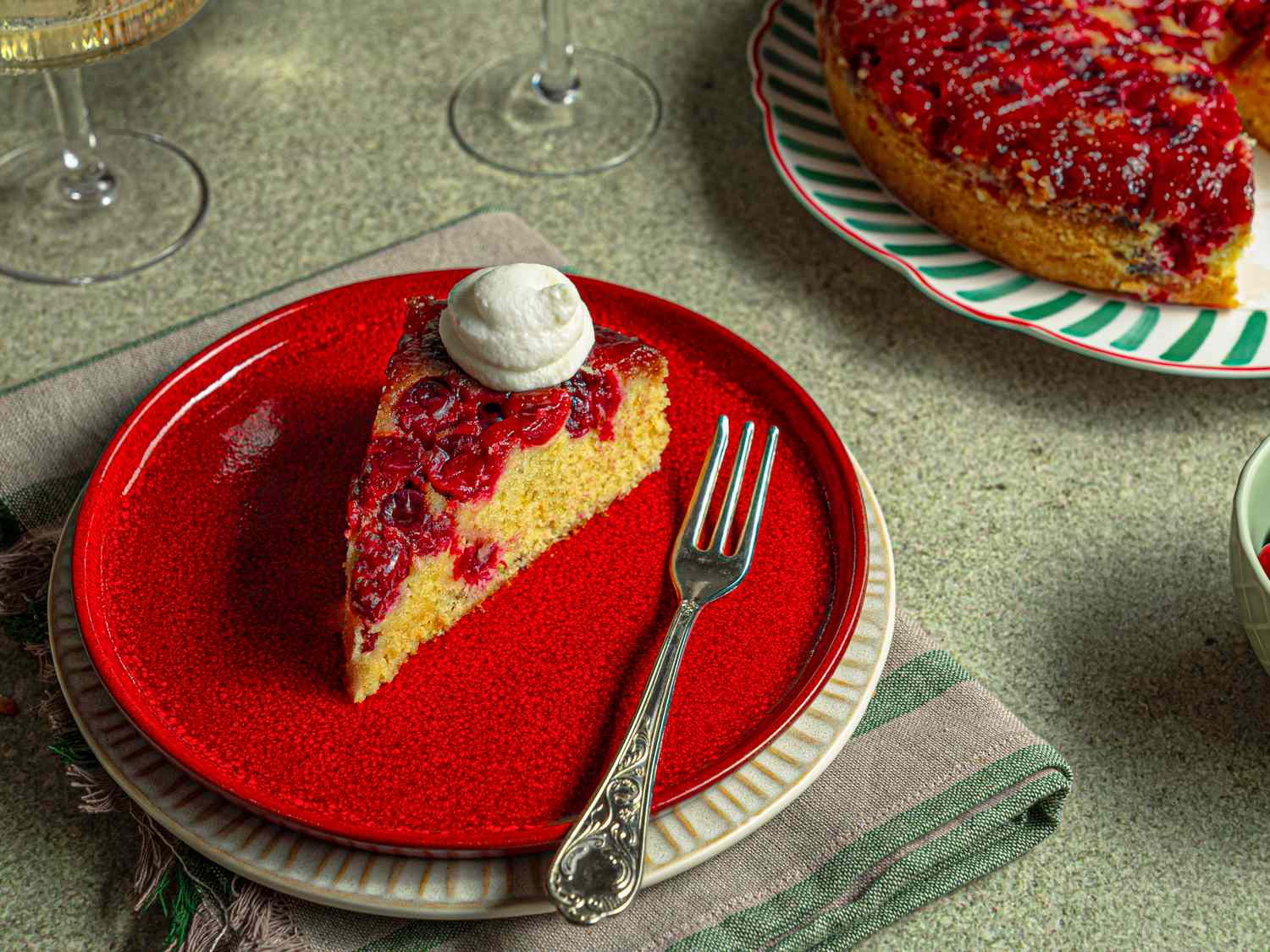
With their deep magenta hue and tart pucker, cranberries are, hands-down, my favorite fall and winter fruit. Many people reserve them for sauce or relish, but I like to incorporate them into my desserts, such as my cranberry crumble galette, former Serious Eats editor Stella Parks’ cranberry trifle, and now this buttery, upside-down cake covered in syrupy, pink cranberries.
An upside-down cake is a busy home cook’s best friend. With its syrupy, built-in topping, there’s no need to fuss with frostings or glazes. Nailing the fruit-to-cake ratio, however, is key: Too much fruit can turn the cake soggy, while too much batter can bury the cranberries. This version hits the sweet spot. It has a modestly thick layer of buttery cake topped with a generous portion of syrupy fruit. It’s simple enough to throw together for a casual autumn brunch, but also elegant enough to earn a spot at your holiday table—especially when served warm with a scoop of vanilla ice cream. Here’s how to make it.
Serious Eats / Mateja Zvirotić Andrijanić
For a Balanced Fruit Topping, Use a Combination of Brown and Granulated Sugars
Many upside-down cakes call for just one kind of sugar for the topping. Here, I use both dark brown sugar and granulated sugar, which give the topping a more complex, toffee-like flavor that complements—rather than overwhelms—the tartness of the cranberries.
The sugars, along with butter and a splash of water, are heated on the stove until bubbling, then poured into a greased pan. Unlike apples, stone fruit, or pineapple, which require peeling and/or slicing, cranberries make for an especially easy upside-down cake. All you have to do is rinse them off and scatter them over the sugary topping. This recipe uses a generous 10 ounces of fresh or frozen cranberries, slightly more than needed to cover the bottom of a 9-inch cake pan. As the cake bakes, the butter and sugar meld with the tart cranberry juices to form a sweet, sticky topping.
Cream Your Butter and Sugar Well—With Your Chemical Leaveners
This batter bakes into a golden cake that’s tender and buttery, but still sturdy enough to support the heavy fruit topping. You’ll begin by creaming butter, sugar, orange zest, vanilla, salt, baking powder, and baking soda until super light and fluffy, which is essential for aerating the batter and gives the cake a fine, tender crumb.
In Stella’s classic vanilla butter cake recipe, she notes that adding the chemical leaveners at this early stage—rather than mixing them together with the flour—allows them to incorporate more evenly into the batter and guarantees the cake rises evenly. This method also eliminates the need for an extra bowl to mix the dry ingredients in, effectively turning any cake into a one-bowl wonder.
Use Room Temperature Ingredients
As with cakes made with the creaming method—where butter and sugar are beaten together—all your ingredients should be at cool room temperature (65°F/18°C). “At warmer temperatures, butter will lose its plasticity, making it too soft and squishy to fold over on itself and entrap air,” Stella writes. “Without those air bubbles, butter and sugar form an ultra-dense paste that gives cakes the texture of a wet brick.” Keeping all the ingredients—including the eggs and sour cream—at the same temperature guarantees they’ll blend seamlessly, resulting in a light, tender cake that rises well in the oven. For that reason, I recommend taking your eggs and sour cream out of the fridge an hour before you plan to bake.
How to Invert an Upside-Down Cake Like a Pro
Once the cake is done baking, let it cool in the pan for about 20 minutes before inverting it. Straight from the oven, the cake is incredibly delicate, but as it cools, it releases moisture and its structure sets, making it much sturdier and less likely to break when removed from the pan. The fruit topping will also thicken and gel as it cools—if you flip the cake over too early, you risk burning yourself with the hot juices and making a mess on your kitchen counter. Don’t let the cake cool too much, though. Once the topping has completely set, it’s more likely to stick to the bottom of the pan. For best results, invert the cake onto a serving plate when the pan just feels warm to the touch.
As a rule, upside-down cakes are best enjoyed warm, while the fruit is still sticky and syrupy. With its built-in topping, this cake doesn’t really need any further adornments. Still, a dollop of whipped cream, a scoop of vanilla ice cream, or a drizzle of crème anglaise takes it into holiday showstopper territory. Plus, who can resist a pink cake?
Serious Eats / Mateja Zvirotić Andrijanić
