


:max_bytes(150000):strip_icc():format(jpeg)/google-pixel-10-pro-fold-unsplash--9396d0ff83c4444eab001827f68118a1.jpg)
Google Pixel 10, 10 Pro and 10 Pro XL
The tenth-generation Pixel phones are sleeker and smarter than ever.
Manufacturer: Google
Display: 6.3-inch Actua OLED (10), 6.3-inch Super Actua LPTO OLED (10 Pro), 6.8-inch Super Actua LPTO OLED (10 Pro XL)
Resolution: 1080 x 2424 (10), 1280 x 2856 (10 Pro), 1344 x 2992 (10 Pro XL)
Chipset: Google Tensor G5
Front camera: 10.5 MP, f/2.2, 95° field of view (9); 42 MP, f/2.2, 103° field of view (10 Pro/XL)
Rear camera: 50 MP wide/13 MP ultrawide (10), 50 wide/48 MP quad ultrawide (10 Pro/XL); 10 MP telephoto with 5x optical zoom (10), 48 MP telephoto 5x optical zoom (Pro/XL)
Battery: 4970 mAh (10), 4870 mAh (10 Pro); 5200 mAh (10 Pro XL)
Charging: fast charging, wireless charging
Ports: USB-C (no audio jack)
Initial Android version: Android 16
The Pixel 10, 10 Pro, and 10 Pro XL introduce the potent Tensor G5 processor, a brighter display, and Gemini everywhere via Magic Cue, a built-in AI feature that gives you the answers you’re looking for even before you ask.
Design changes are also significant with Material 3 Expressive for more fluid interactions and a more fortified and protective satin metal frame.
A first-ever 5x telephoto lens with up to 20x Super Res Zoom ups the level of detail you can capture along with a bevy of new AI-powered photo editing tools.
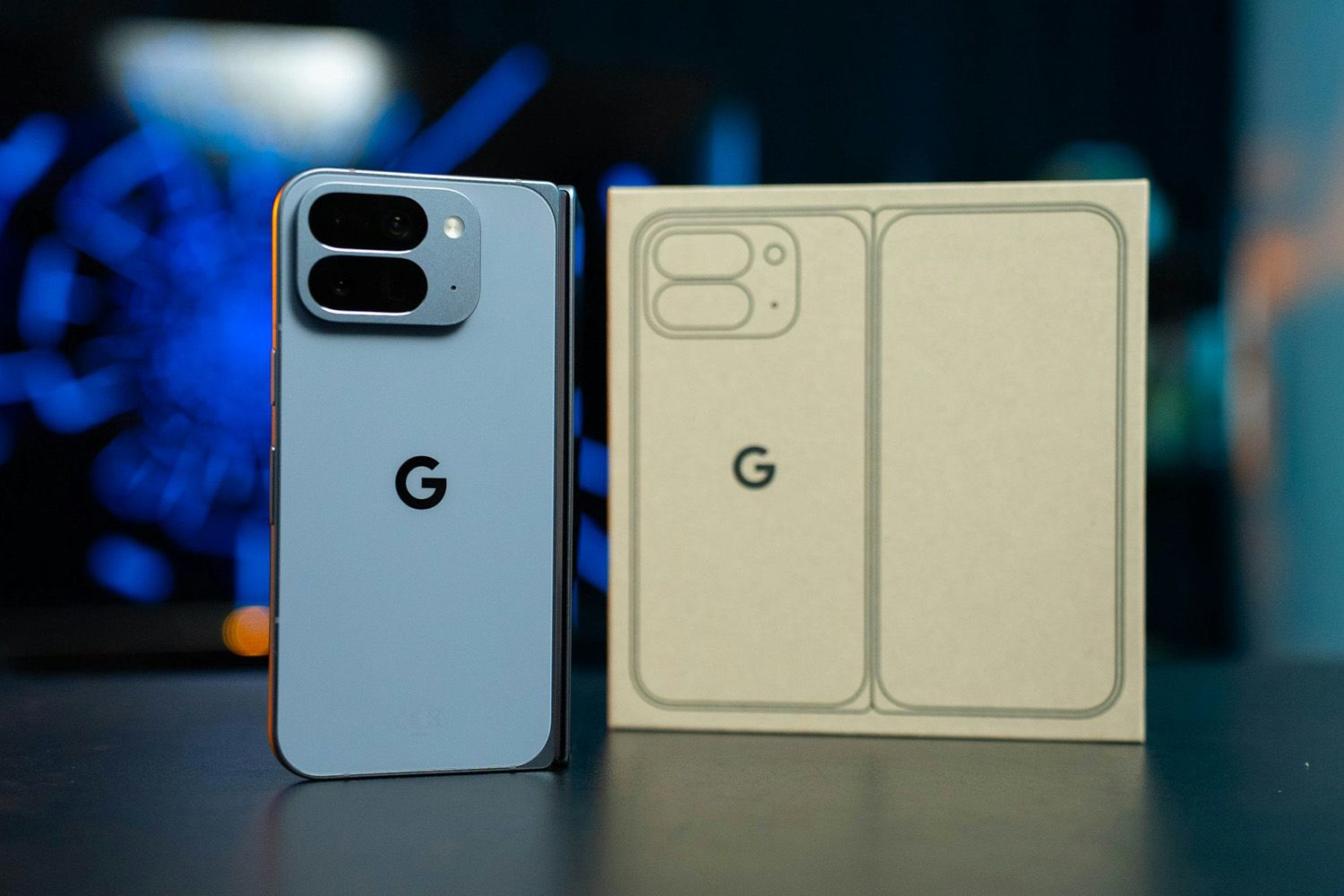
Google Pixel 10 Pro Fold
Manufacturer: Google
Display: 6.4-inch Actua OLED (external), 8-inch Super Actua OLED (internal)
Resolution: 1080 x 2364 (external), 2076 x 2152 (internal)
Chipset: Google Tensor G5, Titan M2 security coprocessor
Front camera: 10 MP, f/2.2, 87° field of view
Inner camera: 10 MP, f/2.2, 87° field of view
Rear camera: 48 MP wide, 10.5 MP ultrawide, 10.8 MP telephoto with up to 20x Super Res Zoom
Battery: 5015 mAh
Charging: fast charging with 30W USB-C, wireless charging
Ports: USB-C
Initial Android version: Android 16
The Pixel 10 Pro Fold isn’t drastically different from the prior-generation 9 Pro Fold, but it sports a few key upgrades.
This foldable has the more powerful, efficient Tensor G5 chip, like other Pixel 10 models, and the battery gets a big boost.
You’ll also see improvements in display brightness and enhanced Gemini in every aspect of the user experience.
Google Pixel 9, 9 Pro and 9 Pro XL
Pixel 9 Pro.
Manufacturer: Google
Display: 6.3-inch Actua OLED (9), 6.3-inch Super Actua LTPO OLED (9 Pro), 6.8-inch Super Actua LTPO OLED (9 Pro XL)
Resolution: 1080 x 2424 (9), 1280 x 2856 (9 Pro), 1344 x 2992 (9 Pro XL)
Chipset: Google Tensor G4 (4th generation)
Front camera: 10.5 MP, f/2.2, 95° field of view (9); 42 MP, f/2.2, 103° field of view (9 Pro/XL)
Rear camera: 50 MP wide/48 MP ultrawide (9, 9 Pro/XL); 48 MP telephoto with 5x optical zoom (9 Pro/XL)
Battery: 4700 mAh (9, 9 Pro); 5060 mAh (9 Pro XL)
Charging: fast charging, wireless charging
Ports: USB-C (no audio jack)
Initial Android version: Android 14
Google Gemini is still the main focus for the 2024 phones.
AI features include on that lets you combine two or more photos in real time, Zoom Enhance; a Guided Frame to help you take better pictures; and Magic Editor, which uses image generation to help you reframe and enhance photos.
The devices are about the same size as their eighth-generation counterparts, but they have slightly larger batteries, improved power efficiency, and more RAM. The rear cameras also got a huge boost, with the Pixel 9 sporting a massive 48 MP ultrawide option, compared to the 8’s 12 MP lens.
Read more about the Pixel 9, Pixel 9 Pro, and Pixel 9 Pro XL.
Google Pixel 9 Pro Fold
Manufacturer: Google
Display: 6.3-inch Actua OLED (external), 8-inch Super Actua OLED (internal)
Resolution: 1080 x 2424 (external), 2076 x 2152 (internal)
Chipset: Google Tensor G4 (4th generation), Titan M2 security coprocessor
Front camera: 10 MP, f/2.2, 87° field of view
Inner camera: 10 MP, f/2.2, 87° field of view
Rear camera: 48 MP wide, 10.5 MP ultrawide, 10.8 MP telephoto with up to 20x Super Res Zoom
Battery: 4650 mAh
Charging: fast charging with 45W USB-C, wireless charging
Ports: USB-C 3.2
Initial Android version: Android 14
The second-generation Pixel Fold’s screens are each about a half inch larger than its predecessor’s, and its Tensor chipset has jumped two generations. That latter upgrade is important because like all of the other Pixel 9 series, the new Pro Fold is full-up with AI features.
The main draw here is the foldable design, however, which includes the largest display of the Pixel 9 line (8 inches, compared to the 9 Pro XL’s 6.8-inch screen). This is still a cool design that provides more options for multitasking and creativity.
Read more about the Pixel 9 Pro Fold.
Google Pixel 8 and 8 Pro
Manufacturer: Google
Display: 6.2-inch OLED; 6.7-inch LTPO OLED (Pro)
Resolution: 1080 x 2400; 1344 x 2992 (Pro)
Chipset: Google Tensor G3 (3rd generation)
Front camera: 10.5 MP; 10.5 MP (Pro)
Rear camera: 50 MP (wide), 12 MP (ultrawide)
Rear camera (Pro): 50 MP (wide), 48 MP (ultrawide); 48 MP (telephoto)
Battery: 4575 mAh; 5050 mAh
Charging: 30W fast charging, wireless charging
Ports: USB-C (no audio jack)
Initial Android version: Android 14
The Google Pixel 8 series consists of the Pixel 8 and Pixel 8 Pro, both released in October 2023. Compared to the Pixel Fold and Pixel 7 series, the Pixel 8 includes a more advanced Tensor G3 chip for improved performance and camera capabilities. The Pro model also features a unique temperature sensor, a first for Google phones.
While the overall design remains similar, the Pixel 8 Pro introduced a new Mint color. The Pixel 8 Pro also upgrades to an LTPO OLED display with a variable refresh rate of 1-120Hz, allowing for smoother scrolling and potentially better battery life.
Read more about the Pixel 8a, Pixel 8, and Pixel 8 Pro.
Google Pixel Fold
Manufacturer: Google
Display: 5.8-inch OLED (external); 7.6-inch OLED (internal)
Resolution: 1080 x 2092 (external); 2208 x 1840 (internal)
Chipset: Google Tensor G2 (2nd generation)
Front camera: 9.5 MP
Rear camera: 48 MP, 10.8 MP (ultrawide), 10.8 MP (telephoto)
Inner camera: 8 MP
Battery: 4821 mAh
Charging: 30W fast charging, wireless charging
Ports: USB-C (no audio jack)
Initial Android version: Android 13
Released in June 2023, the Pixel Fold was Google’s first step into foldable phones, offering a unique design that transforms from a regular-sized phone to a tablet-like device when unfolded. The unfolded design might allow for more creative camera angles and potentially better low-light photos.
Google highlights the Fold’s thin, water-resistant hinge. It also packs the same powerful Tensor G2 chip as the Pixel 7 series, prioritizing performance and multitasking.
Read more about the Google Pixel Fold.
Google Pixel 7 and 7 Pro
Manufacturer: Google
Display: 6.3-inch P-OLED; 6.7-inch P-OLED (Pro)
Resolution: 2400 x 1080; 3120 x 1440 (Pro)
Chipset: Google Tensor G2 (2nd generation)
Front camera: 10.8 MP; 10.8 MP (Pro)
Rear camera: 50 MP (wide), 12 MP (ultrawide)
Rear camera (Pro): 50 MP (wide), 12 MP (ultrawide); 48 MP (telephoto)
Battery: 4335 mAh; 5000 mAh
Charging: 30W fast charging, wireless charging
Ports: USB C (no audio jack)
Initial Android version: Android 13
The Google Pixel 7 and 7 Pro flagship models launched in October 2022. The new devices look similar to their Pixel 6 and 6 Pro predecessors but feature aluminum horizontal camera bars instead of glass and more prominent camera lenses.
Along with a minimally updated design, the models boast Google’s new Tensor G2 processor, face-unlock capabilities, and enhanced camera zoom features. Both the Pixel 7 and Pixel 7 Pro come in Obsidian and Snow, while the 7 has an additional Lemongrass shade, and the Pro also includes a Hazel offering.
As for storage, both Pixel 7 and 7 Pro have 128 GB and 256 GB models; the 7 Pro also has a 512 GB option.
While the Pixel 7 and 7 Pro represent a modest overhaul, Pixel users will be tempted to upgrade to enjoy the enhancements in the 7 series.
Read more about the Pixel 7 and 7 Pro.
Google Pixel 6 and 6 Pro
Google’s Pixel 6.
Adam Doud/Lifewire
Manufacturer: Google
Display: 6.4-inch OLED; 6.7-inch OLED (Pro)
Resolution: 2400 x 1080; 3120 x 1440 (Pro)
Chipset: Google Tensor (1st generation)
Front camera: 8 MP; 11 MP (Pro)
Rear camera: 50 MP (wide), 12 MP (ultrawide)
Rear camera (Pro): 50 MP (wide), 12 MP (ultrawide); 48 MP (telephoto)
Colors: Cloudy White, Kinda Coral, Sorta Seafoam, Sorta Sunny, Stormy Black
Battery: 4614 mAh; 5003 mAh
Charging: 30W fast charging, wireless charging
Ports: USB C (no audio jack)
Initial Android version: Android 12
The Pixel 6 and 6 Pro launched in October 2021.
Both models offer several new features, including an extreme battery saver, a Magic Eraser to remove people and things from photos, and at least five years of Android updates.
Google Pixel 5 and 5a
Manufacturer: Google
Display: Flexible OLED capacitive touchscreen, 6.0 inches, 90Hz refresh rate
Resolution: FHD+ (1080 x 2340) Flexible OLED at 432 ppi
Chipset: Qualcomm Snapdragon 765G
Front camera: 8 MP
Rear camera: 12.2 MP dual-pixel, 16 MP ultrawide
Colors: Just Black, Sorta Sage
Audio: Stereo speakers
Wireless: Wi-Fi 2.4 GHz + 5 GHz 802.11a/b/g/n/ac 2×2 MIMO Wi-Fi, Bluetooth 5.0, NFC, Google Cast
Battery: 4,080 mAh
Charging: 18W fast charging, Qi-certified wireless charging
Ports: USB C 3.1 Generation 1 (no audio jack)
Initial Android version: Android 11
The Pixel 5 launched during the Launch Night In event in September 2020, alongside the Pixel 4a 5G.
Body-wise, it resembles the Pixel 4a. It has the same punch-hole camera at the top and a square camera module on the back. However, unlike the 4a, it has a larger 6-inch screen and some beefed-up specs.
The Pixel 5 loses some of the features its predecessor offers, like Face Unlock and gesture-sensing, but it gains some new tricks.
The camera adds Night Sight to Portrait Mode and a Portrait Light to illuminate subjects. The phone also gets an extreme battery saver mode and a Hold Me feature for Google Assistant that notifies you when someone comes on the line.
Also, music fans will be sad to note the Pixel 5 doesn’t have an audio jack.
Pixel 4a with 5G
Pixel 5 and 4a 5G.
Manufacturer: Google
Display: Full-screen 6.2-inch (158 mm) display, 19.5:9 aspect ratio
Resolution: FHD+ (1080 x 2340) OLED at 413 ppi
Chipset: Qualcomm Snapdragon 765G
Front camera: 8 MP
Rear camera: 12.2 MP dual-pixel, 16 MP ultrawide
Colors: Just Black, Clearly White
Audio: Stereo speakers
Wireless: Wi-Fi 2.4 GHz + 5 GHz 802.11a/b/g/n/ac 2×2 MIMO Wi-Fi, Bluetooth 5.0, NFC, Google Cast
Battery: 3800 mAh
Charging: 18W fast charging
Ports: USB C 3.1 Generation 1, 3.5 mm headset jack
Initial Android version: Android 11
The Pixel 4a 5G launched during the Launch Night In event in September 2020, alongside the Pixel 5. What’s unusual about it is it’s a less expensive device that offers 5G but doesn’t compromise on other features, notably the camera.
It sports two rear cameras—a standard 12.2 MP sensor and a 16 MP ultrawide lens—along with an 8 MP front-facing lens. It’s the same setup found in the more expensive Pixel 5.
Another slight advantage the 4a 5G has over the Pixel 5 is a bigger 6.2-inch screen. Still, the Pixel 5 has a higher resolution and faster refresh rate. The 4a 5G also comes with a headphone jack.
If you’re looking for fun colors, you need to look elsewhere. Your only options here are black and white. That aside, the 4a 5G is a good choice if you’re looking for a solid Android device without breaking the bank.
Google Pixel 4 and Pixel 4 XL
Manufacturer: Google
Display: 5.7-inch FHD+ flexible OLED (Pixel 4), 6.3-inch QHD+ flexible OLED (Pixel 4 XL)
Resolution: 19:9 FHD+ at 444 ppi (Pixel 4), 19:9 QHD+ at 537 ppi (Pixel 4 XL)
Chipset: Qualcomm Snapdragon 855
Front camera: 8 MP
Rear camera: 16 MP
Colors: Just Black, Clearly White, Oh So Orange
Audio: Stereo speakers
Wireless: 2.4 GHz and 5.0 GHz 2×2 MIMO Wi-Fi, Bluetooth 5.0, NFC, Google Cast
Battery: 2,800 mAh (Pixel 4), 3,700 mAh (Pixel 4 XL)
Charging: 18W fast charging, Qi-certified wireless charging
Ports: USB C 3.1 Generation 1 (no audio jack)
Initial Android version: Android 10
The Pixel 4 and Pixel 4XL iterate on the venerated Pixel 3 series, leaving the budget-level Pixel 3a series in the dust. This latest series in the Pixel line retains a lot of what worked about the Pixel 3 series, including the glass-and-metal sandwich body, best-in-class photography abilities, and still-absent headphone jack.
Since the Pixel 4 and Pixel 4XL have glass backs like the Pixel 3 series, the wireless Qi charging that was absent in the 3a and 3a XL is back. The relatively small batteries are also back.
If the Pixel 4 feels lighter in the hand than some of the competitors, it’s because it uses a smaller battery than either the Pixel 3 or Pixel 3a.
The Pixel 4XL ditches its massive notch this time around, opting instead for a thick upper bezel to house the front-facing camera and face unlock sensor.
Other than that, the most notable design change comes on the rear of the Pixel 4 and Pixel 4 XL, where you’ll find a chunky square camera bump that’s more than a little reminiscent of the iPhone 11.
Also of note is that the Pixel 4 replaced the fingerprint reader with Google’s newly-implemented face unlock technology.
Google Pixel 3a and Pixel 3a XL
Manufacturer: Google
Display: 5.6-inch FHD+ flexible FHD+ OLED (Pixel 3a), 6.0-inch FHD+ OLED (Pixel 3a XL)
Resolution: 2220 x 1080 at 441 ppi (Pixel 3a), 2160×1080 at 402 ppi (Pixel 3a XL)
Chipset: Qualcomm Snapdragon 670
Front camera: 8 MP
Rear camera: 12.2 MP dual-pixel
Colors: Clearly White, Just Black, Purple-ish
Audio: Stereo speakers (one front speaker, one on the bottom)
Wireless: 2.4 GHz and 5.0 GHz Wi-Fi, Bluetooth 5.0, NFC, Google Cast
Battery: 3,000 mAh (Pixel 3a), 3,700 mAh (Pixel 3a XL)
Charging: 18W fast charging (no wireless charging)
Ports: USB C 3.1, 3.5 mm audio jack
Initial Android version: 9.0 Pie plus Google Assistant
The Pixel 3a and Pixel 3a XL mark a return to form for Google. These fill the void that was left when the Nexus line was discontinued. These phones share many of the same basic hardware found in the Pixel 3 and Pixel 3 XL. However, some of the bells and whistles are cut out, and some of the costly design choices have been modified to offer an affordable alternative.
While the Pixel 3a and Pixel 3a XL share a lot in common with their more expensive counterparts, there are some important differences. Instead of using Gorilla Glass, the 3a uses a polycarbonate unibody with a Dragontrail glass screen.
The Pixel 3a and 3a XL also miss a handful of features found in the more expensive versions. These phones don’t have wireless charging, lack the Pixel Visual Core, and aren’t water resistant.
While most of the differences between these phones involve things that were removed from the 3a and 3a XL, there is one notable exception. The 3.5 mm audio jack that has been long absent from the Pixel line makes a return here.
In terms of the camera, which has always been an important feature of any Pixel phone, little has changed. The Pixel 3a and Pixel 3a XL still have the same rear camera, and you still get access to features like Night Sight, Super Res Zoom, and Top Shot that were introduced with the Pixel 3.
Overall, the Pixel 3a and Pixel 3a XL offer an attractive alternative if you have missed the affordable Nexus line. These phones lack the premium touches of the more expensive versions but pack a lot of functionality compared to other mid-range phones.
Google Pixel 3 and Pixel 3 XL
Manufacturer: Google
Display: 5.5-inch FHD+ flexible OLED (Pixel 3), 6.3-inch QHD+ OLED (Pixel 3 XL)
Resolution: 2160×1080 at 443 ppi (Pixel 3), 2960×1440 at 523 ppi (Pixel 3 XL)
Chipset: Qualcomm Snapdragon 845
Front camera: 8 MP x2 (one wide-angle and one normal field of view camera)
Rear camera: 12.2 MP dual-pixel
Colors: Clearly White, Just Black, Not Pink
Audio: Dual front speakers
Wireless: 5.0GHz Wi-Fi, Bluetooth 5.0, NFC, Google Cast
Battery: 2,915 mAh (Pixel 3), 3,430 mAh (Pixel 3 XL)
Charging: Built-in Qi wireless charging and 18W fast charging
Ports: USB C 3.1
Initial Android version: 9.0 Pie plus Google Assistant
The third iteration of Google’s flagship Pixel phone line retains many of the same design cues seen in earlier versions. Both handsets feature a similar two-tone color scheme, although the specific colors are different this time around.
The Pixel 3 feels different in the hand from its predecessors, despite the similar looks, as the entire back of the phone is made of the same soft-touch Corning Gorilla Glass 5 that protects the screen. The rest of the body is made of aluminum.
With the switch to a glass back, both versions of the Pixel 3 come with built-in wireless charging made by Qi technology.
The regular Pixel 3 retains the fairly chunky bezel seen in earlier versions of the Pixel line. The bigger Pixel 3 XL has a big notch up top in addition to a noticeable chin bezel.
The notch stands out when the screen is on. It houses the phone’s two front-facing cameras that Google expects to revolutionize the art of the selfie.
The rear camera doesn’t represent an upgrade over the Pixel 2 in terms of megapixels. Still, the Pixel 3 has some built-in learning tricks that elevate its capabilities beyond what you would normally expect out of its bare hardware specifications.
Google Pixel 2 and Pixel 2 XL
Google’s Pixel 2 and Pixel 2 XL phones look remarkably similar despire the fact that one is made by HTC and the other by LG.
Manufacturer: HTC (Pixel 2), LG (Pixel 2 XL)
Display: 5-inch AMOLED (Pixel 2), 6-inch pOLED (Pixel 2 XL)
Resolution: 1920×1080 at 441 ppi (Pixel 2), 2880×1440 at 538 ppi (Pixel 2 XL)
Front camera: 8 MP
Rear camera: 12.2 MP
Initial Android version: 8.0 Oreo
Like the original Pixel, the Pixel 2 features metal unibody construction with a glass panel on the rear. Unlike the originals, the Pixel 2 has IP67 dust and water resistance, which means that it can survive being submerged in up to three feet of water for 30 minutes.
The Pixel 2 processor, a Qualcomm Snapdragon 835, is 27 percent faster and consumes 40 percent less energy than the processor in the original Pixel.
Unlike the original Pixel, Google went with two manufacturers for the Pixel 2 and Pixel 2 XL. That led to rumors that the Pixel 2 XL, manufactured by LG, may feature a bezel-less design.
That didn’t happen. Despite being manufactured by different companies (HTC and LG), the Pixel 2 and Pixel 2 XL look similar, and both continue to sport fairly chunky bezels.
Like the original phones in the line, the Pixel 2 XL differs from the Pixel 2 only in terms of screen size and battery capacity. The Pixel 2 has a 5-inch screen and a 2,700 mAH battery. The Pixel 2 XL has a 6-inch screen and a 3,520 mAH battery.
The only real cosmetic difference between the two, other than size, is the color. The Pixel 2 comes in blue, white, and black. The Pixel 2 XL is available in black and a two-tone black and white scheme.
The Pixel 2 includes a USB-C port but doesn’t have a headphone jack. The USB port supports compatible headphones, and a USB-to-3.5 mm adapter is available.
Google Pixel and Pixel XL
Pixel represented a sharp change in Google’s phone hardware strategy.
Spencer Platt / Staff / Getty Images News
Manufacturer: HTC
Display: 5-inch FHD AMOLED (Pixel), 5.5-inch (140 mm) QHD AMOLED (Pixel XL)
Resolution: 1920×1080 at 441 ppi (Pixel), 2560×1440 at 534 ppi (Pixel XL)
Front camera: 8 MP
Rear camera: 12 MP
Initial Android version: 7.1 Nougat
Current Android version: 8.0 Oreo
Manufacturing Status: No longer being made. The Pixel and Pixel XL were available from October 2016 to October 2017.
The Pixel marked a sharp deviation in Google’s previous smartphone hardware strategy. Earlier phones in the Nexus line were meant to serve as flagship reference devices for other manufacturers and were branded with the name of the manufacturer that built the phone.
For instance, the Nexus 5X was manufactured by LG, and it had an LG badge alongside the Nexus name. The Pixel, although manufactured by HTC, does not bear the HTC name. Huawei lost the contract to manufacture the Pixel and Pixel XL when it insisted on dual-branding the Pixel in the same manner as earlier Nexus phones.
Google also moved away from the budget market with the introduction of its new flagship Pixel phones. Whereas the Nexus 5X was a budget-priced phone, in comparison to the premium Nexus 6P, the Pixel and Pixel XL came with premium price tags.
The display of the Pixel XL was larger and a higher resolution than the Pixel, resulting in a higher pixel density. The Pixel featured a density of 441 ppi, while the Pixel XL featured a density of 534 ppi. These numbers were better than the Apple Retina HD Display and are comparable to the Super Retina HD Display introduced with the iPhone X.
The Pixel XL came with a 3,450 mAH battery, which offered a larger capacity than the 2,770 mAH battery of the smaller Pixel phone.
Both the Pixel and Pixel XL featured aluminum construction, glass panels on the rear, 3.5 mm audio jacks, and USB C ports with support for USB 3.0.
