


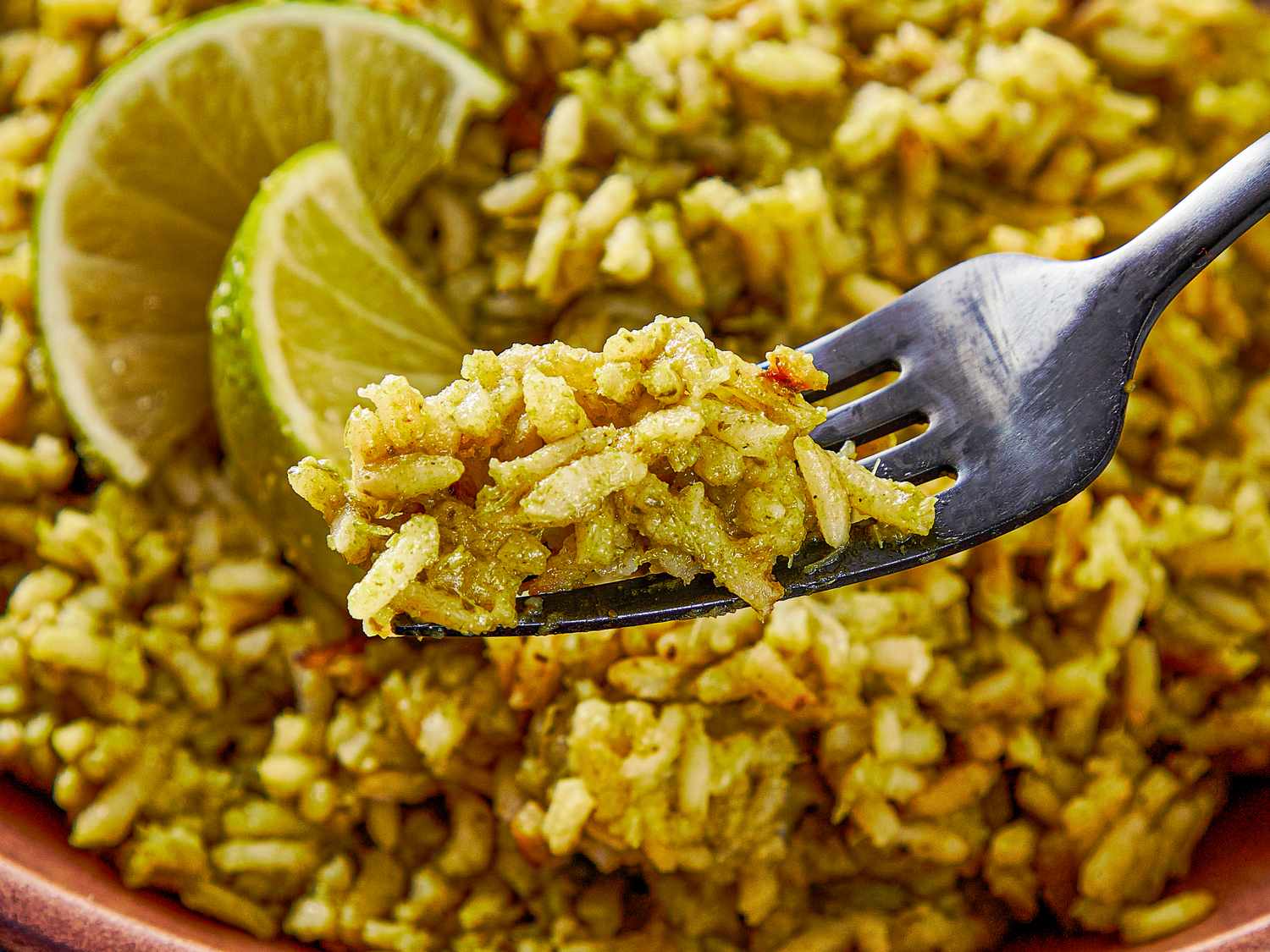
:max_bytes(150000):strip_icc():format(jpeg)/20251203-SEA-ArrozVerde-LorenaMasso-HERO-7d8a4aa5f9504d55b28d4f7daf056a19.jpg)
Why It Works
- Gently cooking the garlic, onion, and serranos in oil confit-style softens their sharpness. It also infuses the fat with heat and aromatic depth, building a flavorful backbone for the rice.
- Frying the uncooked rice grains in the infused oil before adding liquid develops a warm, toasty flavor and helps the grains stay separate.
- Blending epazote, cilantro, and parsley creates a bright, layered herb flavor that’s both fresh and earthy.
When most people think of Mexican rice, their minds go straight to arroz rojo, the beloved red tomato-tinged version that appears alongside dishes like enchiladas and pollo asado. Arroz verde, green rice—its verdant, slightly more mysterious cousin—often flies under the radar. Traditionally, its color and flavor come from green chiles like poblanos or jalapeños, green herbs, and/or leafy greens like spinach, but it’s a wonderfully flexible dish that happily accepts whatever flavorful greenery is in your crisper drawer. Mint, dill, basil, scallions—anything aromatic, fresh, or floppy from last week’s farmers market haul has potential.
In my recipe for arroz verde below, I lean into equal parts cilantro, parsley, and epazote, which together create a flavor profile that’s fresh, grassy, and faintly earthy. Serranos bring a cleaner, sharper heat than the milder poblanos or jalapeños often used in arroz verde, but they stop well short of overpowering the rest of the meal. A squeeze of lime at the table brightens everything, giving the rice a citrusy finish that keeps each bite lively.
Serious Eats / Lorena Masso
Building Rich Flavor in the Rice
A key step in both red and green Mexican rice is frying the uncooked grains in oil. This does two things: It seasons the rice with a warm, toasty foundation and helps prevent the dreaded mush factor. In this green version, I take the flavor-building a step further by first slowly cooking onion, garlic, and serranos in oil. This low-and-slow confit method mellows their raw edge, transforming the onion and garlic into something sweet and jammy while letting the chiles infuse the oil with a fragrant heat. Once softened, they’re blended with the fresh herbs and a splash of broth to create an electric-green purée that serves as the flavorful base of the dish.
Putting It All Together
The rice is fried directly in that now-aromatic oil until the grains turn crisp and lightly golden. Continuous stirring while toasting the rice is essential to coax each grain into its best self and to avoid clumping and scorching. After the rice is toasted, the blended herb mixture is added to it. When the green purée hits the pan, move quickly: You want to quickly stir and coat the rice evenly without over-cooking the purée, which can dull its brightness and mute the herbal freshness.
Serious Eats / Lorena Masso
From here, the ratio of rice to liquid is what ensures fluffy, fully cooked grains. This recipe uses a 1:1.5 ratio (1 cup rice to 1 1/2 cups total liquid), which helps the rice absorb flavor without becoming waterlogged. Once the mixture comes to a simmer and the rice has absorbed most of the liquid, the most important step is letting it rest off the heat. Leaving the rice covered for 10 to 20 minutes allows residual steam to gently and evenly finish cooking the grains. Resist the temptation to peek: You want every bit of trapped steam to absorb into the rice.
Arroz verde is an adaptable side dish. Its mild herbal flavor pairs well with delicate foods such as seafood or braised vegetables, but I don’t limit it to Mexican menus. It pairs just as well with curries, stir-fried meats, roasted chicken, and saucy braises. Wherever you’d typically reach for plain rice, this bright, green, aromatic version adds a little more personality.
