


:max_bytes(150000):strip_icc():format(jpeg)/20251118-SEA-PerfectRoastChicken-AmandaSuarez-HERO-63a20bf4b1414e31a30cb9f27dda7ff7.jpg)
Why It Works
- Patting the chicken dry, then oiling and salting it, helps the skin crisp and brown more deeply in the oven.
- Starting the chicken in a cold oven and then bringing both up to high heat together helps dry the skin even more before the intense heat deeply roasts it.
- Judging doneness with an instant-read thermometer ensures your chicken comes out juicy, tender, and fully cooked.
There is more than one path to the very best roast chicken. You can dry-brine it, and then spatchcock it or truss it and sear the legs before roasting. Each of those helps achieve the gold standard of roast chicken, one that makes even the ghost of Paul Bocuse beam with pride.
Now I’ll let you in on a little secret: I rarely do any of that.
Like many people, I have a busy life. I have a family to feed, and I don’t have time to optimize every last dinner that hits my table. The “best” roast chicken is rarely in my sights, and I’m OK with that. The truth is that, for all the attention that’s ever been given to roasting a perfect chicken, it’s actually one of the easiest recipes to pull off with almost no effort. Unlike the practiced technique required for a proper French omelette or the layered complexity of a great braise like beef bourguignon, you can get 95% of the way to roast-chicken excellence by doing little more than salting the bird and throwing it in the oven. The result may not reach the level of a 3-star restaurant, but it’ll come surprisingly close.
Serious Eats / Amanda Suarez
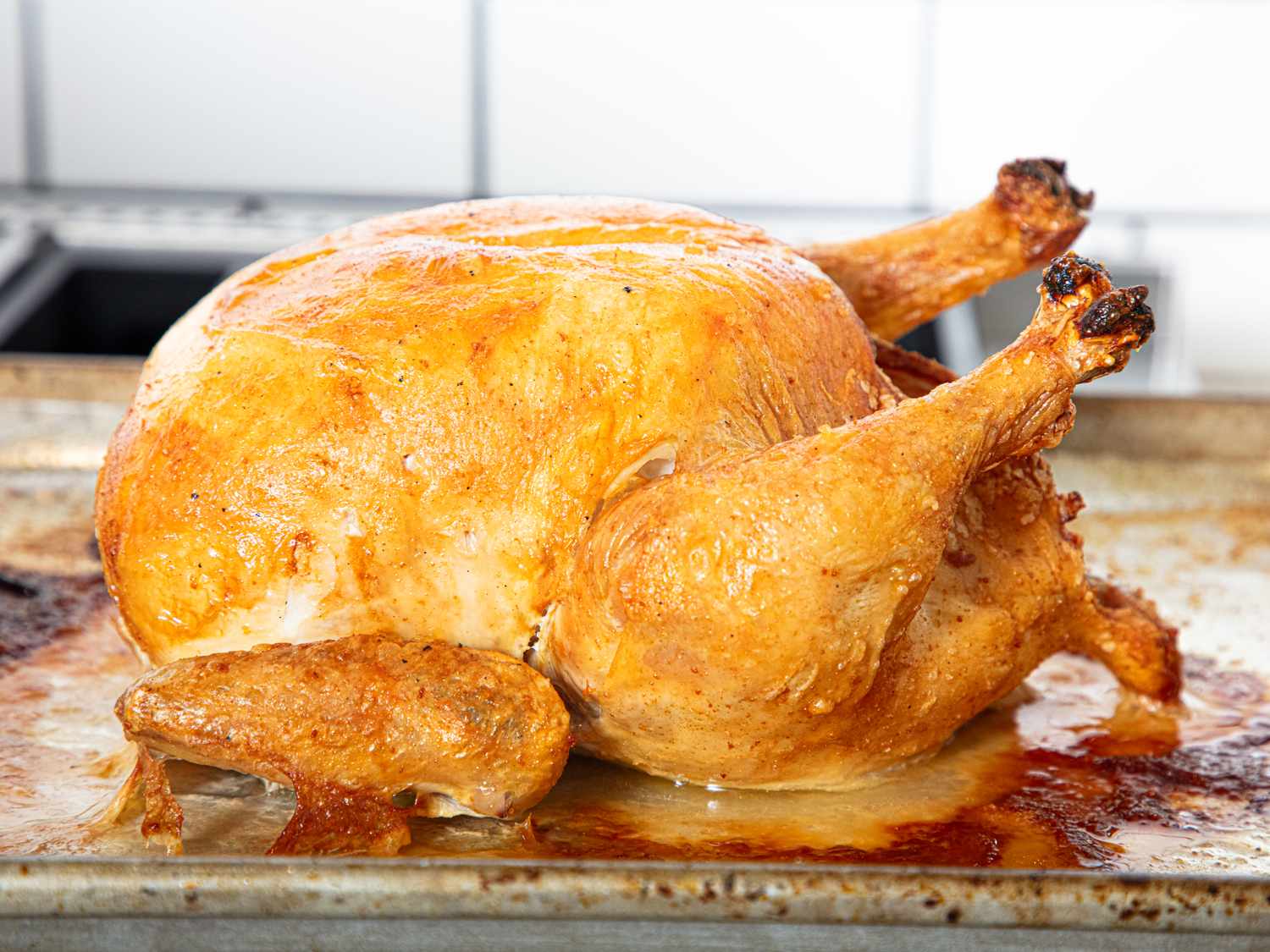
Most of the time, when I roast a chicken at home, I pat the bird dry, rub it with some oil, salt it all over inside and out, and pop it in a cold oven. Then I switch the heat on, usually to a feisty 425°F, and let it ride until it’s done (I often do this on a rimmed quarter-sheet tray in my countertop toaster oven, which heats more quickly than a standard oven.) It’s always a marvel—the skin golden and crisp, the meat juicy and flavorful. It’s one of the easiest, best dinners.
The method is so simple it hardly requires a recipe, but I have one below in case it’s helpful. What’s really important, though, is understanding a few key cooking concepts that ensure success:
- The skin needs to be dry. Water has a relatively low boiling point of 212°F, and it requires significant energy to cook off. If you put a wet bird in the oven, you will waste valuable time simply evaporating surface moisture, all while delaying the browning and crisping reactions that only really start once the chicken skin is dehydrated. By patting the bird dry with paper towels, you cut short that drying time, leading to a bird that’s more deeply golden at the end.
- The skin needs to be oiled. There are a couple of reasons to rub the bird down with oil. First, because you just dried the skin, salt will cling to it less well. A sheen of fat helps the salt adhere. On top of that, the oil helps transfer heat from the oven to the skin, creating a micro-frying environment. In my turkey skin-treatment tests, the advantage of a fat rubdown was clear; the same applies to chicken.
- You must salt it all over. Here’s something I wish more home cooks really took to heart: If you salt an ingredient properly, you really don’t need to add anything else. Salt is that important. Additional flavorings can make a dish much more interesting, but salt alone is sufficient to achieve deliciousness. If you season the bird all over, inside and out, with enough—but not too much—salt, you have done the most crucial thing as far as flavor is concerned. Everything after that is just gravy.
- Cold start for the win. Breaking with the common practice of preheating the oven, I put my chicken in a cold oven and let them heat up together. It’s more efficient because you don’t have to wait for the oven to warm up before cooking the chicken. Second, it gives you some extra skin-drying time at a lower heat, which can only help with skin crisping and browning. Third, it slightly mimics the reverse sear, in which a roast starts at a lower temperature to cook more gently and evenly, then is finished at a higher temperature to get a good sear on the exterior. Depending on how quickly your oven heats, you may not notice much difference between starting hot and cold, but at the very least, it won’t do any harm, and if anything, it’s helping a bit. (See Leah’s article about searing chicken for another ode to cold starting.)
- High heat or bust. It’s fine to start the chicken in a cold oven, but you want it to spend most of its time at high heat, somewhere around 425°F. Chickens aren’t that big, and they don’t take long to cook through, which means you don’t have a lot of time to get the coveted golden, crispy skin. If you roast at a lower temperature, you risk a pale, flabby bird; if you extend the cooking time to deepen the color, you can overcook the meat. With high heat, you’re more likely to get perfect meat and properly roasted skin at the same time.
- Use a thermometer. Getting a faultless chicken requires taking it out of the oven at the right time, and the best way to do that is with a good thermometer. There’s a lot of confusion out there about what temperature you need to cook chicken to, with many insisting that the official USDA number of 165°F is necessary for safe, salmonella-free meat. But the truth is more complicated than that. The official guidance is designed to avoid any error—at 165°F, it’s instant death for harmful bacteria. But you can safely cook chicken to a lower internal temperature, like 150°F, as long as all of the meat remains at or above that temperature for at least a few minutes. That’s more or less guaranteed to happen with a whole roast chicken, because once it’s reached 150°F at its coolest part, it will have enough retained heat throughout to not only hold that temperature but climb even higher via carryover cooking before it starts to cool down. That guarantees you far juicier and more tender meat with no increased risk of foodborne illness. The only catch: You need a thermometer to be certain you’ve done it correctly.
Serious Eats / Amanda Suarez
If you do the above, the chicken will take care of the rest. Its skin and fat will self-baste as it roasts, reaching that deep, roasted color and crisp texture we all desire. The un-trussed legs will flop open to the sides, allowing heat to penetrate more quickly and cook the dark meat more thoroughly, so it’s as delicious as can be. The thicker breast will come out plump, tender, and glistening with juices. And you will have done all of that with hardly any effort. There’s real beauty in that. Some might even call it perfection.
