


:max_bytes(150000):strip_icc():format(jpeg)/20251118-SEA-SilikPak-DeliStudios-HERO-4df09cf13e7b43918be7820836d62080.jpg)
Why It Works
- Cooling toasted pepitas before grinding them ensures the dip has the proper sandy texture rather than turning into a sticky paste.
- Charring the vegetables in a cast iron pan and leaving the tomato skins on develops the deep, smoky flavor that defines this dip.
Sikil pak is a pre-Hispanic Maya dish whose name says it all—in Maya t’an (the Yucatec Maya language), sikil means pumpkin seed, and p’aak means tomato. Those two ingredients are the core of this deeply flavorful dip, which has been part of Yucatán’s culinary landscape for centuries. Originally made from ingredients grown in the milpa (the traditional Maya agricultural system), sikil pak has long been a dish of ceremony and sustenance. It often appears during Hanal Pixán, the Maya celebration of life and death, known elsewhere in Mexico as Día de los Muertos.
Over time, cooks have added aromatics like garlic and cilantro to the dip, but the essence remains the same base of earthy, nutty flavor of toasted pepitas paired with the sweet smokiness of roasted tomatoes. Today, sikil pak has traveled far beyond the Yucatán, appearing on tables across Mexico and abroad as a crowd-pleasing dip that’s as at home at a cookout or dinner party as it is at a traditional feast. It’s make-ahead friendly, keeps beautifully in the fridge, and tends to disappear just as fast as you can set it out. In this version, a cast iron skillet steps in for a traditional comal, offering a home-friendly way to toast and char to provide the same balance of heat and flavor.
Serious Eats / Deli Studios
The Technique
The key to making sikil pak is heat management. You’ll start by toasting the pepitas until golden, which releases their oils just enough to intensify their flavor. Then, while you prepare the vegetables, you’ll let the pepitas cool before grinding them. If you don’t let the pepitas cool, the mixture can turn into a sticky paste rather than having the fine, sandy texture that defines this dish.
Every vegetable—tomato, shallot, garlic, and habanero—cooks in its skin, roasting until tender inside and blistered outside. To achieve this, you’ll cook the vegetables in a cast iron skillet on the stovetop over medium to medium-low heat, adjusting the heat as you go and flipping occasionally so everything softens at the same pace it chars. If your burner runs hot, the process may be quicker than the suggested time; if it’s gentle, let it go longer. The goal is vegetables that yield slightly when squeezed with tongs—tender and almost collapsing. While white or green onions are more traditional, I prefer the gentle sweetness that shallots bring to the dip.
Serious Eats / Deli Studios
Once the roasted vegetables have cooled, they’re peeled and mashed with the toasted pepitas into a rustic, creamy dip. The traditional tool for this is a molcajete, whose wide bowl and coarse volcanic stone surface provide traction that grips and breaks down the ingredients, producing a smooth yet textured result that’s difficult to replicate with modern tools. A sturdy mortar and pestle comes close—it offers reasonable control and similar grinding action. A food processor or blender will certainly work in a pinch, but expect a slightly grittier, looser texture; sikil pak should never be completely smooth, but the best version of it has a subtle creaminess that only hand-grinding delivers.
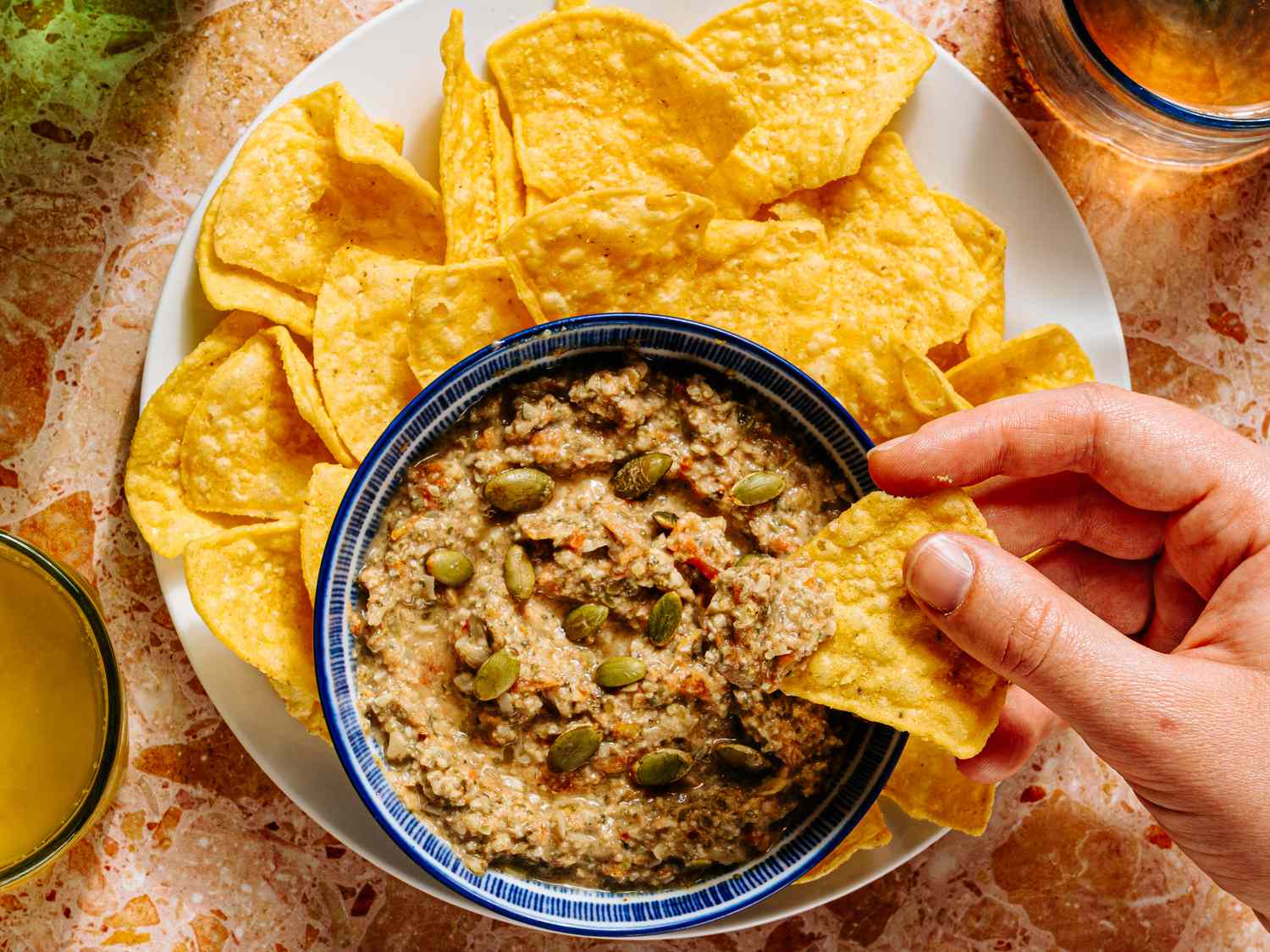
The finished dip should be thick but loose enough to scoop, with visible flecks of toasted pepitas and bits of charred tomato throughout. Think rustic guacamole, with a texture that’s just rough enough to remind you it was made by hand.
Serious Eats / Deli Studios
Serving Suggestions
Traditionally, sikil pak was served at Maya gatherings alongside tortillas hechas a mano (handmade corn tortillas) or as part of ceremonial meals during Hanal Pixán, where it symbolized abundance and the connection between the earth and the harvest. In homes across the Yucatán today, it often appears as a casual snack or appetizer—spooned into a communal bowl and enjoyed with fresh tortillas, crisp radish slices, or cucumber spears.
Sikil pak has become a beloved dip throughout Mexico and beyond, where it’s served much like guacamole—set out with tortilla chips or vegetable sticks for dipping. Its rich, nutty depth and smoky tomato flavor also make it a natural companion to grilled meats and roasted vegetables, or as a spread for tacos or sandwiches.
