



Social media shapes culture and commerce across global markets, and the UK is no different. As Sprout Social’s UK Index shows, 91% of consumers in the UK keep up with trends and cultural moments through social. And it’s where they connect with brands and discover buying inspiration.
In this post, we bring you the latest UK social media statistics defining the landscape. Use these insights to see how UK consumers are using social media and what they expect from brands. Let’s take a look.
The 2026 UK social media landscape: A shift toward “social search”
Algorithms have always driven discoverability on social media. But social search is having its moment in the UK.
People are no longer solely looking to traditional search engines for information. Ofcom’s Adults’ Media Use and Attitudes Report found that 43% of UK consumers use social media platforms to search online at least once a day. And 34% use video-sharing platforms like TikTok to search daily.
And younger UK users were more likely than average to use social search daily.
This aligns with Sprout’s Q2 2025 Pulse Survey, which found that Gen Z users were more likely to use social search over traditional search engines. 41% say that social is the first place they turn to when looking for information online—whether it’s product reviews or how-to tutorials.

This shift toward social search is largely driven by a desire to get answers from real people, especially in video form. And social is where you find them.
If these UK social media trends tell us anything, it’s that brands need to optimize for social search. Using platform-specific best practices can drive discoverability and get your content in front of these users.
On Instagram, for instance, using on-screen text in your Reels can improve your Instagram SEO.
| UK consumers using social media for search | 43% |
| UK consumers using video-sharing platforms for search | 31% |
| Gen Z users using social media for search | 41% |
Social commerce statistics and the UK “community economy”
- Social commerce in the UK is thriving even amid a cost-of-living crisis. An Adobe Express survey found that 29% of Brits are buying more through social media.
- Sprout Social’s UK Index also found that 35% of social users in the UK make spontaneous purchases based on social media content a few times per year. And 33.5% even make spontaneous purchases monthly.
- And there’s a clear pattern of UK consumers being swayed by their social media community, with creators and shareable content driving discovery. Community-led purchasing is huge, as user-generated content and promotions from UK influencers inspire buying decisions.
- Bazaarvoice’s Shopper Preference Report 2025 found that 30% of UK shoppers have bought a product based on recommendations from a creator.
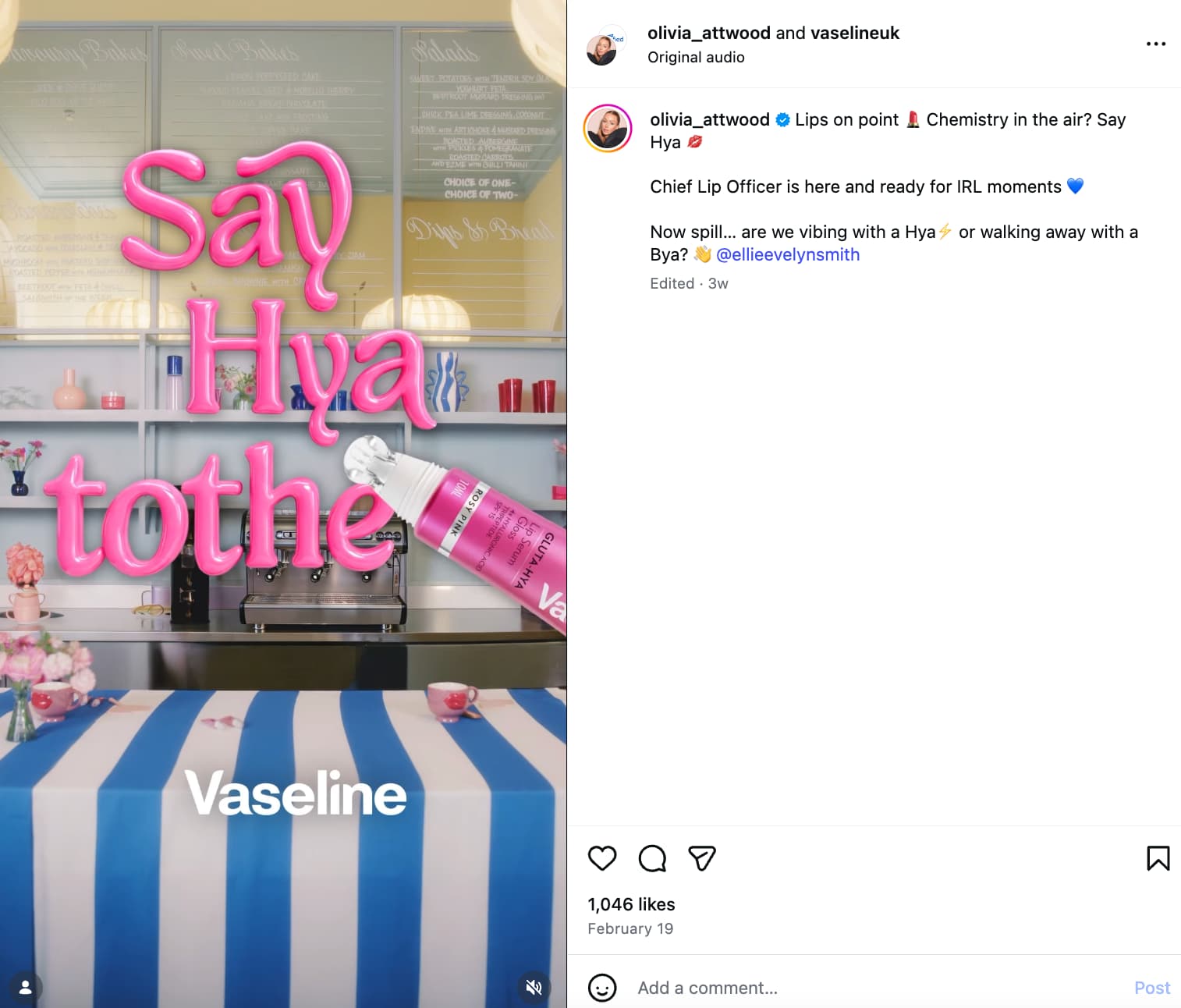
- There’s a reason major UK brands are partnering with leading influencers. Vaseline UK’s partnership with Love Island’s Olivia Attwood is one such British influencer marketing campaign example.
Source: Instagram
But people aren’t always buying immediately after discovering content through creators. The Bazaarvoice survey found that 41% of UK shoppers look for more reviews, while 37% research more before buying.
This means brands should be sharing more user-generated content to build trust with social media users. Video reviews as Reels, customer photos as Stories and written reviews converted into graphics are just a few examples of what you can do.
Platform deep-dives: UK benchmarks and performance
TikTok marketing statistics: The UK’s new primary search and discovery engine
The latest UK TikTok statistics show that UK users are spending an average of almost 50 hours per month on the platform—well above the global average of 34 hours. This higher time spent on TikTok coincides with the Ofcom survey, which found that users are spending extended periods scrolling through videos on the app.
And with more time spent scrolling through their TikTok Feeds, UK consumers are using it as a primary discovery engine. TikTok for social search is especially popular among younger users, with younger participants in the Ofcom survey using it to seek out targeted information.
So brands can improve discoverability by applying TikTok SEO best practices like creating videos based on trending challenges or using keywords in their captions.
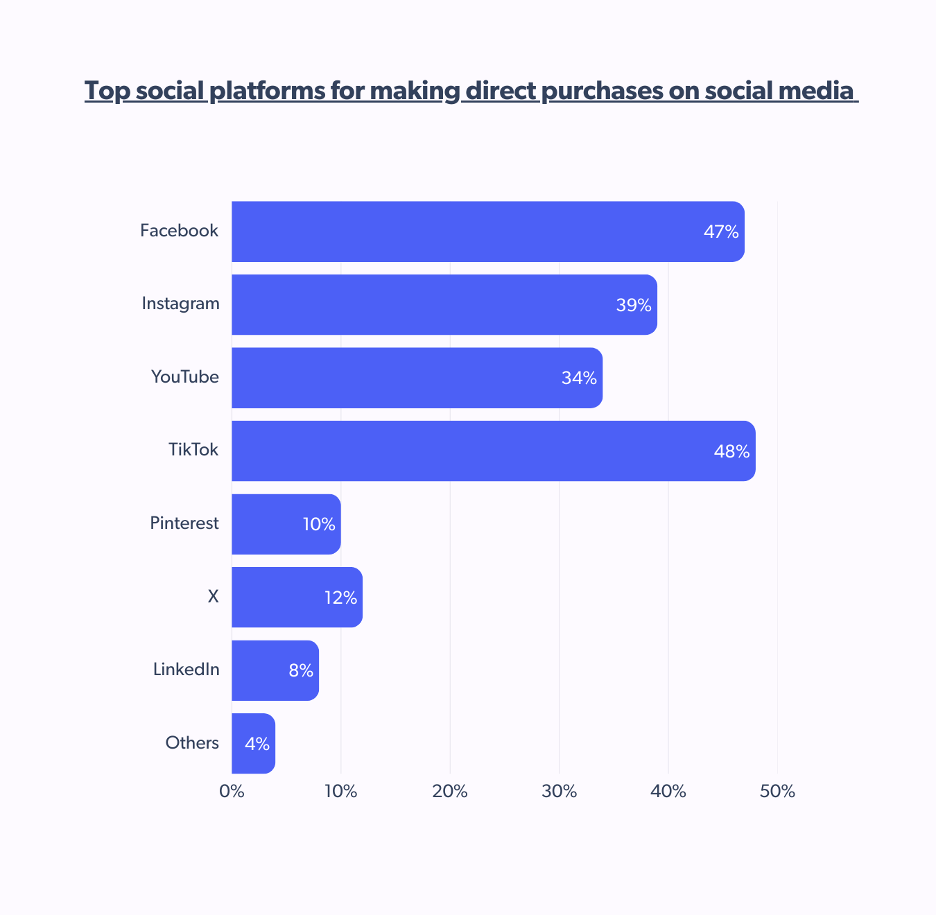
TikTok is also a key driver of social commerce. According to the Bazaarvoice survey, it’s the top platform for making direct purchases on social media, with 48% of UK consumers using it.
Source: Bazaarvoice
Instagram marketing statistics: Balancing aesthetic storytelling with “Thread-led” community
Instagram’s popularity with UK users isn’t dying down any time soon. Based on the latest UK Instagram stats, they’re spending an average of 53 minutes per day on the platform.
With Instagram being a visual-first platform, aesthetics still play an important role in engaging audiences on the platform. And the rise of short-form video means Reels takes centre stage for users and algorithms alike. From entertaining visuals to bite-sized information, this content format is a great way to attract and engage a wide audience.
But Reels isn’t the only type of content Instagram prioritizes. Trending discussions on Threads are also showing up for users on Instagram. So building an engaged Threads community could boost brand presence across the two platforms.
And according to Ofcom’s Online Nations Report 2025, 4.3 million online adults in the UK visited Threads in May 2025. Although it may not be as big as the major platforms, it still has a solid standing among UK consumers.
With Threads emphasizing community and conversation, brands need to post regularly and engage with users to build a solid presence. Posting at the right time is a great way to gain traction during the first few minutes, which is key to maximizing visibility and engagement.
Here’s what we found in our analysis of the best times to post on social media in the UK:
- Best day to post: Thursday
- Best times to post: Typically from 5 p.m. to 9 p.m. on weekdays
Using a tool like Sprout’s Threads integration can streamline the process of managing your content and engagement. You could use the publishing tool to plan and schedule your posts to go out at the best times. And the Smart Inbox lets you keep track of and respond to comments in one place.
LinkedIn marketing statistics: The UK’s hub for high-value B2B authority
LinkedIn continues to be a mainstay in B2B marketing, serving as the top platform for B2B brands to build authority. 76% of B2B marketers say it’s the most effective channel for publishing thought leadership content.
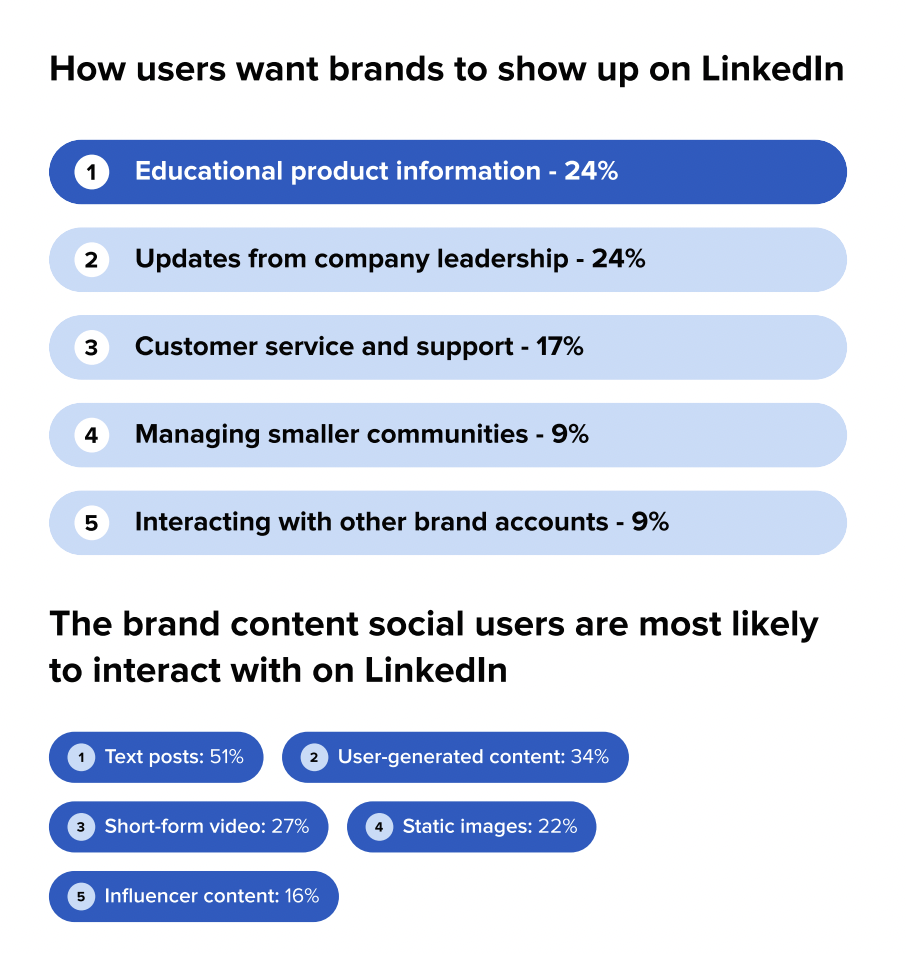
This makes sense because users look to the platform for product education and company leadership updates. Sprout’s 2026 Social Media Content Strategy Report found that these were the top ways users want brands to show up on LinkedIn.
And UK companies targeting a B2B audience need to pay attention because the platform’s reach in the UK market is expanding. According to Digital 2026: The United Kingdom, LinkedIn saw a 2.1% increase in UK ad audiences in Q3 of 2025. This makes it the #2 social platform in terms of audience growth, after Reddit.
B2B companies in the UK can use LinkedIn to build authority through high-value thought leadership pieces that educate audiences about their industry and products. Company leaders should also maintain a presence on the platform to humanise the brand and build a personal connection with their audience.
WhatsApp marketing statistics: the UK’s shift to “dark social” and private care
WhatsApp’s popularity with UK audiences is undeniable, with its reach extending to 92% of UK online adult smartphone users in May 2025. Based on this data from the Online Nations Report 2025, it’s the most-visited smartphone app in the UK.
It’s also the most popular app for messaging and calling, according to the Adults’ Media Use and Attitudes Report. 82% of online adults use the app for these purposes.
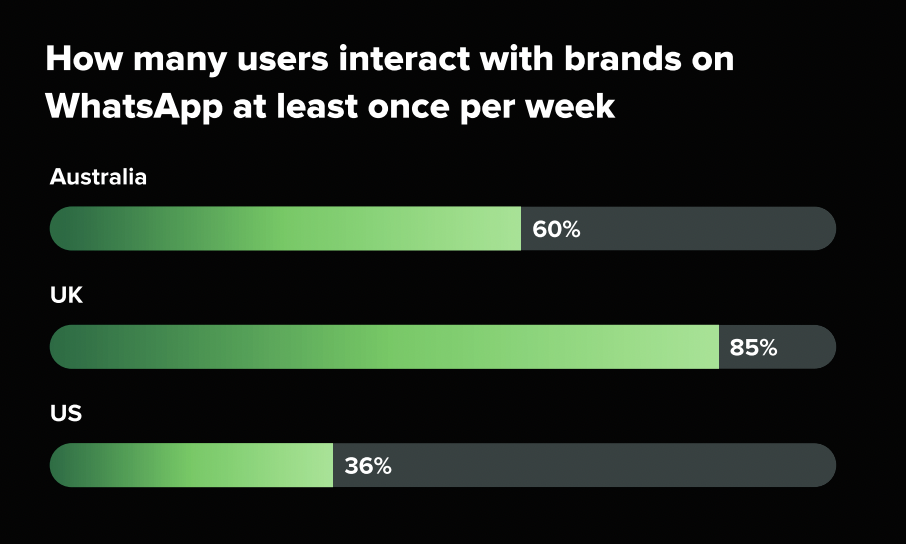
Based on the 2026 Social Media Content Strategy Report, 85% of UK consumers interact with brands on the app at least once a week. This puts it far ahead of other markets like Australia and the US, where consumers are less likely to use WhatsApp to communicate with brands.
In fact, 31% of UK consumers even contact brands multiple times a day on the app.
This behaviour is largely influenced by the private and personalised nature of communications on the app. Since consumers can receive private care on WhatsApp, they’re likely to use it to ask questions about an order they placed or about a company’s products or services. No wonder 40% of users want companies to show up on the app to provide customer service and support.
With these numbers considered, UK companies can build WhatsApp marketing strategies revolving around brand-to-consumer messaging.
Reddit marketing statistics: The UK’s source of “vetted truth” and niche advice
Reddit’s popularity with UK audiences is growing. As the Digital 2026 report shows, it had the biggest UK ad audience growth among social media platforms. It added 2 million users in Q3 of 2025—a 4.6% quarter-on-quarter increase.
For UK brands, this means it’s high time to build a solid Reddit marketing strategy.
But this is easier said than done because the landscape is so different from other social media platforms. Reddit is a place where users go for advice on niche topics, whether it’s about baby carrier brands for new parents or tips to decorate rented flats.
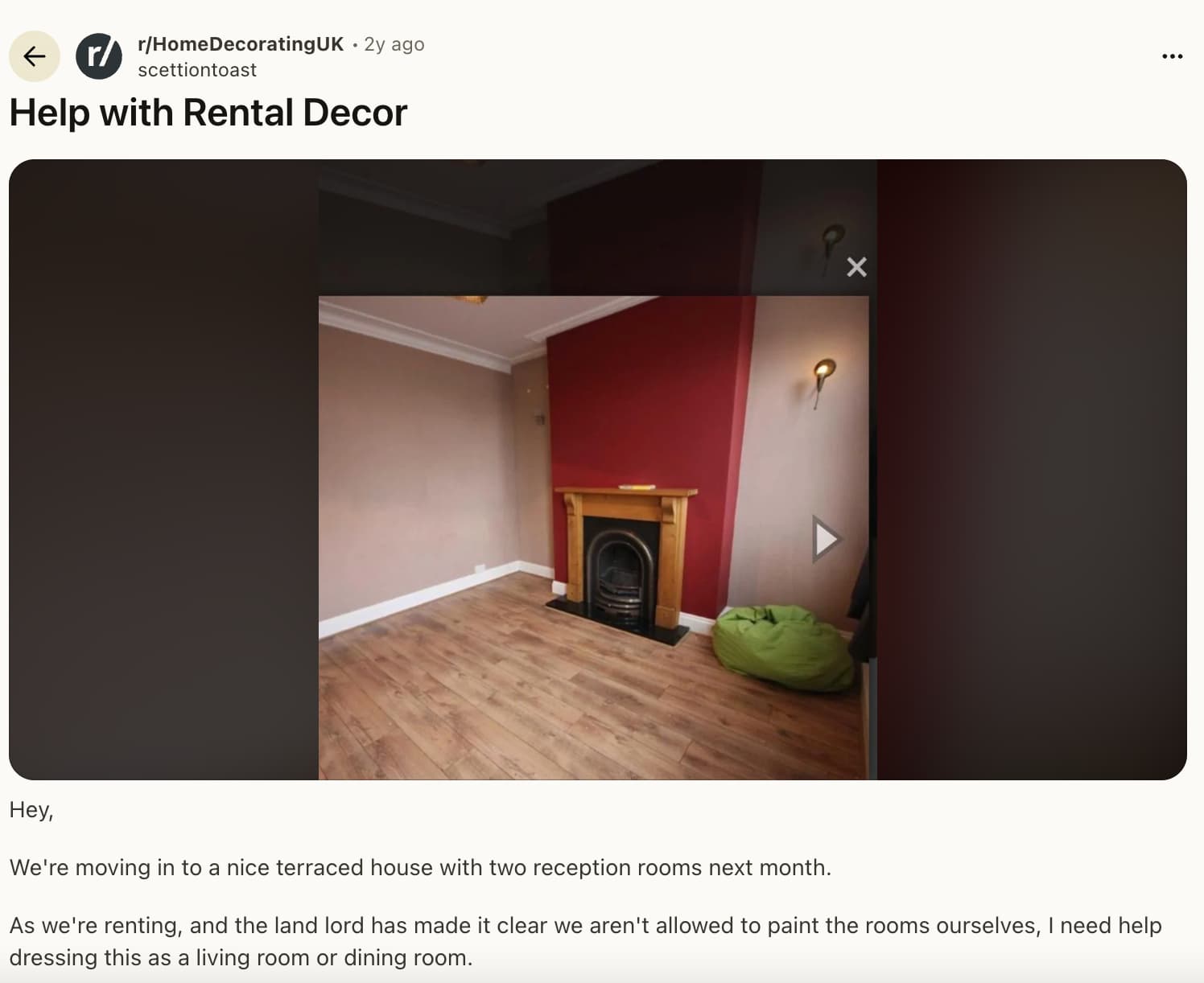
Source: Reddit
And the platform thrives on authenticity, with real users sharing honest opinions.
Brands can use Reddit to tap into relevant niche communities and drive organic engagement through branded subreddits. Ask Me Anything sessions hosted by company leaders are also a great way to build your brand presence on the platform.
The ROI of social care: UK customer service benchmarks
Social media influences buying decisions not just because it drives discovery. How brands show up and provide customer service through social media channels can make all the difference. Here are some UK industry standards on social media customer service to prove it:
- According to the 2026 Social Media Content Strategy Report, 71% of social media users will switch brands if a brand doesn’t respond to customer service questions on social media.
- According to eDesk, UK consumers expect brands to respond quickly when they reach out with a complaint or question on social media. Over one-third expect brands to respond in under 30 minutes. 31% expect brands to respond in under two hours.
- 71% of UK consumers would even abandon a brand that responds slowly on social media.
- 88% are less likely to buy from a brand that doesn’t respond to social media complaints.
AI and automation: How UK marketers are scaling intelligence
Marketers in the UK are feeling the effects of the AI boom and ramping up their use accordingly. HubSpot found that 84% of UK marketers are now using AI tools daily.
With AI helping them speed up various tasks, these marketers can save time and effectively scale their social media marketing efforts. In fact, they’ve been able to save at least one hour a day on tasks like:
- Data analysis and reporting (86%)
- Media content creation (76%)
- Automating brand communications (70%)
- Market research (67%)
From AI-driven creative to social listening, there are various ways UK marketers can use AI in their workflows to maximize social media ROI. For example, AI tools can help them brainstorm ideas at scale, making it easier to plan for high-volume publishing. In fact, 42% of UK marketers are using AI to brainstorm ideas and 76% see a positive ROI from AI.
AI-powered social listening can also help marketers quickly sift through large volumes of conversational data to identify the most relevant insights. This streamlines the research process and makes it easy to narrow down the social listening metrics that matter.
Turning UK social data into a competitive advantage
As the UK social media landscape continues to evolve, the brands that stand out are the ones that adapt quickly. And paying attention to social media marketing statistics in the UK gives you the leverage you need to do just that.
With Sprout’s powerful analytics tools and insightful data reports, you get to see exactly what’s going on across the industry and benchmark your performance. So you’re no longer just “watching” the data but owning it instead. This gives you the competitive edge you need to engage UK audiences based on where they are and how they show up on different platforms.
