


Brand reputation has the capacity to change quicker than ever before, and in 2026, there are more potential risks than ever before. Brand safety has traditionally been relegated to protecting brands from advertising on or near inappropriate content online, but it also now has to encompass monitoring your organic content and what people are saying about your brand on social, and scoping out other security threats.
Where once there were a limited number of news sources to monitor, this has ballooned and fragmented. There are now six networks where consumers get news at least once a week, and more conversations to be aware of than ever before across platforms. There are decentralized communities, content automation and platform rule volatility, plus the new threat of generative AI creating almost anything at the click of a button.
Keep reading for actionable ways you can use brand safety tools and examples of effective ones that will help you minimize risk on social.
What are brand safety tools?
Brand safety tools were traditionally automated solutions that protected your brand from threats on social media and other digital channels like your ads appearing alongside distasteful content. However, this definition has broadened to include tools that monitor online conversations, ensure brand-safe partnerships and recognize where potential threats exist that could negatively impact your brand.
With this intel on hand, you are empowered to respond to reputational risks before they become a full-blown crisis, and expand the breadth of your corporate communications strategy.
6 key ways to use brand safety tools to protect your reputation
From advertising safeguards to real-time risk detection, here are five ways you can use brand safety tools to protect your brand’s reputation online.
Platform-level control and advertising safeguards
Your first line of defense against your branded ads appearing alongside offensive content includes the in-platform tools that major social networks have. Factor them into your social media advertising strategy to minimize risk and maximize the impact of your campaigns.
Meta platforms: Meta offers several brand safety controls that work across Facebook, Instagram and Messenger. These features allow you to choose the level of control over where your ad appears. Placements can be restricted by content topic, format and source.
X: X’s brand safety tools offer both technical and general advice on how to keep your brand safe on the network. These features allow you to keep X a safe place for your brand and community by offering keyword blocking and sensitivity settings, among other controls.
YouTube: YouTube’s brand safety features are consistent with those available through Google search and display ads.
TikTok: TikTok launched its Brand Safety Center to provide marketers with up-to-date news and recommendations on brand suitability within the network.
These network-provided safety tools help stop brand advertisements from appearing next to sensitive content, but it’s not all about paid any more.
Social Listening for real-time risk detection
To protect your brand’s reputation, it’s important to be aware of the full picture when it comes to conversation around your brand. This goes far beyond comments that mention your brand directly or on your owned posts, and extends into the broader ecosystem within which your brand exists.
For example, if you’re a consumer packaged goods (CPG) brand, you’ll want to be aware of conversations about your brand, whether it’s about inflation or a narrower topic such as packaging sustainability. It’s crucial to monitor all of these adjacent topics as brands can be brought into these conversations, so understanding how that ecosystem works and any developing narratives is key.
Sprout Listening can show you key metrics when it comes to detecting risks. For example, track off-brand hashtags to see where risk emerges, or have a topic monitoring search for one of the scenarios above to see if there is any message spike in topics relevant to your brand.
If there are, you can then use sentiment analysis to discover what people are saying about any given incident, and whether that conversation is positive or negative so that you are armed with context when deciding to respond.
In conjunction with this analysis, NewsWhip by Sprout Social provides a layer of predictive intelligence on media coverage and social posts, identifying the narratives that are emerging across the social web to enable your team to make informed decisions about response quickly.
With real-time risk detection implemented, escalations and responses happen faster, protecting your brand equity from external threats.
Message monitoring and crisis triggers
Dashboard-level analysis is useful, but realistically, it’s impossible to monitor a dashboard all day, every day. That’s why automation needs to be a crucial part of brand safety.
Social inboxes are a more direct signal for measuring brand health. For the most part, an average volume of messages means things are business as usual. But an unexpected spike can be cause for concern. It could indicate a PR disaster is on the horizon or has already arrived. To monitor this, you can use tools such as Message Spike Alert notifications connected to Sprout’s Smart Inbox. When incoming messages across your social platforms exceed the hourly average, you immediately get email or mobile push notifications. Plus, you can customize the tool’s sensitivity settings to ensure the protocol is appropriate for your team.
Data security & regulatory compliance
Some brand risks stray into legal territory. For brands operating in regulated industries, such as healthcare or finance, there are strict rules when it comes to data privacy and the information that is put on social media.
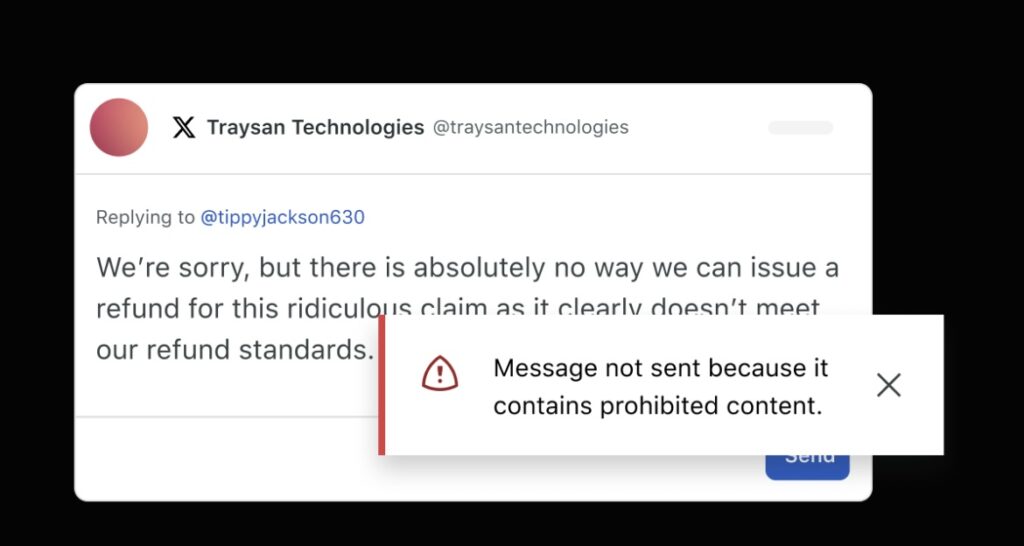
Tools such as Guardian by Sprout Social add an extra layer of security on top of your normal efforts if you work in a regulated industry. Guardian enables you to control both input and output, including masking sensitive data automatically, securing forms and blocking keywords.
This gives you the ability to engage effectively while ensuring compliance, protecting sensitive data and maintaining brand integrity. This helps you retain trust with your customers by demonstrating a commitment to their security.
Influencer and creator safety solutions
Influencers are the new face of marketing for many brands, with the authenticity and loyal audiences they bring proven to be a valuable dovetail with more traditional marketing methods. According to our 2026 Social Media Content Strategy Report, creator content is the third-most cited content that marketers plan to prioritize in 2026.
But with that authenticity comes risk. They are not your brand’s employees—that’s part of the value. They have their own audiences, a history of online comments and values of their own.
Before working with influencers and creators, it’s crucial to vet them, weigh up the risks and build customizable safety reports that help you align creators with your brand’s values. For example, Sprout Social Influencer Marketing automatically scans a creator’s past content for “red flags” like adult content, gambling or political controversy.
When you ensure that any influencers you work with are brand safe, you’re reducing the risk your brand will be pulled into any unsavory conversations or situations started by people outside of your organization.
Employee advocacy and internal safety gates
When employees share brand content, they amplify your reach and give you a powerful endorsement. However, even the most well-meaning employees can tip public favor against you by saying the wrong thing, or even just saying the right thing at the wrong time.
With employee advocacy, you can provide your employees with pre-approved social messages to share. These help maintain a consistent brand voice and enable your employees to easily and confidently comply with your brand guidelines. You’re also able to restrict the available social networks your content can be shared on,decreasing your risk of liability even further.
Best brand safety tools to consider
Here are some of the best tools for managing brand safety that you might want to consider when planning out your strategy.
Sprout Social
Sprout Social offers a suite of AI-powered solutions for social media management and media monitoring that help you protect your brand. Our platform improves your brand safety on social with voice of the customer data, and automated tools and processes, including:
Publishing and compliance
Sprout’s messaging and approval workflows ensure that no content goes live without approval. This can include reviews by managers to any post that is set live, reviews by legal teams through a secure link (even if they don’t have a Sprout Social account) and added protections for regulated industries through Guardian.
You can also build a repository of pre-approved assets to make certain that everything posted on social media is brand-appropriate and vetted.
Monitoring & crisis management (proactive protection)
Sprout Listening and NewsWhip by Sprout Social give teams a sense of the broader landscape beyond mentions and messages. With Listening, you can monitor sentiment and spikes in interest around the web via keywords, brand hashtags and competitor mentions to gauge perception of any brand or issue.
NewsWhip offers media coverage monitoring of any topic via agentic AI as well as social media alerts to keep track of how news is spreading online. This predictive intelligence puts you ahead of any emerging narrative, and allows you to make an informed decision on whether your brand needs to be reacting to those changes in media and public interest. The Trellis monitoring agent will alert you directly to your inbox if anything changes based on your chosen keywords, brand and sensitivity thresholds.
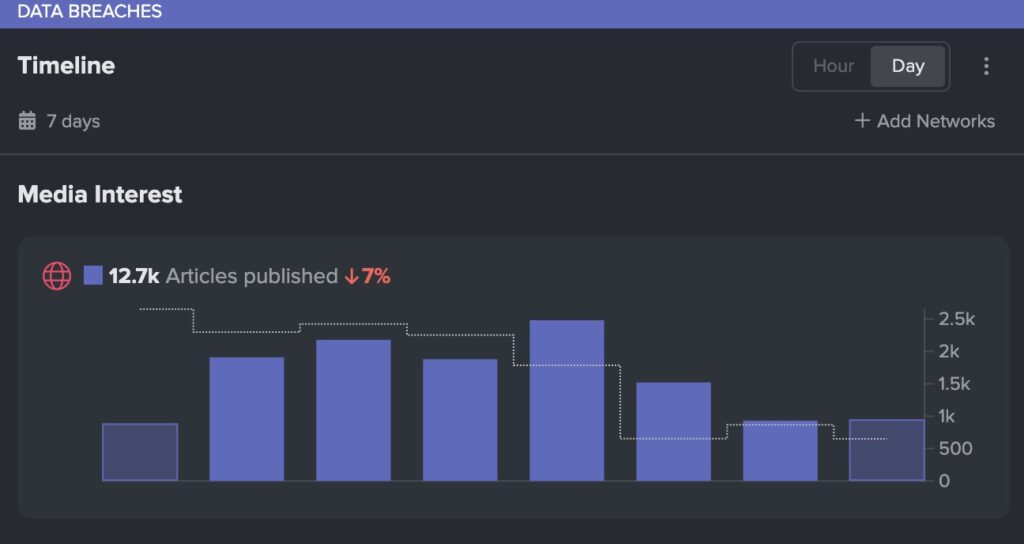
This aids with institutional awareness of moments of potential reputational damage. Many crisis teams develop benchmarks of escalation to know what level of coverage and/or social sharing requires an escalation vs. it being something that can be handled by a smaller team.
Beyond agentic monitoring, traditional social alerts also serve a similar function for you to be alerted when a topic is trending.
The Trellis AI Agent also runs within Sprout Listening, which enables users to interrogate the data directly within the dashboard through the agent for deeper analysis of the reason behind changes in the dashboard.
Influencer safety
Sprout Social Influencer Marketing offers a number of tools to manage the potential risks of working with influencers. These include a brand safety tool that scans a creator’s past content for potential issues, and customizable safety rules that use AI to suggest and flag keywords or hashtags in an influencer’s history that don’t align with your values. There are also tolerance thresholds that enable you to set specific levels for safety rules (e.g., “flag if more than three posts mention a competitor”) to balance risk with opportunity.
Community and review management
Review sites and forums are another place where a crisis can begin, as customers voice their frustrations with negative experiences. With Sprout’s community and review management tools, you can:
Monitor and respond to reviews on Google My Business, Yelp, Glassdoor, and TripAdvisor from one place to address negative feedback immediately.
See in real-time when another team member is viewing or replying to a message, preventing “double-responses” that look unprofessional.
Monitor Reddit conversations about your brand or the adjacent industry and flag any risks that emerge.
Proofpoint
Proofpoint is a digital risk protection solution that fortifies brands, data and personnel against cyber attacks across the deep and dark web. This deep analysis ensures that your brand is protected in areas that you might not otherwise think to look.
You can use it to:
- Discover brand misuse, fraudulent accounts and executive impersonations across global social platforms.
- Scan the deep and dark web for compromised credentials, leaked data and physical threats.
- Receive alerts and orchestrate automated takedowns for risky accounts, phishing domains and malicious content.
Zefr
Zefr enables digital advertising effectiveness while ensuring brand suitability and safety values are upheld within the world’s largest networks.
They specialize in AI-powered brand suitability solutions that allow you to:
- Activate and measure brand suitability using pre-impression content avoidance controls.
- Enable precise advertising activation while navigating modern, complex content risks, including misinformation, deepfakes and unregulated AI-generated media.
- Eliminate misaligned impressions from false positives and unsuitable content.
ZeroFox
ZeroFox provides protection that scours the surface, deep and dark web to identify and dismantle external threats to your brand identity and personnel.
You can use it to:
- Identify and orchestrate the takedown of fake executive profiles and brand impersonators.
- Detect phishing campaigns and spoofed domains designed to steal customer credentials.
- Monitor the dark web for leaked company data, compromised credentials or targeted chatter.
Best practices for integrating brand safety tools into team workflows
There are a lot of ways to set up successful brand safety management. Below are key steps that ensure it’s embedded in the culture of your organization rather than an afterthought.
1. Establish clear ownership and escalation paths
There are several aspects to brand safety, from ads to content publication to influencer management, and each workflow might have different ownership. That’s why there must be clear ownership and a crisis plan if something does go wrong, whether that’s looping in the comms team or sending flags to stakeholders.
2. Embed safety checkpoints into content approval workflows
There should never be a single point of failure for content publication, which is why it’s important to have approval workflows. Use tools to let managers have final sign-off on posts before they go live to make sure brand safety is front of mind. This is particularly true in regulated industries, where you might want to set up a list of banned words to ensure compliance.
3. Automate alerts and threshold triggers
Nobody has time to monitor a dashboard all day, which is where alerts come in. Make sure you’ve set up automated alerts to let you know when things change, whether that’s message volume, media coverage or brand mentions.
4. Align safety criteria across paid and organic teams
Paid and organic teams need to be working from the same criteria, so make sure that everyone across both teams is aware of safety guidelines, banned words and escalation protocols.
5. Standardize influencer and partner vetting processes
However you choose to vet the influencers you’re working with, it’s crucial the process is consistent. Develop criteria and brand values that require alignment and stick to them.
6. Document response playbooks and SLAs
The most mature teams have crisis response playbooks and escalation guides that document everything needed to respond effectively to crises or potential crises. Make sure you have one too.
7. Integrate safety metrics into performance dashboards
Don’t keep brand safety in a silo, it’s something that affects everyone. Make sure safety metrics (whether that’s ad adjacency, a reduction in crisis escalations or negative news stories) are reported alongside other performance indicators.
8. Conduct regular audits and post-incident reviews
Just as it’s good to have a plan in place in case a crisis does strike, you should always be aware of past performance to improve future performance. If you do have an incident, go back and analyze where it started, what went wrong and how your team could have responded differently.
9. Train teams continuously
The internet is always evolving. Make sure your team is aware of all the new features in your tool stack.
10. Reassess risk as platforms and culture evolve
This last point applies to the business too. New risks will emerge as technology and online culture continue to evolve. Your business needs to have the tools available to manage this new reality.
Measuring success
Brand safety self-evidently has value, and like all things that drive value for a business, it’s important to measure how the teams involved are contributing to that value.
This will depend on your organization’s priorities and whether your focus is on organic, paid or earned media, but success often involves some or all of the following:
- Declining number of unsafe ad placements
- Less time to identify a brewing crisis
- Reduction in crisis escalations due to early action
- Fewer negative news stories
- Better sentiment around campaigns
- Benchmarking the impact of brand safety tools
- Integration of safety metrics into executive dashboards
However you decide to measure it, keep it consistent and regular, with ties back to business impact to demonstrate the importance of the work to the wider team.
Brand safety in 2026 and beyond
Incorporating brand safety solutions into your workflow will strengthen your brand and prevent reputational risks from morphing into serious business damage. But it’s no longer enough to be reactive when something goes wrong.
Like the internet, the risks to your brand can be exponential, whether that’s an ad appearing next to an offensive post, negative media coverage or an influencer going against brand values. The proactive management and reporting on those risks are the only way for a brand to truly stay safe online.
Start assessing your brand safety measures and take actionable steps to improve it with our brand safety checklist.
