Key Takeaways
- CLV measures the total revenue a customer generates over their entire relationship with your business.
- Tracking CLV helps you measure where your growth is sustainable, not just whether your last campaign worked.
- Use the basic CLV formula to get a usable baseline fast: CLV = Average Purchase Value × Purchase Frequency × Customer Lifespan.
- CLV delivers greater value when combined with other factors. For example, comparing CLV to customer acquisition cost (CAC) can give you a clearer picture of business health.
- One of the fastest ways to grow CLV is retention-focused marketing. That means building more engagement points through tactics like targeted segmentation, subscription incentives, and referral programs.
Customer lifetime value (CLV) is the revenue a customer is likely to generate over their entire relationship with your business. In marketing, it’s one of the few numbers that tells you whether your growth is sustainable.
A campaign can hit its numbers and still lose money, but if you’re only measuring clicks or first purchases, you won’t see it happening.
CLV forces you to ask better questions:
- Are you attracting the right customers?
- Are you keeping them?
- Are you increasing repeat purchases and profit margins over time?
Here’s the simplest way to think about it. If your average customer sticks around for three years and buys four times a year, your marketing should be built around keeping that relationship going, not just getting the first sale.
Smile.io research shows that the longer customers shop with a brand, the more they spend per order. In beauty and cosmetics alone, shoppers buy 45% more per order after three years than they did at the start of the relationship.
In this post, we’ll break down what CLV means, how to calculate it, what impacts it most, and how you can use it to your advantage.
One of the fastest ways to grow CLV is retention-focused marketing. That means building more engagement points through tactics like targeted segmentation, subscription incentives, and referral programs.
What Is CLV?
CLV is the total revenue you can expect from a customer over the course of their relationship with your brand.
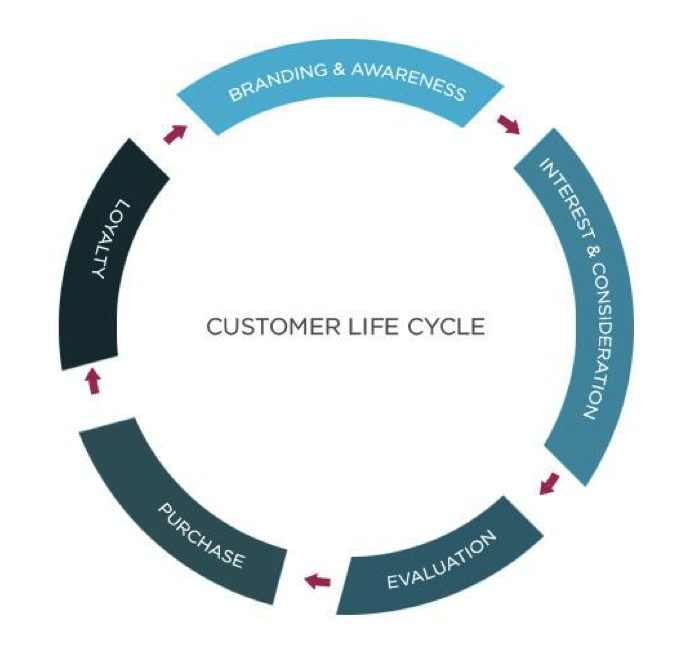
That’s why CLV is a core marketing metric. It connects top-of-funnel work (such as ads, content, offers, and landing pages) to what really drives sustainable growth, which is retention and expansion. But only 37 percent of organizations are using CLV strategically, according to Forrester research. This means most marketers are missing out on its value.
CLV Is a Long-Term Growth Metric, Not a Vanity Metric
A campaign can “win” on clicks or first purchases and still be a bad business decision.
For example, that campaign may lead to:
- Discount buyers who disappear after the promo
- Cheap leads that never become repeat customers
- One-time purchases with no follow-up behavior
CLV exposes those patterns. If CLV is low, it means your customers aren’t sticking around. If CLV is rising, you can tell the leads, offers, and growth strategies you’re implementing are starting to work.
CLV Can Be Revenue- or Profit-Based
Most teams start with revenue CLV because it’s simple. It’s the average customer’s lifetime spend.
Profit CLV is stricter (and can be more useful). It’s the average profit the customer generates after costs. If margins vary by product, profit CLV gives you a cleaner view of what’s worth scaling.
CLV Helps You Make Better Marketing Decisions
With CLV, you can answer:
- Which channels bring customers who stick
- Which offers attract long-term buyers vs. deal hunters
- How much you can afford to pay in CAC and stay profitable
Having concrete, data-driven answers to these questions helps you get more of the right customers and keep them.
Why CLV Matters
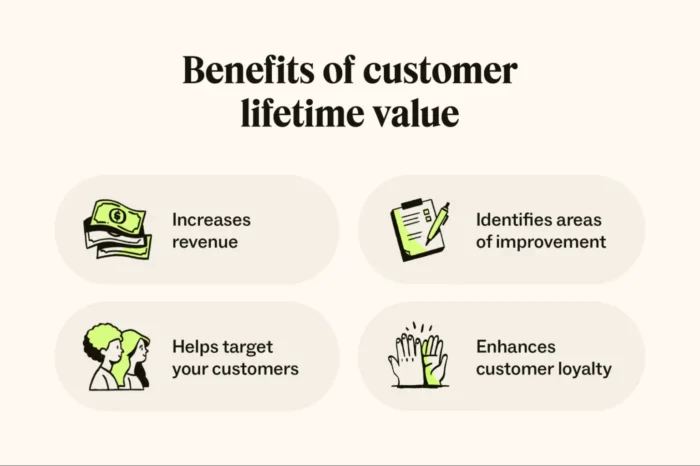
CLV is one of the cleanest ways to measure customer loyalty because it shows what a customer spends over time, not just what happened after their first click or their biggest purchase.
Source: https://www.zendesk.com/blog/customer-service-and-lifetime-customer-value/
Loyalty means retention, and retention means much higher revenue. In fact, even a small boost (5 percent) in customer retention has been shown to increase company profits anywhere from 25 to 95 percent.
CLV sweeps away the noise of other metrics because it focuses on long-term value, not the flash-in-the-pan appeal of traffic spikes and seasonal fluctuations. When you track CLV, you stop overreacting to short-term metrics and start investing in what creates durable revenue.
Tracking CLV also forces better decisions across the business. CLV shows which products or aspects of your business drive the most long-term conversions, and how you can improve weaker areas to help extend relationships.
CLV is also how companies justify “loss leader” plays. Amazon famously leaned into Kindle and Alexa hardware as a gateway to more book purchases over time because the lifetime relationship mattered more than the first transaction.
If those points aren’t important enough, CLV also ties directly to profit. If you increase CLV, you increase profits. Why? Because repeat customers spend more with your brand, and every sale they bring you costs less than the first one. You only have to spend to acquire them once, and as long as they keep buying, the overall value of that customer increases.
The kicker is that many teams still don’t measure CLV well. That’s why getting this right becomes a real advantage.
How To Calculate CLV
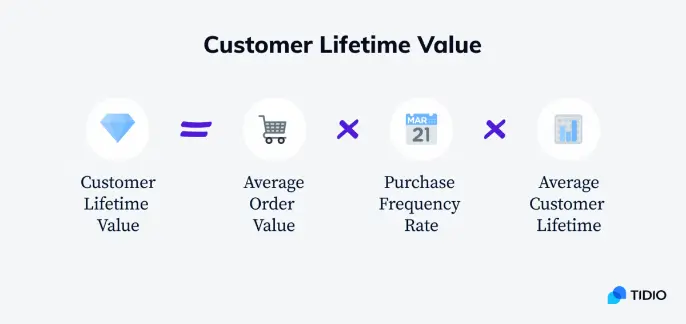
Here’s the formula to calculate CLV: (Average Purchase Value) x (Purchase Frequency) x (Customer Lifespan) = CLV
So, say your average customer spends $50 per order, buys four times a year, and stays for 3 years. That’s a $600 CLV ($50 × 4 purchases/year × 3 years = $600 CLV).
The math is simple, but it’s enough to start making smarter calls on retention tactics and what “profitable growth” looks like.
Breaking Down the Inputs
Each input in the formula is worth understanding on its own terms:
- Average purchase value: What a customer spends per transaction, on average
- Purchase frequency: How often they buy per year
- Customer lifespan: How long they keep buying from you (in years)
Source: https://www.tidio.com/blog/customer-lifetime-value/
Advanced CLV Models (When You Need Them)
Instead of assuming every customer follows the same path, advanced models use real behavioral patterns to estimate values more accurately. Two of the most common approaches are:
- Cohort-based CLV: Groups customers by when or how they were acquired and tracks how each cohort behaves over time. It’s great for identifying which campaigns attract customers who stick around.
- Predictive CLV: Uses historical behavior (like orders, time between purchases, or churn signals) to forecast what a customer is likely to spend next. This is helpful when you want to personalize retention or prioritize high-value accounts.
Using CLV and CAC
CLV isn’t as impactful in isolation. Pair it with CAC, and the picture gets a lot clearer. CAC measures what you spend to acquire a customer (factoring in ads, tools, agencies, sales time, and discounts).
The relationship is straightforward:
- CLV tells you what a customer is worth
- CAC tells you what that customer costs you
- The gap between them is your profit window
If your average CLV is $600 and your CAC is $200, you’re earning about $3 for every dollar you spend to acquire a customer. But if your CAC creeps up to $500, your margin nearly disappears. You might feel it in cash flow before you see it in the numbers.
Use CLV and CAC together to set guardrails on acquisition spend and decide which channels and campaigns are worth keeping.
What Impacts CLV the Most
CLV isn’t a mysterious number that only “big brands” can calculate and increase. Measurable metrics and broader experience factors drive it, and all of these are within your control:
- Retention rate: How long customers stick around. People churning after one or two purchases caps your CLV, no matter how strong your acquisition is.
- Purchase frequency: How often customers buy. This is where replenishment reminders, subscription nudges, and smart follow-ups can add a lot of revenue.
- Average order value: What customers spend per purchase. Bundles, add-ons, and better merchandising can boost CLV without requiring more traffic.
- Customer experience: The less friction, the better. Shipping issues, confusing onboarding, weak support, and a clunky checkout can all chase customers away and drag down your CLV.
- Personalization and relevance: More relevant messaging can equal more repeat purchases. Gartner research shows that customers who engaged through active, tailored personalization are 2.3 times more likely to confidently complete a purchase decision. Generic email blasts or one-size-fits-all offers usually just train people to ignore you.
Every one of these drivers is controllable. Once you identify which lever is limiting your CLV, you know exactly where to focus next.
How to Grow CLV
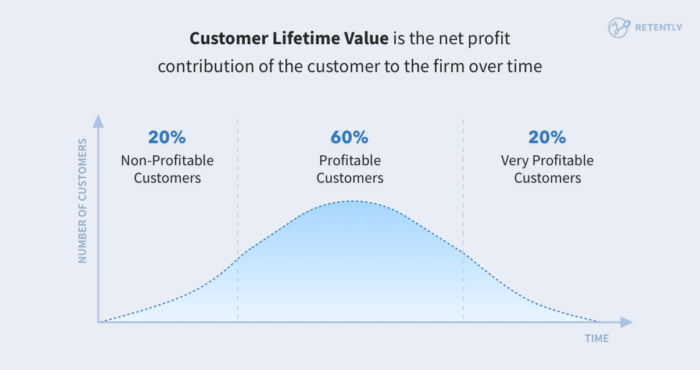
Customer lifetime value is not distributed evenly. As the graph below shows, customer value follows a bell curve. Research from Retently finds that about 20% of customers aren’t profitable, 60% are profitable, and 20% are very profitable over time.
Source: https://www.retently.com/blog/increase-customer-lifetime-value/
Growing CLV means shifting that curve to the right. This requires increasing how often customers buy and how much they spend while creating conditions that move more of them into your highest-value segment.
Here are some tips on how to maximize this metric.
1. Understand What Makes Your Audience Tick
CLV grows when customers keep finding reasons to come back, and that requires more touchpoints than the initial purchase.
But keeping your customers engaged is getting tougher. BCG reports that the average U.S. customer belongs to 15 consumer loyalty programs (up 10 percent from 2022). As they join more of these programs, loyalty and engagement often decline. More options mean more competition for attention, and generic retention tactics won’t cut through. The brands winning on CLV are the ones giving customers specific reasons to come back.
Start by identifying who you’re talking to and why they bought from you in the first place. Customer personas make that easier. They force you to map your buyers’ motivations and the problems your business solves.
From there, tailor your content to where customers are in their journey:
- Onboarding: Help them hit early wins with setup guides and quick-start tutorials.
- Education: Deepen their knowledge with how-to content, real-world use cases, and product tutorials.
- Replenishment: Keep them stocked with timely reorder prompts and low-stock reminders.
- Social proof: Build their confidence with customer reviews and success stories.
- Proactive support: Reduce friction with knowledge bases, FAQs, and troubleshooting guides.
The goal is to show up when it’s most helpful. Do that consistently and repeat purchases will follow, which ultimately contributes to a healthier CLV curve.
2. Personalize Touchpoints with Segmentation
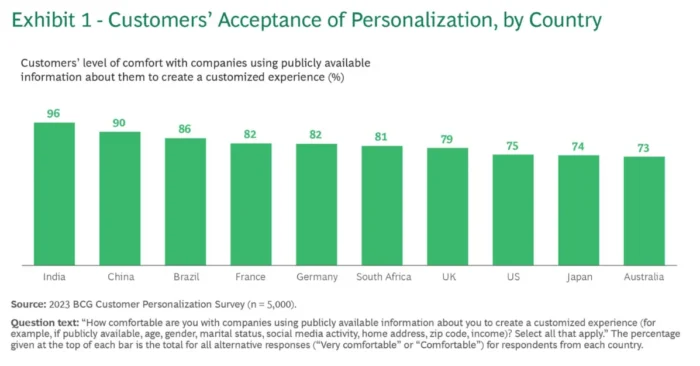
If you want to grow CLV, you need to meet customers where they are. Data shows that your customers are asking for a personalized journey. A BCG survey finds that 75 percent of U.S. customers are comfortable with companies using publicly available information about them to create customized experiences.
Source: https://www.bcg.com/publications/2024/what-consumers-want-from-personalization
That’s where behavioral segmentation comes in.
Instead of segmenting by basic demographics, group your audience by what they do:
- Behavior: Whether they’re first-time or repeat buyers, which categories they shop, and how often they reorder
- Engagement: How they interact through email clicks, site visits, feature usage, or support tickets
- Customer value: Whether they’re high spenders, discount-only buyers, or long-time loyalists
With segments in place, the next steps are more straightforward. You can:
- Upsell and cross-sell based on what customers already bought.
- Trigger replenishment or renewal messages at the right time.
- Reactivate lapsed customers with a relevant offer (not a generic blast).
- Reward your best customers, so they stick around longer.
If you need a simple framework to get started, use this customer segmentation approach and build from there. The goal is to send fewer messages, make each one more relevant, and earn more revenue from customers you already have.
3. Publish an Engaging, Informative E-blast or Newsletter
Email marketing assets, such as e-blasts or newsletters, keep you in front of customers after the first purchase. That’s where CLV is won or lost.
Here are a few tips to make your emails work for lifecycle retention:
- Segment before you send. The behavioral segments you’ve already built translate directly to email. Each group needs a different message and cadence.
- Make your emails worth reading. Send tutorials and tips to help buyers get the most out of your products. Add user-generated content, exclusive early access, or “best of” customer stories to keep engagement high.
- Test your subject lines. A/B test subject lines, track open rates, and refine based on what works. Small lifts in open rates compound over time.
- Send your emails regularly. Find a frequency that’s right for your customers and your business (and let subscribers choose options such as “weekly only”).
Do it right, and email can become your easiest lever for repeat purchases and a higher CLV.
4. Create as Many Engagement Points as Possible
The more places customers encounter your brand (and get value from it), the longer they stick around. That’s the idea behind engagement points. These are moments where customers see something useful from your brand and find a reason to come back.
Here’s where to focus your efforts:
- Make a list of the places where your customers spend time, both online and offline.
- Develop an advertising or content marketing presence in those places.
- Encourage your customers to engage with your brand on those platforms.
Then build touchpoints that keep your brand visible. Examples include:
- Social follow buttons on high-intent pages
- SMS opt-ins for back-in-stock or reorder reminders
- Invites to join communities like Reddit or Discord
- Webinars and live demos
- Retargeting that promotes education, not just discounts
The brands with a strong CLV are the ones showing up in the right places.
5. Develop a Recurring Payment (Subscription) Model
One of the most powerful ways to improve CLV is a subscription model. It gives you a recurring revenue stream, and customers pay more and cost less to retain over the long haul.
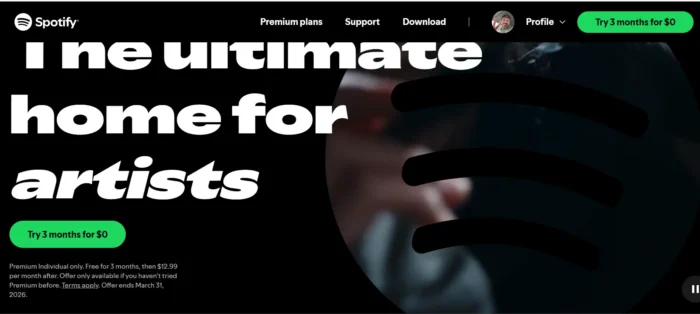
Take Spotify Premium, for example. At $12.99 per month, a two-year subscriber generates:
$12.99 × 12 = $155.88 per year
$155.88 × 2 = $311.76 in lifetime revenue
Source: https://www.spotify.com/us/premium/#ref=spotifycom_header_premium_individual
Compare that to a one-time purchase business. If your average order is $50, you’d need that same customer to buy six times just to match the value of a two-year subscriber.
6. Offer a Referral Program
A well-designed referral program pulls double duty. It brings in new customers and gives existing ones a reason to stay engaged.
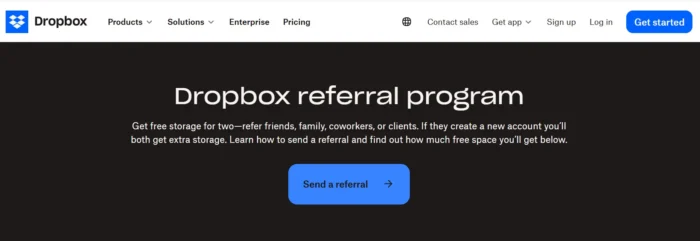
Dropbox’s referral program is a classic example. Invite a friend to sign up on Dropbox Basic, and you both get up to 16 GB of extra storage.
Source: https://www.dropbox.com/refer
That structure works for CLV because the reward itself drives product usage. More storage means more files, which means more reasons to stay. The referral program effectively becomes a loyalty loop.
7. Implement Personalization in Your Marketing
We covered behavioral segmentation earlier. This is about what you do with those groups once you have them. You should deliver personalized marketing experiences that are specific enough for customers to notice.
Customer expectations have shifted. BCG finds that 80 percent of customers are comfortable with personalized experiences, with most saying they expect them. But not all personalization is created equal. Simply inserting a first name into an email subject line no longer qualifies.
Personalization that moves CLV looks like:
- Product recommendations based on what customers have viewed or bought. That might be a skincare brand suggesting a moisturizer to someone who just purchased a cleanser.
- Content that matches a customer’s stage in the buyer journey. That might be beginner guides for new buyers, advanced tutorials for power users, or optimization tips for long-term customers.
- Timing that respects their cycle. That might be reminders to reorder before a customer runs out of your product or win-back flows for customers who’ve gone quiet.
The challenge is that customers have a high bar for what registers as personal. Deloitte Digital research finds that consumers recognize only 43 percent of experiences as personalized, while the brands behind them claim 61 percent.
The brands that bridge the gap deliver personalization that customers notice and refine from there.
8. Collect and Act on Feedback
Feedback is another direct lever you have on CLV. It tells you where your product or experience is falling short before customers walk away. If enough customers are saying the same thing, that’s a sure sign you’re getting something wrong.
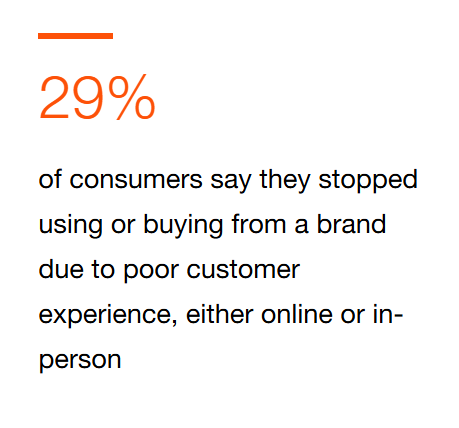
Fixing friction points supports customer retention. PwC’s 2025 Customer Experience Survey finds that 52 percent of consumers have stopped using or buying from a brand because of a bad experience with its products or services. Nearly 1 in 3 (29 percent) stopped using or buying due to poor customer experience, either online or in person.
It helps to turn feedback into action with a repeatable loop:
- Ask questions after key moments like deliveries or support interactions.
- Tag recurring issues like shipping costs or setup friction.
- Close the loop by telling customers when you fix something they flagged.
The upside is real. Qualtrics reports the majority of U.S. customers (72 percent) would pay more for a premium experience. Fix those friction points your feedback identifies, and the same customer base starts generating more revenue.
9. Focus on Retention over Acquisition
Selling to existing customers can be cheaper than acquiring new ones. That’s why retention is one of the fastest ways to grow CLV. Acquisition gets you the first sale, but retention gets you the second, third, and 10th.
Retention can also unlock expansion revenue. Customers who already trust you are more likely to buy more often if the offer feels like a natural next step rather than a pitch.
The key is to make your upselling and cross-selling efforts feel like help, not pressure:
- Upsell when it clearly improves the outcome, whether that’s faster shipping or premium support.
- Cross-sell based on the customer’s last purchase, like refills or complementary products.
- Trigger offers after successful moments, such as a repeat purchase or great support interaction.
Ultimately, timing is everything. An upsell that arrives at the right moment feels like good service. The same offer at the wrong moment feels like pressure.
FAQs
CLV is the total revenue a customer generates across their entire relationship with your business. It matters because it shifts your marketing focus from “get the sale” to “keep the customer.” Track CLV by channel and segment so you can double down on the sources that bring repeat buyers, not just one-time bargain hunters.
Start with the basic CLV formula: CLV = Average Purchase Value × Purchase Frequency × Customer Lifespan. Pull average order value from your analytics, estimate how many times the average customer buys per year, and multiply by how many years they typically stay. Use round numbers first. Once you have a baseline, compare CLV across campaigns to see what drives profitable growth.
CLV tells you how much you can afford to spend to acquire a customer and still make money. Without it, you can scale campaigns that look “successful” but lose profit after discounts, churn, and support costs. When you understand CLV, you can prioritize retention and focus time and resources on the channels that bring customers who stick.
The fastest lever is retention. Focus on understanding what keeps your best customers coming back, then build systems around it. That means personalizing your outreach so it feels relevant, creating engagement points that give customers reasons to return, and making the experience smooth enough that they never have a reason to leave.
Conclusion
CLV is one of the clearest signals your marketing is working. When it’s rising, your acquisition, retention, and expansion efforts are moving in the same direction. When it’s flat or falling, something in that chain is broken.
Every lever that moves CLV is within your control. Start by calculating your baseline and comparing it to your CAC. That ratio tells you what profitable growth looks like for your business.
From there, focus on giving your customers reasons to come back through personalized messaging and engaging content. And keep that feedback loop open so every cycle makes your retention sharper.
In the end, customer retention is where CLV is won or lost. The brands that figure that out stop optimizing for the first sale and start building something worth staying for.
Are You Using Google Ads? Try Our FREE Ads Grader!
Stop wasting money and unlock the hidden potential of your advertising.
- Discover the power of intentional advertising.
- Reach your ideal target audience.
- Maximize ad spend efficiency.