



The rules of social media interaction have changed. You’re probably tracking likes, comments and shares, but that’s not the full picture anymore. There are more ways for audiences to interact with the brands they follow than ever before, from AI-assisted conversations to interactive video and live content. Social search has entered the mix as well, with people increasingly turning to social platforms to research products and discover brands.
That’s a lot to keep up with. With more channels, formats and automation tools to manage, knowing which interactions actually move the needle, and how to show up authentically in them, is where many social teams get stuck.
So how do you scale your interaction strategy without losing what makes it work? That’s exactly what this guide covers. We’ll break down what social media interaction actually means in 2026, explore the formats and behaviors driving it, and share the best practices and metrics that help you do it well.
What is social media interaction?
Social media interaction refers to any action a person takes in response to a brand’s presence on social. That could be a comment, share, DM, save, search click or even a simple reaction. It’s the exchange between brands and audiences that makes social media fundamentally different from other marketing channels.
In 2026, the definition has expanded. Interaction is more than what happens in the comments section. It includes how people:
- Find your content through social search
- Engage with interactive video formats
- Tag your brand in their posts
- Respond to your replies and expect you to show up
Every one of those touchpoints is an interaction and they all shape how audiences perceive your brand.
Interaction vs. engagement: What’s the difference?
People often use these terms interchangeably, but they mean different things and the distinction matters for strategy.
Engagement is the umbrella metric. It typically refers to the measurable actions audiences take on your content: likes, comments, shares, saves and clicks. It’s what appears in your analytics dashboard.
Interaction is broader and more behavioral. It includes engagement, but also captures things like DMs, mentions, reviews, social search behavior and participation in live content. Some of these are harder to quantify but just as important to track.
Think of it this way: all engagement is interaction, but not all interaction shows up as engagement. A customer who finds your brand through a TikTok search, watches three videos and sends a DM has interacted with your brand significantly but none of that may register in your engagement rate.
How consumers expect to interact with brands in 2026
It’s not enough to post consistently or occasionally respond to comments. People want real, two-way interaction with the brands they follow, and they notice when it’s missing. According to The 2025 Sprout Social Index™, 73% of social media users say they’ll buy from a competitor if a brand doesn’t respond on social.
At the same time, audiences are increasingly clear about the type of content they want to interact with. Social media is fundamentally a human space and audiences come to it expecting human connection—even from the brands they follow. The data backs this up. The 2026 Social Media Content Strategy Report found that consumers want brands to make human-generated content their top priority on social.
For social teams, that means the quality of your interactions matters as much as the quantity. It’s the difference between a brand that replies “Thanks for your feedback!” to every comment and one that actually engages with what was said.
Why social media interactions matter for brands in 2026
A brand with a million followers but zero meaningful interactions is just broadcasting into a void. What actually moves the needle is what happens when audiences engage back.
Here’s why interactions are one of the most valuable things your brand can invest in on social.
Strong interaction boosts brand loyalty and trust
Every comment you respond to, conversation you spark and piece of content that resonates is a small deposit in your brand’s trust account. Over time, those deposits add up.
Sprout’s Q2 2025 Pulse Survey found that 58% of social users believe audience interactions are the most important thing for brands to prioritize on social. In other words, audiences are paying attention to how brands show up in the conversation, not just what they broadcast into it.
Influence social search, product discovery and brand visibility
Social media has quietly become a powerful brand discovery engine. According to the 2026 Social Content Strategy Report, social networks, including TikTok, Instagram and YouTube, collectively drive over 60% of product discovery. This means that interactions are more influential in decision-making than ever before.
When someone saves your post, shares it with a friend or leaves a comment, they’re extending your content’s reach organically. Those interactions tell platforms what content is worth surfacing. The more meaningful your interactions, the more visible your content becomes.
Supports customer service, feedback and community
Brands now build and maintain a significant portion of their customer relationships through social interaction. The 2026 Social Content Strategy Report found that brands investing in personalized responses and community care build stronger relationships with their audiences over time.
That emerges in practical ways: customers who feel heard are more likely to advocate for your brand, share their experiences and return. And when audiences can just as easily post a frustration publicly as send a private message, how you handle those moments matters just as much as what you post in the first place.
10 ways customers interact with brands on social today—and how to leverage them
Social media interaction takes many forms, and each one tells you something different about your audience. Some are passive signals, like a save or a profile visit. Others are active and conversational, like comments or DMs. They all paint a picture of how people engage with your brand and where you have room to do more.
Here’s a breakdown of the 10 most common ways customers interact with brands on social today, and how to make the most of each one.
| Interaction type | How to leverage it |
|---|---|
| 1. Likes and reactions | Track which content formats earn the most reactions and use that to inform your content mix. |
| 2. Comments and conversations | Reply in your brand’s authentic voice, ask follow-up questions and treat comments as a space for genuine conversation. |
| 3. Saves and shares | Create content that educates, entertains or speaks directly to a specific audience. Think tutorials, surprising stats or relatable moments. |
| 4. Follows and profile visits | Focus on content consistency and explore creator partnerships to accelerate audience growth. |
| 5. Direct messages | Prioritize fast, personalized responses and treat DMs with the same care as any other customer touchpoint. |
| 6. Mentions and tags | Monitor consistently, reshare UGC that reflects well on your brand and create campaigns that give your community a reason to tag you. |
| 7. Reviews and ratings | Use social listening to monitor reviews across platforms and respond promptly to positive and negative feedback quickly. |
| 8. Social search clicks | Optimize captions, hashtags and profile information with the keywords your audience actually searches for. |
| 9. Polls, quizzes and live content | Make participation feel worthwhile. Use polls to crowdsource opinions, quizzes to entertain and live content to create real-time conversation. |
| 10. Hashtag and trend participation | Identify trends that are genuinely relevant to your audience and find a natural way in rather than forcing participation. |
1. Likes and reactions
Likes and reactions might be the simplest form of social interaction, but they’re also the most universal. When someone reacts to your content, they’re telling you it resonated, which is always worth paying attention to.
How to leverage them: Pay attention to which content types consistently earn the most reactions. High reaction rates on short-form video, for example, suggest your audience is responding to that format, making it worth doubling down on. Track likes and reactions alongside your other metrics to build a sharper picture of what content your audience values most.
2. Comments and conversations
Comments are where social media interaction becomes a real conversation. They’re where audiences ask questions, share reactions, tag friends and tell you exactly what they think. An active, well-managed comment section signals to both audiences and platforms that your content is worth engaging with.
e.l.f. Cosmetics is an example of a brand that gets this right. Rather than defaulting to generic replies, their team responds in a way that matches the commenter’s energy (“This is so ballerina coded”).
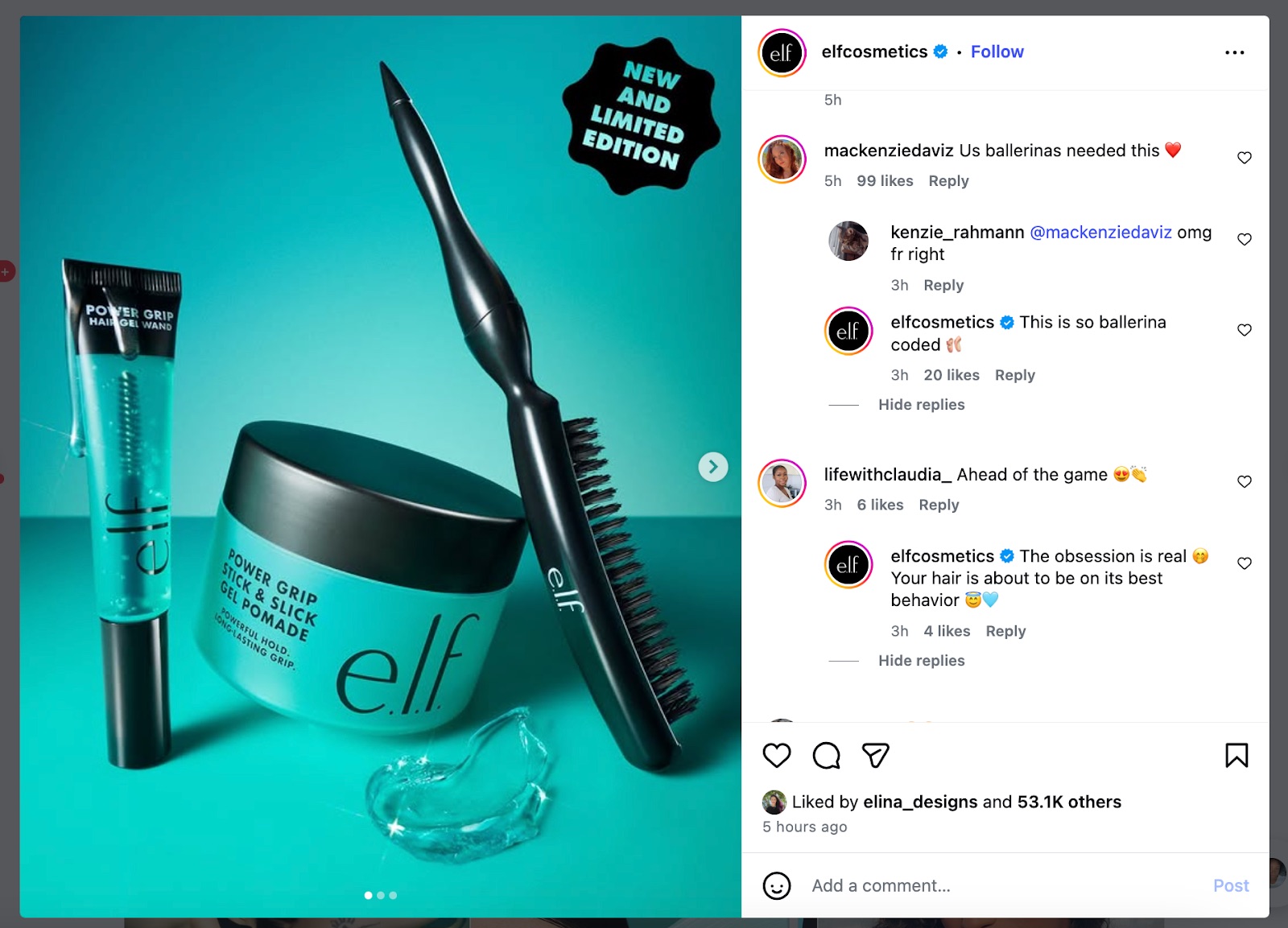
How to leverage them: As we mentioned, audiences want human interaction above all else, which extends to how brands show up in the comments. Respond to comments in your brand’s authentic voice, ask follow-up questions and treat comment sections as a space for genuine, back-and-forth conversation.
3. Saves and shares
Saves and shares are two of the most valuable interactions a brand can earn on social. A save means that someone found your content useful enough to return to. A share means they thought it was worth putting in front of their own audience. Both extend your content’s reach and shelf life well beyond the original post.
How to leverage them: Focus on content that delivers value: educational, entertaining or highly relevant to your audience. Think quick tutorials, surprising stats or relatable moments. Short-form video is a strong format to lean into here. According to LinkedIn’s 2025 B2B Marketing Benchmark Report, it delivers the highest ROI at 41%.
4. Follows and profile visits
A follow is a strong marker of intent on social. Someone liked what they saw enough to want more. And according to the 2025 Sprout Social Index, audience growth remains the second most tracked KPI for social teams,
Profile visits tell a similar story. They often happen when someone discovers your content for the first time and wants to learn more before deciding whether to stick around. Together, follows and profile visits reflect how well your content is earning attention and converting it into a longer-term relationship.
How to leverage them: Consistency and content quality are the baseline. But if you want to accelerate growth, creator partnerships are worth exploring. Sponsored influencer video and image content outperforms traditional organic brand content in reach by 92%, according to the 2025 Sprout Social Influencer Marketing Report. The right creator partnership puts your brand in front of an already-engaged audience and gives people a reason to visit your profile and hit follow.
5. Direct messages
DMs are where many of the most important brand interactions take place. They’re where customers bring their real problems, ask sensitive questions and expect a level of care that a public comment thread can’t always provide.
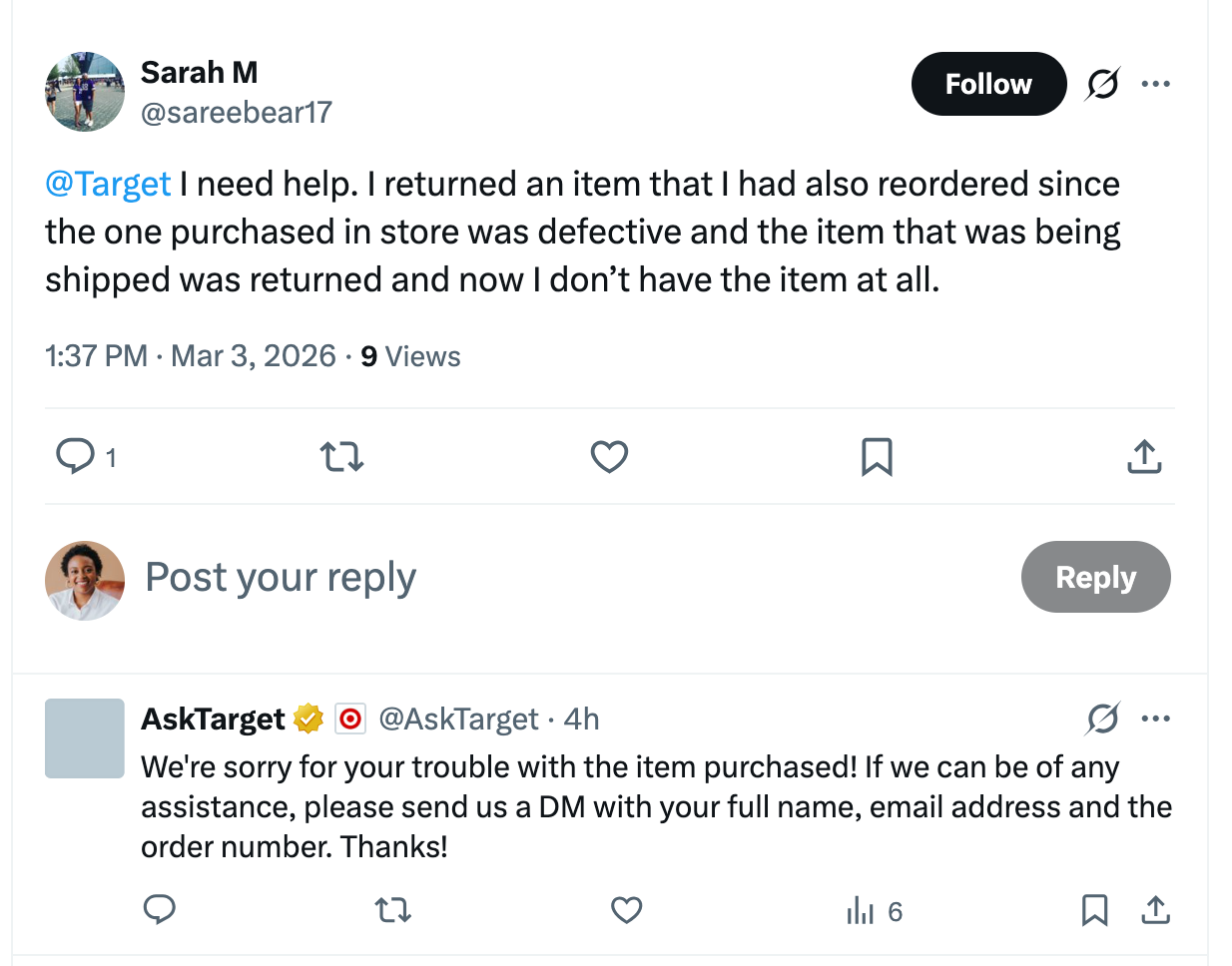
@AskTarget is a good example of this in practice. A customer publicly flagged a complicated order issue on X and @AskTarget responded within hours. They acknowledged the problem and invited them to continue the conversation via DM to resolve it properly.
How to leverage them: Make DMs a core part of your social media customer service. A fast, personalized response can turn a frustrated customer into a loyal one. Setting up a dedicated support handle, establishing response-time goals and equipping your team with the context to personalize replies are all practical ways to make DMs a strength.
6. Mentions and tags
When someone tags your brand in a post or mentions you in a caption, they’re vouching for you publicly. Whether it’s a customer showing off a recent purchase or a fan sharing their experience, these interactions carry weight because they come from real people instead of your marketing team.
How to leverage them: Consistently monitor mentions and tags so nothing falls through the cracks. When customers tag you in content that reflects well on your brand, reshare it. It rewards the creator and builds social proof with the rest of your audience. Branded hashtags and community campaigns are also natural ways to encourage more of it.
7. Reviews, ratings and feedback posts
Before many consumers make a purchase decision, they check reviews. And increasingly, they’re finding them on social. According to a 2026 BrightLocal report, 97% of consumers read reviews for local businesses. And the bar is rising: consumers expect higher star ratings and more recent reviews than ever before.
How to leverage them: Social networks like Facebook and YouTube are major places where consumers leave and read brand reviews, so monitor them consistently with social listening. Also, respond quickly to positive and negative feedback. How you handle reviews publicly builds trust with the customer you’re responding to and everyone else reading along.
8. Social search clicks and actions
Social search clicks and actions include any interaction that stems from someone actively searching for content on a social network, like typing a query into TikTok, browsing hashtags on Instagram or looking up a brand on YouTube. They represent active, intentional behavior from people who are already looking for something specific.
How to leverage them: As we’ve established, social platforms now drive over 60% of product discovery, so your content needs to be engaging and findable. Treat captions, hashtags and profile information with the same intentionality you’d give a search-optimized web page. Use keywords your audience actually searches for and create content that answers the questions they’re already asking.
9. Polls, quizzes and live content interactions
Audiences love to weigh in. Polls, quizzes and live content give them the perfect excuse. When people choose to participate, it creates a more active, engaging experience for your audience.
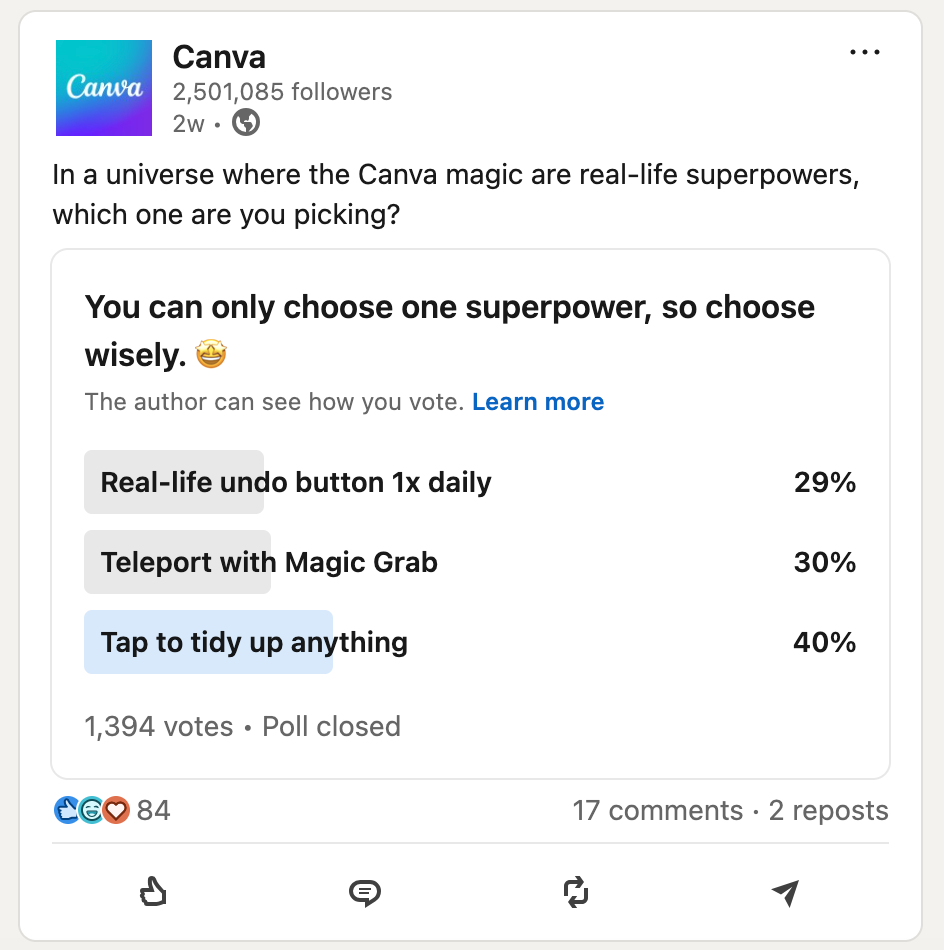
Canva does this well on LinkedIn. Rather than asking a straightforward product question, they framed their poll around a fun hypothetical, which made participating feel like play.
How to leverage them: The best polls, quizzes and live sessions make the audience feel like their input matters. Use polls to crowdsource opinions, spark debate or let your community weigh in on something relevant to them. Run quizzes that are genuinely useful or entertaining. Use live content to create real-time conversation around product launches, industry topics or behind-the-scenes moments. The format matters less than the feeling. If participating feels worthwhile, your audience will show up.
10. Hashtag and trend participation
Hashtags and trends are how people organize shared moments, topics and conversations on social. When a brand participates authentically, it becomes part of that conversation and visible to audiences who may never have encountered it otherwise.
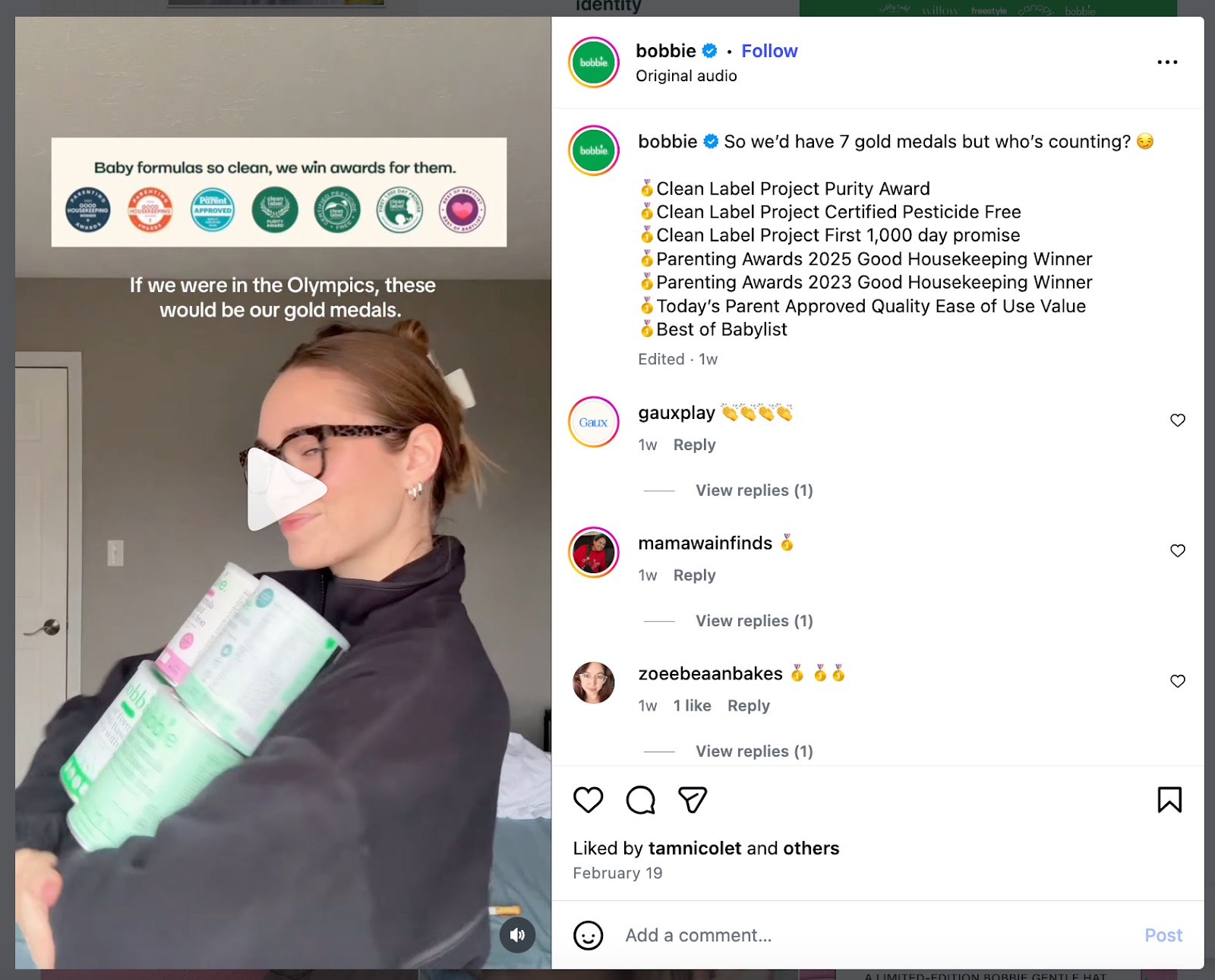
Take Bobbie’s Olympics post as an example. They connected the cultural moment directly to their product, reframing their award wins as gold medals. The caption—”So we’d have 7 gold medals but who’s counting?”—was playful, platform-native and felt completely natural to their brand.
How to leverage them: According to the 2026 Social Content Strategy Report, users now hop between 6.75 social networks per month, meaning trends and platform cultures vary widely. Knowing your audience well enough to identify which ones are worth joining is half the battle. The brands that do this best find a natural way into relevant trends rather than forcing participation where it doesn’t fit.
Best practices for increasing social media interactions in 2026
Knowing which interactions matter is one thing. Building a strategy that consistently earns them is another. These best practices reflect how the most effective social teams are approaching interaction in 2026.
Create human-first content that sparks conversation
As we recently explored on Sprout’s Social Futures Substack, audiences want content that feels real, original and emotionally resonant. And the brands delivering that are the ones showing up consistently with a genuine point of view.
The data reflects this. According to the 2026 Social Content Strategy Report, short-form video under 60 seconds is the top-performing content type for interaction across Facebook, Instagram and YouTube. The format rewards authenticity. Quick, conversational content tends to perform strongly because it feels native to how people use these platforms.
The practical takeaway: lead with stories, perspectives and moments that reflect real human experience. Give your audience something to react to, respond to or share with someone else. AI can help you move faster and maintain consistency. The spark that starts a conversation still comes from a human insight at its center.
Lead with value
What earns interaction is content that gives people something useful: an answer, insight, perspective or recommendation they didn’t have before. This is especially true as social platforms become primary destinations for product research and discovery.
Reddit is a good example of where this plays out clearly. The company estimates that roughly 40% of all posts and comments are product-related. People go to Reddit specifically to get honest, unfiltered opinions, which means a Reddit marketing strategy built around genuine helpfulness works better than one built around promotion.
The same principle applies across platforms. Whether you’re creating a how-to video on TikTok, answering a question in a LinkedIn comment or sharing a resource on Instagram Stories, leading with value is what makes content worth interacting with.
Respond fast and personalize interactions
Speed and personalization sound simple, but they’re where many brands lose ground at scale. Setting response time goals by channel is a good starting point. Different platforms carry different expectations, but all of them deserve a standard your team can stick to.
From there, it comes down to quality. A response that references what someone actually said will always land better than a templated acknowledgment. Equipping your team with the right context, tools and inbox management systems makes it possible to stay responsive and personal even as volume grows.
Tailor interaction strategy by platform behavior
How people interact with brands on Instagram looks nothing like how they interact on LinkedIn or TikTok. Your strategy should reflect that.
According to the Social Content Strategy Report, 60% of consumers interact with brand content multiple times a week on Instagram, 75% of Gen Z and Millennials do so weekly on Snapchat and 65% of Bluesky users engage with brand content at least weekly.
The main takeaway? Spend time understanding how your audience behaves on each network before deciding how to show up. The formats, cadence and tone that work on one won’t necessarily translate elsewhere. Tailoring your approach to each platform’s culture is what turns a presence into a real interaction strategy.
Incentivize UGC and community participation
User-generated content is word-of-mouth at scale. When a customer shares their experience with your product, tags you in a post or creates content around your brand unprompted, they’re doing something no marketing budget can fully replicate: authentically vouching for you to their audience.
The simplest way to start is by making participation easy and rewarding. A skincare brand that asks customers to share their 30-day results with a branded hashtag gives its community a clear reason to post. A software company that highlights a customer’s creative use case in their newsletter gives others a reason to share theirs.
The common thread: when people feel like their participation matters, they’re more likely to keep showing up. Build moments that invite your community in, recognize the people who respond and make sharing feel like belonging rather than a transaction.
Lean into community-driven spaces
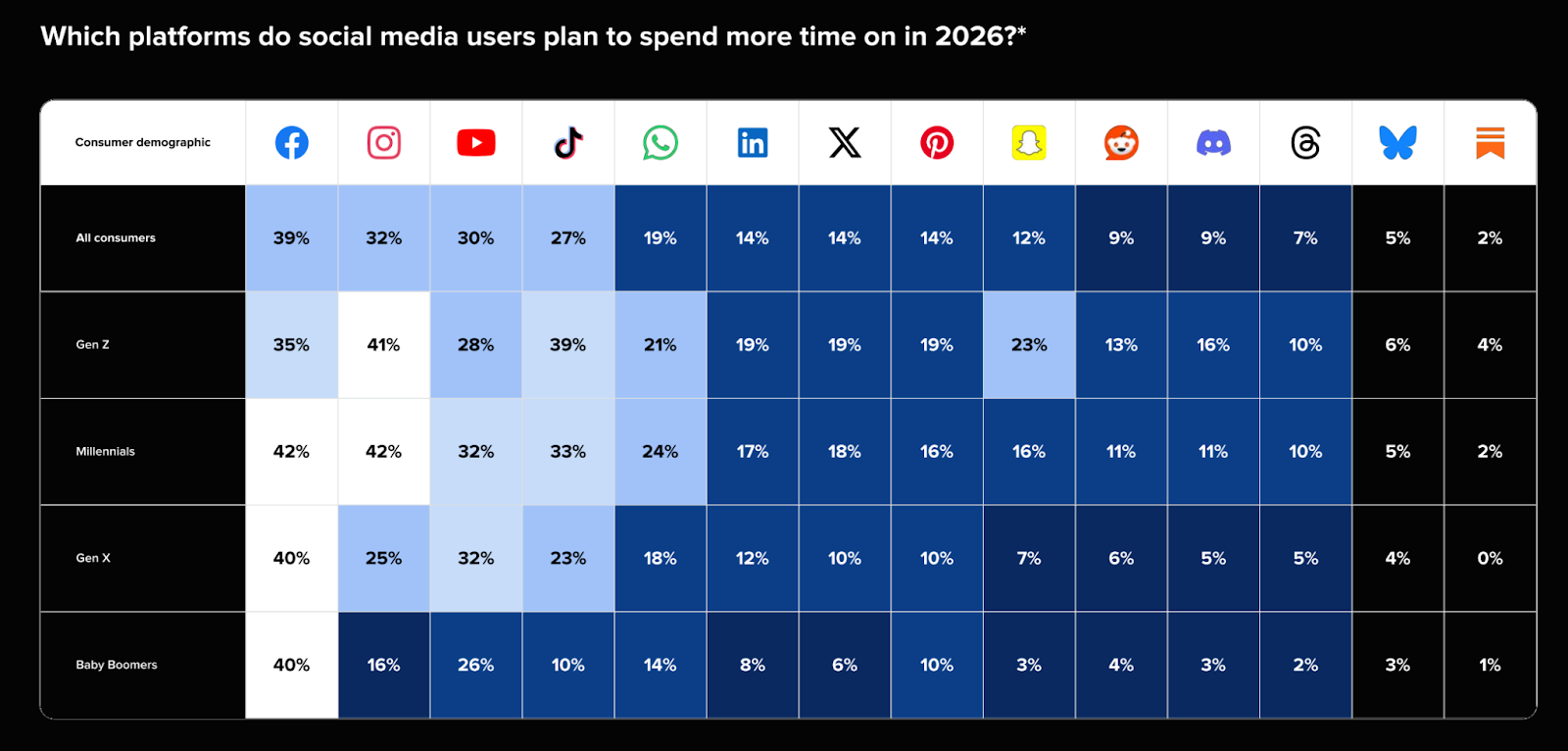
Audiences are spending more time in smaller, niche spaces where conversation feels more intentional. According to Sprout’s Q2 2025 Pulse Survey, around half of all global social media users plan to increase their time on emerging, community-driven platforms. Millennials and Gen Z are even more likely to do so.
That’s showing up in platform behavior too. Sprout’s Q3 2025 Pulse Survey found that users are most eager to increase their time on community-based platforms like Reddit, and 51% say they like Bluesky specifically because of the ability to control their own feed.
For brands, these spaces reward a different kind of presence. The key is to find your niche on social media and show up there as a genuine participant. Listen first, contribute meaningfully and earn trust before anything else.
How to measure social media interaction (metrics that matter in 2026)
Tracking interactions is only useful if you’re measuring the right things. Here’s a look at the metrics that matter, how to benchmark them and the tools that make it manageable.
Key interaction metrics every brand should track
- Engagement rate measures how often people interact with your content relative to your reach or follower count. It’s one of the most reliable indicators of whether your content is resonating.
- Comment ratio tells you how much conversation your content is generating. A high comment-to-like ratio often suggests your content is sparking genuine discussion.
- Saves and shares per post show how much value people find in your content. These are among the strongest indicators of content utility and organic reach potential.
- DM response metrics, including response time and resolution rate reflect the quality of your one-on-one interactions and customer care.
- Social search clicks track how often people find and engage with your content through search behavior on social platforms.
Benchmarks by platform
Benchmarks vary significantly by platform, industry and audience size, so tracking your performance over time is often more useful than chasing industry averages.
That said, the 2025 Sprout Social Content Benchmarks Report offers a helpful baseline. Meta networks continue to lead in engagement activity. Instagram averages 27 engagements per post and Facebook 24, with Instagram engagements growing 28% year over year. X remains steady at an average of 13 engagements per post. TikTok currently averages 4, but is emerging as a rising player worth watching as the network continues to mature.
Tools to measure and analyze interaction
The right combination of tools makes it possible to track interactions comprehensively and act on what you find:
- Analytics dashboards give teams a centralized view of interaction performance across platforms. Sprout Social’s analytics make it easy to track engagement trends, benchmark content and pull reports across all your channels in one place.
- Social listening platforms like Sprout surface broader conversation trends, sentiment shifts and mentions beyond your own content, giving you a fuller picture of how audiences are talking about your brand.
- AI-assisted trend detection helps teams spot patterns earlier and connect interaction data to broader business outcomes. NewsWhip by Sprout Social is built specifically for this, giving communications and social teams early visibility into how stories and conversations are gaining momentum.
See how customer engagement is evolving on social
Social has gotten more complex. More platforms, more formats, more volume. It makes sense that teams have leaned on automation to keep up. But audiences are sending a clear message: they still want real, human interaction from the brands they follow.
Think about the last time a brand genuinely surprised you on social. A reply that made you do a double take, or a trending moment they jumped into so naturally it didn’t feel like marketing. Those moments stick. And they rarely happen on autopilot. They happen when a real person is paying attention and has the space to act.
That’s the balance worth building toward. AI helps you scale. People make it mean something. The 2026 Sprout Social Content Strategy Report has the data to help you find that balance.
