


:max_bytes(150000):strip_icc():format(jpeg)/20260213-SEA-Creole-Gumbo-Vy-Tran-24-1cfd0b2adc35473dbdf0e50549e24e1d.jpg)
Why It Works
- A quick steam before slicing tames okra’s mucilage, cutting down on stickiness and speeding up browning later in the skillet.
- Cooking the roux slowly over low heat for 20 to 30 minutes develops a peanut butter–colored base with deep, toasty flavor and the right thickening power.
- Aggressively seasoning the okra as it sautés concentrates spices in the browned bits, creating a deeply layered base for the stew.
Pick a classic dish, any dish. Chances are, that region’s natives will swear up and down that there’s the way to make it—and none of those ways will be exactly alike. Such is the case with gumbo.
Partially, it’s because there is no one gumbo. You’ve got your Creole gumbo vs your Cajun gumbo. Your okra vs your filé. There’s seafood gumbo, game gumbo, and greens gumbo (aka Gumbo z’Herbes), often served on Holy Thursday. When it comes to preparation, some thicken their gumbos with roux while others rely on okra alone. Some swear that gumbo should be soupy, while others (like me) insist it is a stew and should be thick enough to stand your spoon in it.
Most folks serve gumbo atop rice, unless, of course, you’re in Cajun country and nestle a scoop of creamy potato salad into the bowl. (Trust me. It’s delicious.) Some cooks add tomatoes to their gumbo (tomatoes!) while others drop in boiled eggs or even poach them right in the roiling stew.
You get the picture: Gumbo is flexible and endlessly customizable. There may be great variation across areas, families, and even on different days, depending on what you have in the fridge. But all gumbos are equal in the eyes of the Lord.
Serious Eats / Vy Tran
A Bowlful of History
Gumbo is also quintessentially Louisiana. The state’s people, its particular history, and its natural resources are fundamental to its terroir.
It’s not an exaggeration to say that gumbo wouldn’t exist without the contributions of enslaved Africans. The transatlantic slave trade brought many indigenous ingredients to the Americas, including okra. Most food historians agree that the name gumbo is derived from the Bantu family of languages spoken by these West Africans. Ki ngombo, quingombo, and gombo, refer alternately to the thickened stews West Africans made with okra or to the mucilagenous vegetable itself, depending on the dialect. Okra thrived in Louisiana’s hot, humid climate, and remains a choice gumbo ingredient, both for its flavor and its thickening power.
Louisiana’s Choctaws also made stews thickened with filé, ground sassafras leaves that they called kombo. Coincidence? Maybe. Some culinary historians believe filé was used when okra was out of season, but it’s likely that the traditions developed separately. Indeed, some believe kombo to be akin to savvy marketing by enterprising Native Americans trading filé at market. (Read more in Robert Moss’s history of gumbo, okra, and filé.) Today, many cooks opt for okra or filé, while others insist on both. Filé lends gumbos a greenish hue and a grassy, herbal flavor that’s, yes, reminiscent of root beer. It’s often served tableside or sprinkled in just before serving–but never cooked into the gumbo, as heat turns the powder unpleasantly ropy.
Germans contributed smoked-meat and sausage traditions that translated into the andouille, tasso, and other ingredients commonly found in the gumbo pot. The French, of course, contributed roux. As Daniel Gritzer explains in his article on how to make roux, there are many types of roux, distinguished by how long they’re cooked and how dark they get. Peanut butter–colored roux is customary for Creole gumbo, rendering the stew lighter in color but thicker. Dark roux is Cajun all the way: The murky base gives Cajun gumbo a deeper, more intense flavor but also renders it thinner, as more of the flour’s thickening power is cooked out.
First You Make a Roux, Then Bow Before the Holy Trinity
It’s a well-worn joke that most New Orleans recipes start with a roux. It’s certainly true for most gumbos. While you can make a roux-less gumbo–say, if you’re an okra- or filé-thickening purist or if you just want to speed the process—but, for me, gumbo just isn’t gumbo without a roux. The same goes for okra…and chicken, and sausage, and shrimp.
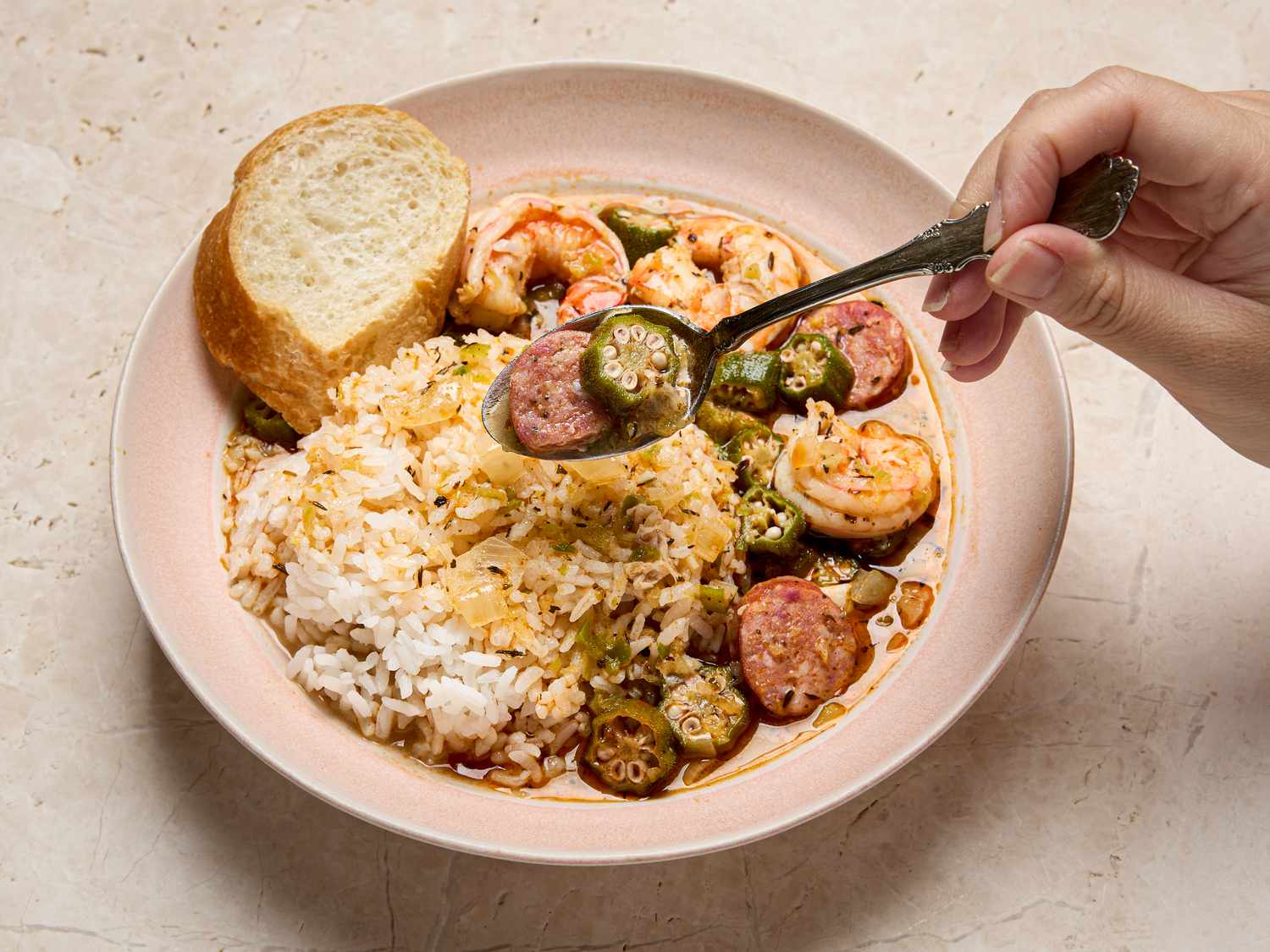
My recipe follows the Creole tradition, starting with a peanut butter–colored roux for a lighter, thicker stew versus a thinner, darker Cajun gumbo.
Because I skip the stock-making step (to save myself another hour of cooking), I add a little bacon grease to the neutral canola or avocado oil, which deepens the flavor of the overall stew. The most important step to making roux, though, is not to burn it. Seriously, don’t: A burned roux can not be salvaged.
Read enough about gumbo and you’ll learn that tomatoes are customary in Creole gumbo. You won’t find them in mine. Tomatoes were never used in gumbo in my Creole family, so they’ll never darken my gumbo pot.
Serious Eats / Vy Tran
Layers of Flavor
While the stock is simmering, I turn my attention to the okra, which must be sautéed separately until you “cook the slime out it,” per my mother’s instructions. I know: The same slippery texture that gives okra its thickening power also makes it a polarizing ingredient. But I am here to tell you that properly cooked okra isn’t slimy. Yes, it will definitely be sticky when you’re cutting it. (As kids, we liked to steal the discarded cut pod stems and stick them to our necks, Frankenstein-style. See, okra is fun!) You will see evidence of this stickiness for quite a while as it sautés.
Here’s how I handle it: Using frozen cut okra eliminates the sticky cutting ceremony, but it does take longer to cook until you no longer see mucilagenous ropes. Usually, I prefer to use whole fresh pods (or ones I froze from last season’s garden) and steam them whole until bright green and barely tender, which eliminates much of the slime before you cut into it, making the ultimate sauté take less time. The knife will still get a little sticky as you slice the steamed pods pre-sauté. Simply rinse off the slime and wipe it with a damp cloth halfway through.
In addition to sautéeing the okra separately, it’s important to season the hell out of it while you do, like, aggressively. The key to gumbo is building flavor, layer by layer, and this is a crucial place to build it. Indeed, I add most of my seasonings directly into the okra, only sprinkling spices into the stock pot to fine-tune the flavor toward the end. It makes for okra that would be too heavily seasoned on its own, but perfect for the pot.
As you sauté, you’ll notice the okra begins to fall apart and bits stick to the bottom of the pan. This is a good thing: Those super-seasoned browned bits add yet another layer of flavor.
Time Is a Major Ingredient
Another most important ingredient for a greatgumbo? Patience. Gumbo will never be a quick weeknight dinner (not real gumbo, anyway). It’s an all-day affair. I recommend inviting a couple of loved ones to hang out in the kitchen with you. Because why not make it event?
My favorite way to prepare gumbo is on a cold winter weekend, visiting with friends and family in the kitchen, cocktail in hand as the windows become increasingly steamier. It’s truly a labor of love, not just from your hands, but all the ones who came before and added their contributions to the gumbo pot. Indeed, it’s time well spent.
