


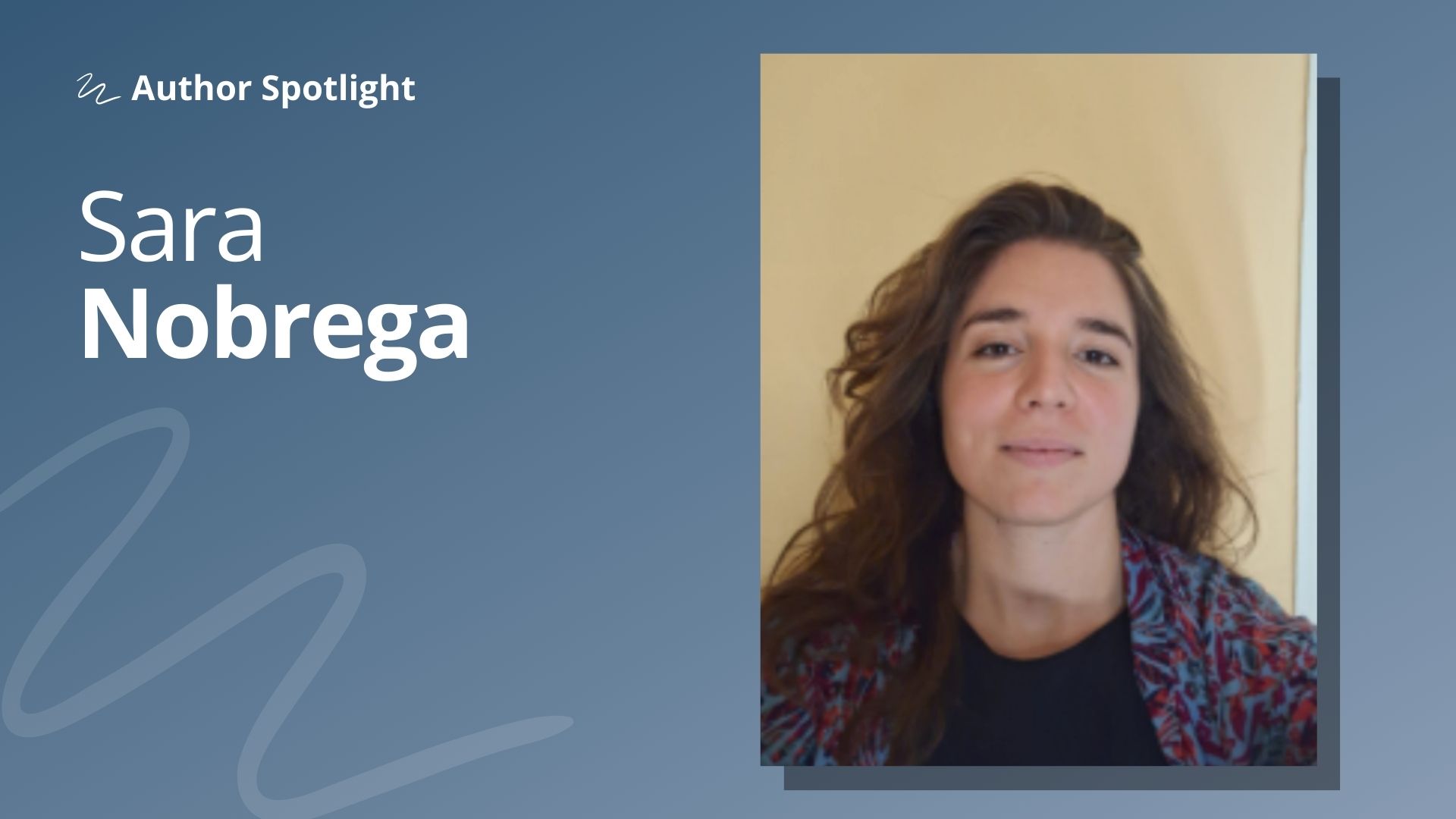
In the Author Spotlight series, TDS Editors chat with members of our community about their career path in data science and AI, their writing, and their sources of inspiration. Today, we’re thrilled to share our conversation with Sara Nobrega.
Sara Nobrega is an AI Engineer with a background in Physics and Astrophysics. She writes about LLMs, time series, career transition, and practical AI workflows.
You hold a Master’s in Physics and Astrophysics. How does your background play into your work in data science and AI engineering?
Physics taught me two things that I lean on all the time: how to stay calm when I don’t know what’s happening, and how to break a scary problem into smaller pieces until it’s no longer scary. Also… physics really humbles you. You learn fast that being “clever” doesn’t matter if you can’t explain your thinking or reproduce your results. That mindset is probably the most useful thing I carried into data science and engineering.
You recently wrote a deep dive into your transition from a data scientist to an AI engineer. In your daily work at GLS, what is the single biggest difference in mindset between these two roles?
For me, the biggest shift was going from “Is this model good?” to “Can this system survive real life?” Being an AI Engineer is not so much about the perfect answer but more about building something dependable. And honestly, that change was uncomfortable at first… but it made my work feel way more useful.
You noted that while a data scientist might spend weeks tuning a model, an AI Engineer might have only three days to deploy it. How do you balance optimization with speed?
If we have three days, I’m not chasing tiny improvements. I’m chasing confidence and reliability. So I’ll focus on a solid baseline that already works and on a simple way to monitor what happens after launch.
I also like shipping in small steps. Instead of thinking “deploy the final thing,” I think “deploy the smallest version that creates value without causing chaos.”
How do you think we could use LLMs to bridge the gap between data scientists and DevOps? Can you share an example where this worked well for you?
Data scientists speak in experiments and results while DevOps folks speak in reliability and repeatability. I think LLMs can help as a translator in a practical way. For instance, to generate tests and documentation so what works on my machine becomes “it works in production.”
A simple example from my own work: when I’m building something like an API endpoint or a processing pipeline, I’ll use an LLM to help draft the boring but important parts, like test cases, edge cases, and clear error messages. This speeds up the process a lot and keeps the motivation ongoing. I think the key is to treat the LLM as a junior who is fast, helpful, and occasionally wrong, so reviewing everything is important.
You’ve cited research suggesting a massive growth in AI roles by 2027. If a junior data scientist could only learn one engineering skill this year to stay competitive, what should it be?
If I had to pick one, it would be to learn how to ship your work in a repeatable way! Take one project and make it something that can run reliably without you babysitting it. Because in the real world, the best model is useless if nobody can use it. And the people who stand out are the ones who can take an idea from a notebook to something real.
Your recent work has focused heavily on LLMs and time series. Looking ahead into 2026, what is the one emerging AI topic that you are most excited to write about next?
I’m leaning more and more toward writing about practical AI workflows (how you go from an idea to something reliable). Besides, if I do write about a “hot” topic, I want it to be useful, not just exciting. I want to write about what works, what breaks… The world of data science and AI is full of tradeoffs and ambiguity, and that has been captivating me a lot.
I’m also getting more curious about AI as a system: how different pieces interact together… stay tuned for this years’ articles!
To learn more about Sara’s work and stay up-to-date with her latest articles, you can follow her on TDS or LinkedIn.
