


With much of the Northern Hemisphere fully covered in snow, we can safely say that winter is here. While we’re cozy in our warm homes, our cars unfortunately have to take all that beating outside (unless you have a garage, of course). One of those cars is my poor old BMW, which I thought wouldn’t be drivable this winter—until I fixed a surprisingly simple issue.
My parking situation ain’t great

Before you ask, I’m not referring to a dead battery. My aging 2002 BMW E46 diesel has a fresh battery, so it starts just fine, even in below-freezing temperatures.
The problem I’m talking about is traction.
To give you a better understanding of my parking lot situation, it helps to set the scene first. My street is unpaved because construction started late. With constant rain and snow, the loose gravel won’t be replaced with asphalt until spring.
Normally, it’s just a little annoying to drive on, but after nearly 10 inches of snow hit my city overnight, I was worried my BMW would be stuck in front of my building for days, if not weeks. The gravel makes traction tricky in the first place, and with snowplows skipping my street entirely, it’s become a real challenge.
Cold weather deflated my tires more than I anticipated

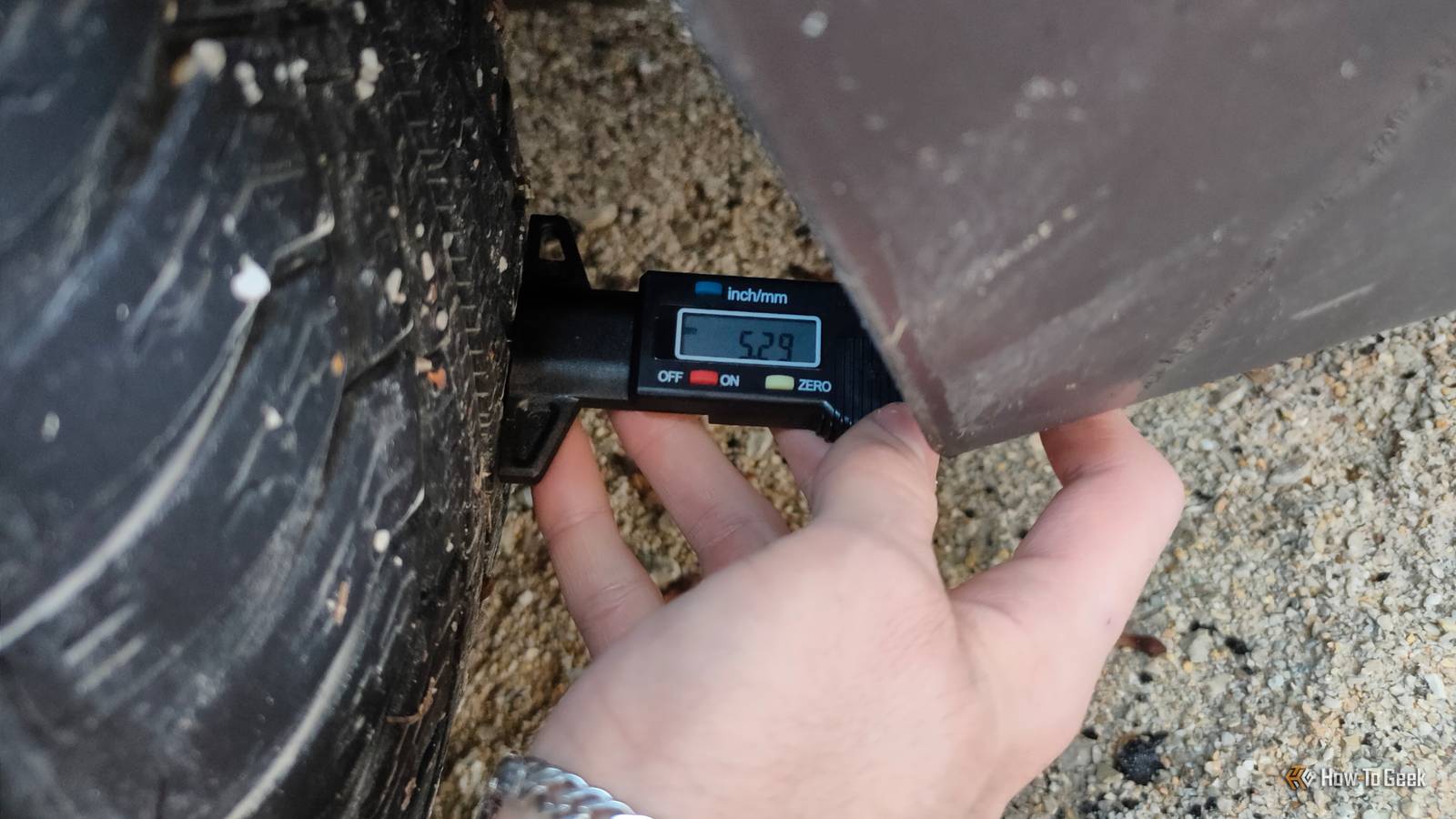
My 2002 E46 is equipped with four winter tires, so I thought maybe it wouldn’t be impossible. However, those tires are over five years old, and at around 4.5 to five mm (depending on where I measure the tread), they’re mostly on their way out. I figured I could just use them for light driving this season and sell the whole car in the summer to replace the poor beater.
Sure, my tires aren’t perfect, but they should be usable. As everyone in the neighborhood was slowly making their way down my street, I couldn’t get my car out of the parking lot—even after I’d shoveled all the snow away from my tires and from around my E46.
Long story short, my first attempt at leaving only moved the car a few feet before it ended up blocking the entire street and creating a mini-traffic jam. Two kind strangers helped push me back into the parking lot, but even with their help, I couldn’t move again until I shoveled all the snow from underneath the tires.
Since I don’t really need to drive my BMW every day, I waited a few days for the snow to melt a little before trying again. When I was about to get in, I noticed my tires were slightly deflated, which made me wonder—could this be the reason I was unable to drive?
My E46 doesn’t have a tire pressure monitoring system (though I’m now considering installing an aftermarket unit), and I don’t have a tire pressure gauge (yet), so I slowly headed to the nearest gas station.

- Material
-
Brass
- Color
-
Black
Calibrated to ANSI standards, this rugged tire pressure gauge makes it quick and easy to keep an eye on your car tire pressure.
Sure enough, all four of my tires had lost over five PSI during the cold spell that had hit my city. The tires were so deflated that the poor wheels couldn’t push the car at all. The regular resistance was amplified by all that extra weight on the front from the heavy engine and sagging tires.
Now, I’m well aware that cold weather affects tire pressure—tires lose one to two PSI for every 10-degree (Fahrenheit) drop in temperature. Old tires lose even more, especially as they develop tiny leaks around the valve stem and where the tire seals to the rim.
Although I check my tire pressure every week for optimal traction and fuel economy, the snowstorm and the resulting temperature drop were enough to push my tires over the edge and lose a significant amount of pressure virtually overnight.
The fix was simple

As you can probably imagine, inflating my tires back to factory specs completely transformed my winter driving experience. Although I’m still wary, as these are old tires, and driving on icy roads is always risky, my trusty E46 is at least usable again.
I can now recover traction when I lose it much more easily. I was even able to unstuck my car a couple of times in my patchy parking lot, without the help of people pushing me.
Make sure you have good winter tires
And a small shovel

If you live in an area that sees snow, rain, and cold temperatures, consider investing in good winter tires in addition to a set of summer tires.
You can identify winter tires by their tread design, which feature deeper grooves and asymmetric patterns. If you want to be absolutely sure you’re getting proper winter tires, look for the Three-Peak Mountain Snowflake (3PMSF) icon—or at the very least, the M+S (Mud + Snow) symbol.
The 3PMSF tires are the “official” winter tire symbol, indicating they’ve been tested and certified for severe snow conditions.
If you already have winter tires, make sure to check the tread depth and do a rotation, so the tires with the most tread are on the rear for overall safety. Don’t make the mistake of assuming the best tires should always go on the front.
Winter tires are essential, but they’re only part of the story. Even the highest-quality rubber can only do so much if you encounter severe snow in a RWD car. That’s why, on top of having winter tires, I always keep snow chains in my trunk as a last resort.
What isn’t a last resort, though, and sees frequent action, is my trusty folding shovel. Every winter, shovels sell out fast, so make sure you have one in your trunk. You never know when you might get stuck.
