


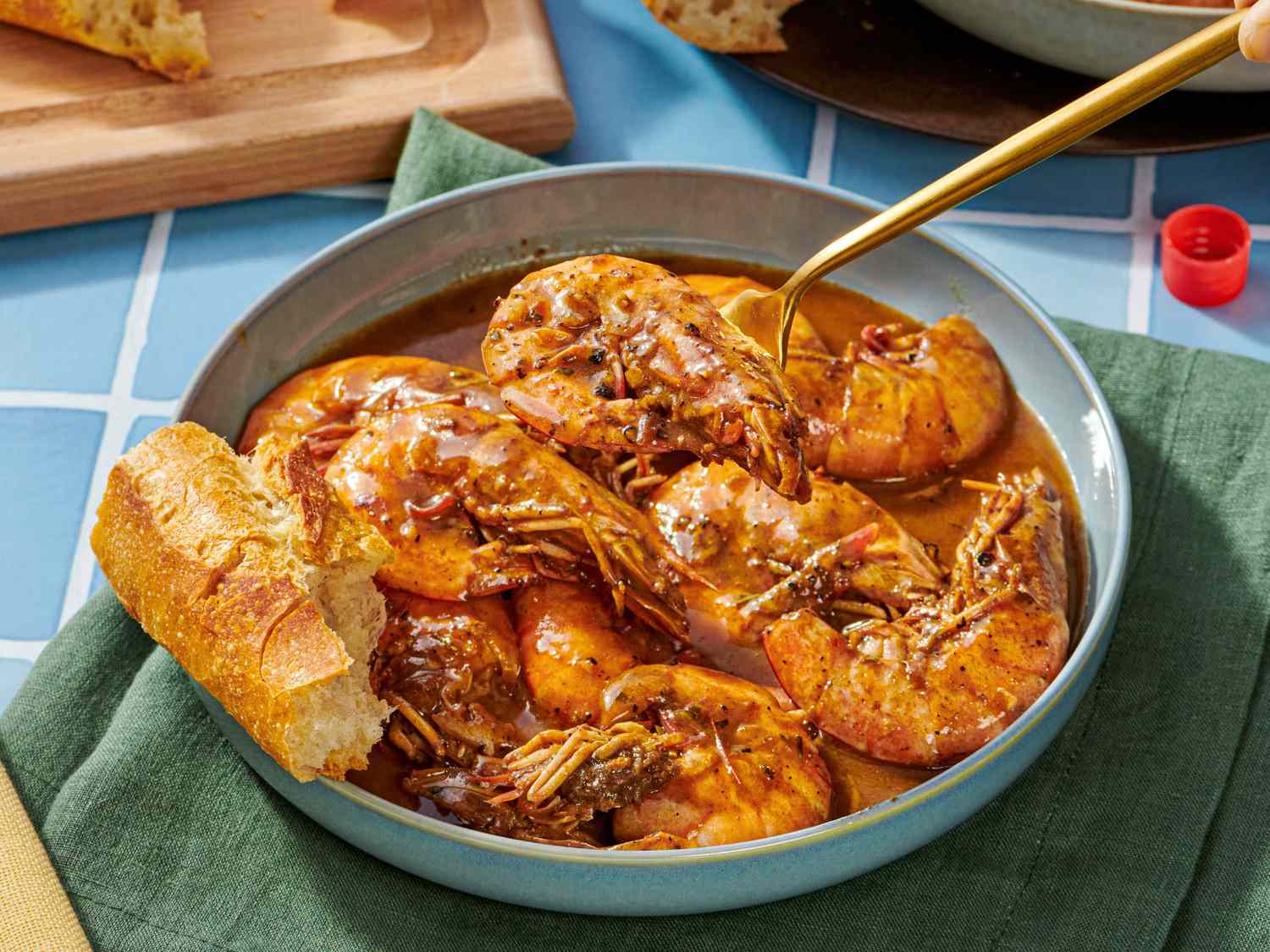
:max_bytes(150000):strip_icc():format(jpeg)/20260122-SEA-New-Orleans-BBQ-Shrimp-Qi-Ai-HERO-2fdec6dabc274ecab3367326b09b806a.jpg)
Why It Works
- Using jumbo shrimp, which take longer to cook than their smaller cousins, ensures the finished dish will be tender, not tough, and makes them easier to peel.
- Leaving the shrimp in their shells–complete with heads–builds nuance. As the shrimp cook, the fat in the heads melts into the sauce, imparting a rich umami.
- The addition of a little dry wine and rosemary provides a touch of brightness to the rich, tangy sauce.
If you don’t associate New Orleans cuisine with barbecue, you’re right not to do so. We’re more of the saucing, stewing, and smothering type. It should be no surprise, then, that New Orleans’ signature BBQ Shrimp dish has nothing whatsoever to do with barbecue and everything to do with the buttery sauce.
A 70-year Tradition…and Counting
Though you’ll find versions of BBQ shrimp all over New Orleans, Pascal’s Manale restaurant is credited as the originator of the dish. Legend says that in the mid-1950s, owner Pascal Radosta (nephew of the original owner, Frank Manale, and the man responsible for the restaurant’s unusual moniker) was chatting with a regular who described a rich, peppery shrimp dish he’d enjoyed in Chicago. Radosta tried his hand at recreating it, and a NOLA legend was born.
It’s thought that the “barbecue” designation refers to the dish’s ruddy-russet hue and its deep, rich flavor. Technically, the shrimp here are sautéed, but it’s the sauce–heavily spiced, tangy, and richly aromatic–that begs the comparison. That, and maybe the messiness: Like many barbecue dishes, BBQ shrimp is eaten with your hands as it requires that you peel the shrimp at the table. And it is one delicious mess, indeed.
Serious Eats / Qi Ai
A Flexible Standard
As with most “classic” recipes, New Orleans BBQ shrimp is often adapted to reflect each chef’s individual flair. Some recipes call for a little amber beer, while others call for a little tomato or even cream. Some recipes riff on Pascal’s Manale’s Italian-Creole roots by calling for lots of oregano, while others rely on a pre-serve sprinkle of fresh chopped chives to add a subtle astringent bite.
The Ingredients That Matter Most
At its core, New Orleans BBQ shrimp is a simple dish, but ingredient choices make a real difference. Jumbo shrimp—ideally Gulf shrimp—are key. Their larger size (16/20 count) helps ensure they stay tender and juicy, and when cooked shell-on, they contribute body and flavor to the sauce. Traditionally, the shrimp are left head-on, which adds richness as the fat from the heads melts into the butter as it cooks. Depending on where you live or the time of year, head-on shrimp can be difficult to source, but don’t let that stop you from making this dish: Jumbo shell-on shrimp without heads are an excellent substitute and will still produce a rich, well-balanced sauce. Smaller shrimp can be used in a pinch, but they cook more quickly and are easier to overdo.
Most versions of the dish rely on a Cajun or Creole seasoning blend for background heat and spice. While the two are often used interchangeably, Cajun mixes tend to be pepper-forward and spicier, while Creole blends lean more herbaceous. Either works well here, but both contain salt, which is why the recipe doesn’t call for any additional measured salt.
Finally, bread matters. New Orleans–style French bread—thin-crusted with a soft, fluffy interior—is the traditional choice and perfect for soaking up the sauce. If you can find Leidenheimer bread, grab it. Vietnamese bánh mì bread is a close approximation; otherwise, a good baguette does the job just fine.
My Take on New Orleans BBQ Shrimp
My recipe for New Orleans BBQ Shrimp is heavily inspired by Mr. B’s Bistro’s in New Orleans. I worked there for several years in college, and it’s where I came to truly know and love the dish. Mr. B’s version is my gold standard.
Since the dish is so rich, I add some dry white wine and piney fresh rosemary for a bit of brightness. I also add a pinch (or four) of smoked paprika–my favorite spice, redolent of a warm summer’s day. But I don’t mess with BBQ shrimp’s core ingredients: Briny-sweet Gulf shrimp (of course), Worcestershire sauce, lemon, heaps of black pepper (fresh cracked and ground), and butter–unholy amounts of butter.
If you deviate from the core, the end result will suffer. And, yes, that means you really do need to use all of that butter. If your sense of self-preservation is as strong as mine, you’ll be tempted to short the sauce by a stick or two. But without the full amount, the sauce won’t meld and emulsify as it should. The delightful tang from the Worcestershire’s tamarind notes would translate as unpleasantly tart, and you might just get more black pepper in a mouthful than you bargained for because it won’t be evenly suspended in the sauce.
Serious Eats / Qi Ai
Mise en place, or preparing all of your ingredients before you turn on the burner, is also crucial. Since shrimp cook so quickly, you can’t afford to be measuring and chopping while they’re in the pan. Overcooked shrimp are tough—not only disappointing but also more challenging to peel.l. Otherwise, preparation is straightforward and quick.
Which brings me to another essential: Protect your clothes with a bib, big napkin, or apron. When you’re peeling the shrimp, the buttery sauce will splash. It won’t come out of your clothes, like ever, and you will be sorry. So get right with feeling silly and cover up. If fancy-suited folkscan business-lunch in bibs with straight faces, you can, too. The only other thing you’ll need is a wealth of crusty bread to sop up the leftover sauce. While your arteries might rebel, your taste buds—and dinner companions—will thank you.
