


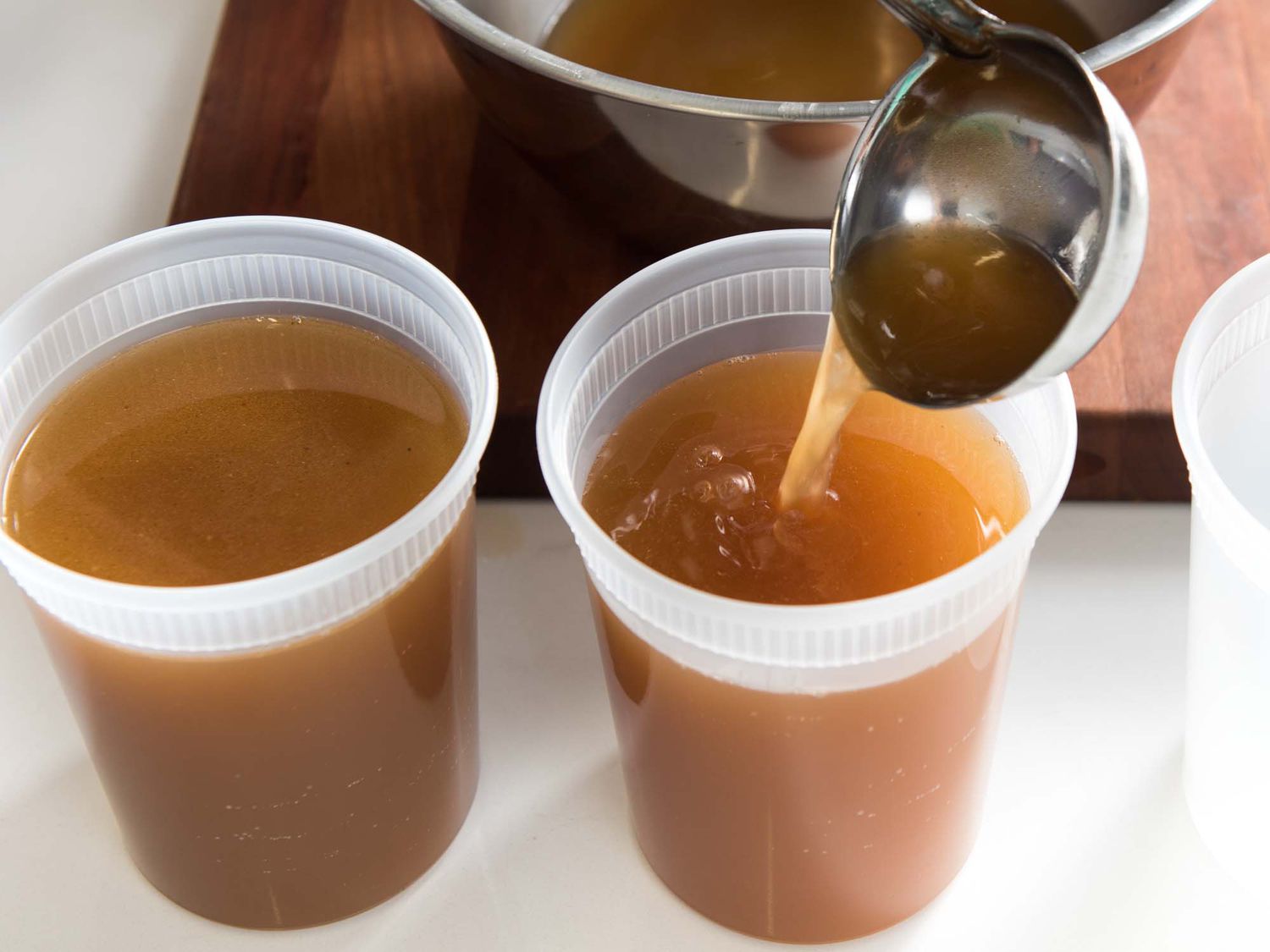
Chicken stock and chicken broth aren’t the same, and using the wrong one can change the texture and flavor of your cooking. Stock is made from bones and rich in gelatin, which gives soups and sauces body and silkiness, while broth is made from meat and stays lighter and more chicken-forward. Knowing when to use each helps you get better results from everything from pan sauces to rice dishes.
Many cooks call chicken stock and chicken broth “liquid gold,” and it’s easy to understand why. These versatile products form the backbone of countless dishes from many cuisines, including soups, stews, and sauces. Homemade stocks and broths are typically more flavorful and complex than store-bought, and they also perform what I like to think of as a culinary magic trick: They can be made from components you’d otherwise throw away, like the backbone of a spatchcocked chicken and a few vegetable scraps, which are then transformed by the alchemy of water, heat, and time into a glorious new ingredient. That said, store-bought broths and stocks are an undeniable convenience item, and if you choose a good brand, work nicely in many recipes.
But the differences between chicken stock and broth can be confusing, especially when it comes to store-bought broths and stocks, and it’s easy to get turned around in the soup aisle at the grocery store. To better understand the difference between these two products, I spoke with Mark Farone, chef instructor in the professional program at the Cambridge School of Culinary Arts in Cambridge, Massachusetts.
The Differences Between Homemade Chicken Stock and Chicken Broth
Vicky Wasik
Chicken stock and chicken broth are similar ingredients that exist on the same spectrum, and the terms are often used interchangeably, which can be confusing. Their differences are largely semantic and dependent on the cuisine at hand, and there’s no one completely correct answer as to which is which. But from a classical French perspective, culinary experts agree on a few key distinctions between broth and stock made from scratch. “The very short answer [to their difference] is gelatin,” Farone says. “This is a bit of a hyper-generalization, but in essence, stocks are made from bones, and broths are made from meat.”
The Role of Gelatin
When animal bones are cooked in water, connective tissues like the cartilage and tendons release their collagen, which transforms into gelatin. The gelatin turns the liquid viscous and silky, resulting in a wiggly, wobbly mass when chilled. This product would be considered culinary stock. Broth, on the other hand, is classically made by simmering meat without bones, which can give the liquid a “meatier” flavor and aroma, but allows it to stay fluid and light bodied, even when chilled.
How Stocks and Broths are Seasoned
Seasoning and flavor also play a role here. “[In French cuisine,] one of the hallmarks of a good chicken broth is a very clear, simple chicken aroma,” Farone says. “However, in the case of stock, there should also be a significant amount of other aromatics present. Classically, that’s going to be mirepoix, but also herbs or other ingredients, and these elements bring an added layer of aroma and also sweetness.” As for seasoning, broths are generally seasoned with salt after straining, but stocks are not. This is because broths are meant for enjoying without the need for additional cooking (just warm them up and they’re ready!), but stocks are intended for use as a building block in a sauce, gravy, or soup, which you wouldn’t want to risk oversalting as it reduces further. “Stock is an ingredient,” Farone says, “not something to serve on its own.”
Liz Clayman
In the history of French cooking, stock was an adaptation made by restaurant chefs to create more economical sauces. “Originally, instead of stocks, sauces would be made from the collected drippings of various roasts,” says Serious Eats’ Editorial Director Daniel, “but this meant cooking (and wasting) a lot of meat just to yield the desired amount of sauce. The innovation of stocks, made from bones and scraps that might otherwise be discarded, was a much more efficient technique for restaurants to employ.”
The Best Uses for Homemade Chicken Stock vs. Chicken Broth
The gelatin in chicken stock is critical for making sauces and glazes with the proper texture. Its silky body makes it the ideal choice for a velvety pan sauce, like in chicken marsala or pan-roasted chicken breasts with lemon and rosemary sauce, or in a soup where you want a rich, creamy texture, like avgolemono and tom kha gai. In fact, many of our favorite chicken soup recipes incorporate a first step of making a flavorful homemade stock from scratch, like our ultimate chicken noodle soup. And, even when the need for gelatin isn’t essential, chicken stock can add more depth of flavor to dishes like cooked grains or stews.
:max_bytes(150000):strip_icc()/070623_Avgolemono-Soup-MPPSoupsAndStews-MorganHuntGlaze-27373c43431c4c6286af983f7bb72897.jpg)
Avgolemono Soup (Greek Lemon-Egg Chicken Soup)
Chicken broth’s lighter texture and more chicken-forward flavor make it perfect for sipping on its own or using in any dish with starchy ingredients. “Whenever you’re cooking a starch,” Farone explains, “whether it’s pasta, rice, beans, or potatoes, if you have an excessive amount of gelatin content in the water, it can clog up and interfere with the starch granules’ ability to absorb water, and they won’t properly hydrate.” So when making rice dishes like risotto or halal cart-style chicken and rice, it’s typically best to use broth instead of stock.
The Differences Between Store-Bought Chicken Broth and Stock
Frustratingly, if you’re looking to purchase chicken stock or chicken broth at the grocery store, these distinctions go out the window. The USDA’s 2005 Food Standards and Labeling Policy Book, which determines how food manufacturers may label their products, states, “No distinction has been made between ‘broth’ and ‘stock.’ They may be used interchangeably as the resulting liquid from simmering meat and/or bones in water with seasonings.” This means manufacturers can decide to call their product “broth” or “stock” as they wish, regardless of the product’s viscosity or whether or not it is seasoned. Generally speaking, the containers of chicken broth or stock you buy at the store are more on the broth end of the spectrum, remaining fluid when chilled and featuring a mild chicken flavor. Products labeled both stock and broth can be found in salted, low sodium, and no-salt added versions as well. If you need true chicken stock with lots of body, you’re better off making a basic homemade stock or a pressure cooker homemade stock.
Can You Substitute Chicken Stock for Chicken Broth, and Vice Versa?
Vicky Wasik
When it comes to true chicken broth and stock (and not the store-bought kind that is generally broth, no matter what’s on the label), Farone doesn’t recommend substituting one for the other. “[Broth and stock] have different purposes, so swapping them will give you very different results than what’s intended,” he told me.
Understanding the function of the liquid in a recipe can help you reach for the right product. If your recipe involves reducing liquid significantly and/or you’re seeking a silky texture for a sauce or gravy, use chicken stock, preferably unsalted so that you have control over the seasoning. If the liquid is there to hydrate a starch, such as rice, or to provide an extra boost of chicken flavor, broth will be best. But don’t worry too much–in a pinch, you could water down a stock for something more broth-like, or add gelatin to store-bought broth to give it more body. “At the end of the day, do what you need to do–pragmatism is law in the kitchen!” Farone says.
The Takeaway
True culinary chicken stock is made from bones, and will be gelatinous when chilled. It serves as the foundation for sauces and thicker soups and should be unsalted so it won’t over-season a dish as it reduces. True chicken broth, on the other hand, is made from meat, and will have light body and a clean chicken flavor. It may be seasoned after straining, and is ideal for serving on its own, cooking starchy ingredients, or using as the base for lighter soups. But the containers of chicken broth and stock you buy at the store don’t always adhere to these classical definitions, so it’s best to choose something unsalted and minimally seasoned so you can add salt, aromatics, and gelatin as desired to get the texture and flavor you need for your dish.
