


:max_bytes(150000):strip_icc():format(jpeg)/20260113-SEA-Homemade-winter-sheetpan-chicken-Robby-Lozano-HERO-5df3951d65504cc7ad589512d487ced6.jpg)
Why It Works
- Placing the chicken thighs in the corners of the sheet pan puts them in the hottest zones of the pan, helping the skin render and brown more deeply while the meat cooks through evenly.
- Adding the vegetables in stages during roasting ensures perfect textures while preventing overcooking.
- A duo of sauces adds contrast and exciting flavor, transforming weeknight roasted chicken and vegetables into a memorable meal.
Yes, it is indeed another sheet-pan chicken dinner. I know. You probably already have at least three versions in regular rotation, and if you’re anything like me, you’ve made peace with the fact that “sheet-pan chicken” is both wildly useful and occasionally…a little dull. How many ways can we realistically roast chicken and vegetables before they all start to blur together? Turns out, there’s at least one more very good way.
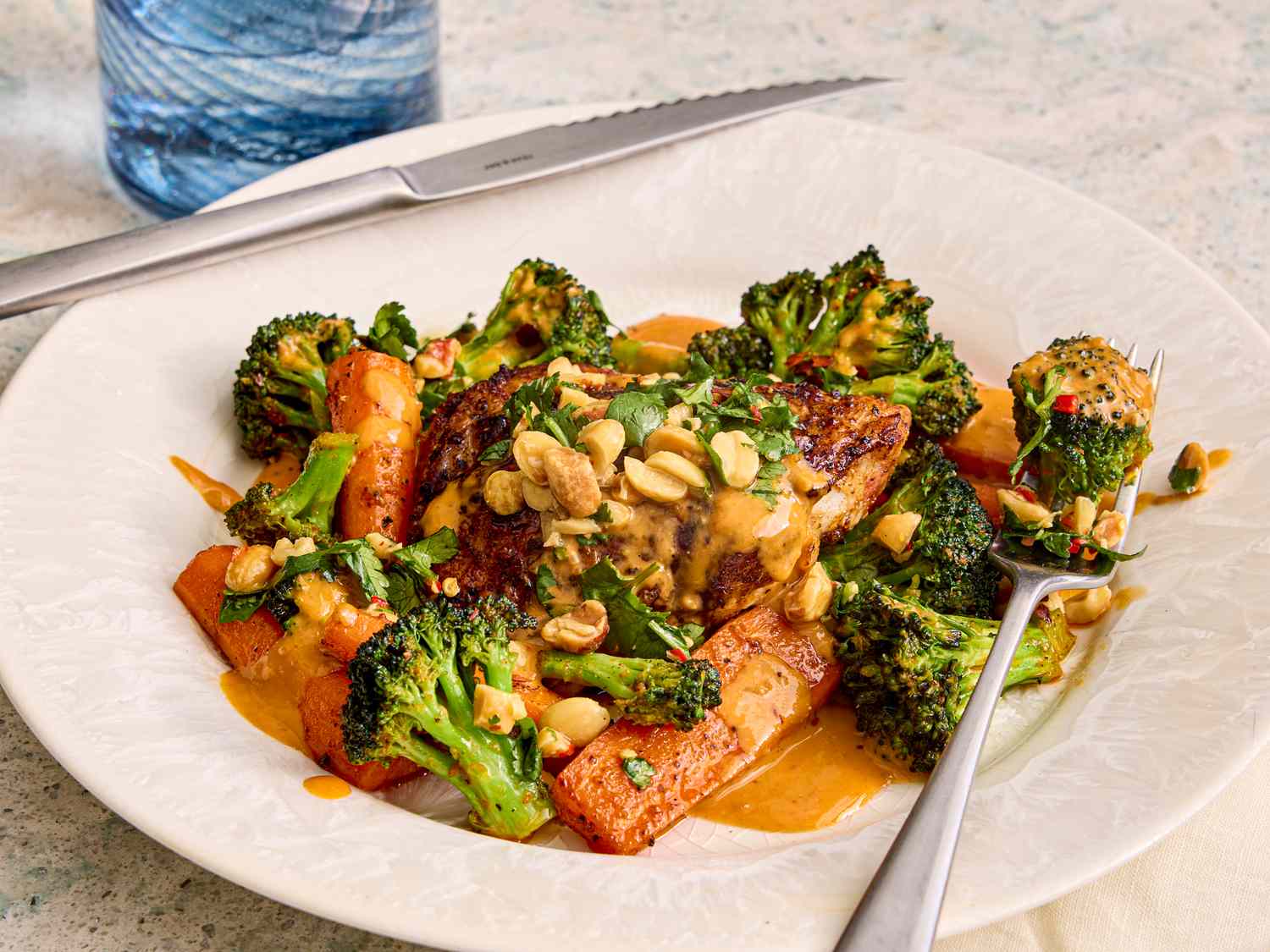
This recipe, developed by Nicole Hopper in our Birmingham, Alabama test kitchen, offers the ease we all want from a one-pan dinner and layers on bold, Thai-inspired flavors, using smart cooking techniques that make it feel genuinely exciting—not just “fine for a Tuesday.” This dish pairs high-heat roasted chicken thighs with carrots and broccoli, seasoned with Thai red curry paste, and finished with a warm peanut-lime dressing and a fresh cilantro-peanut relish. The flavors nod to Thai satay—savory, nutty, and bright—without requiring much more effort than your average sheet-pan dinner.
When cooking an entire meal on a single sheet pan, placement and timing are key to ensuring the food is properly cooked. You’re asking ingredients with wildly different needs—fatty chicken thighs, dense carrots, delicate broccoli—to cook at the same temperature, at the same time, on the same surface. Without a plan, one ingredient might burn while others remain undercooked. Smart staging and thoughtful positioning are what separate a deeply browned, well-textured sheet-pan dinner from one that tastes like everything was simply roasted until edible.
Serious Eats / Robby Lozano, Food Stylist: Margaret Dickey, Prop Stylist: Christina Daley
This recipe staggers the vegetables instead of dumping them all on at once, which would be the fastest way to guarantee at least one sad, overcooked component. The chicken goes in first, so its skin has time to render and crisp. The thighs are parked in the corners of the pan, putting them in the hottest zones, encouraging better browning and crispier skin. Carrots follow, giving them enough exposure to soften and caramelize. Broccoli joins at the end, just long enough to char lightly while staying vibrant and sweet. And everything finishes at the same time.
The choice of bone-in, skin-on chicken thighs is equally intentional. Thighs are forgiving, flavorful, and happiest at higher temperatures. Cooking them to around 175°F—not just the food safety–recommended minimum of 165°F—ensures the connective tissue breaks down completely, yielding meat that’s juicy and tender rather than technically safe but slightly tight.
And then there are the sauces—plural, because one sauce is never enough when it’s this easy to do two. The recipe borrows a page from a common restaurant playbook that Daniel has praised before: the two-sauce trick. On paper, multiple sauces can sound like chef-y overkill, but in practice, they can be fast, low-stress, and one of the simplest ways to make a straightforward meal feel more complete.
Here, a warm peanut-lime dressing, made of coconut milk, peanut butter, lime juice, and curry paste, coats the chicken and vegetables with rich, satay-like depth. It’s balanced by a cilantro-peanut relish that’s bright, crunchy, and spicy, cutting through the richness. The final sheet pan dinner is bold, savory, and proof that even the most familiar weeknight formats still have room to surprise you.
This recipe was developed by Nicole Hopper; The headnote was written by Leah Colins.
