


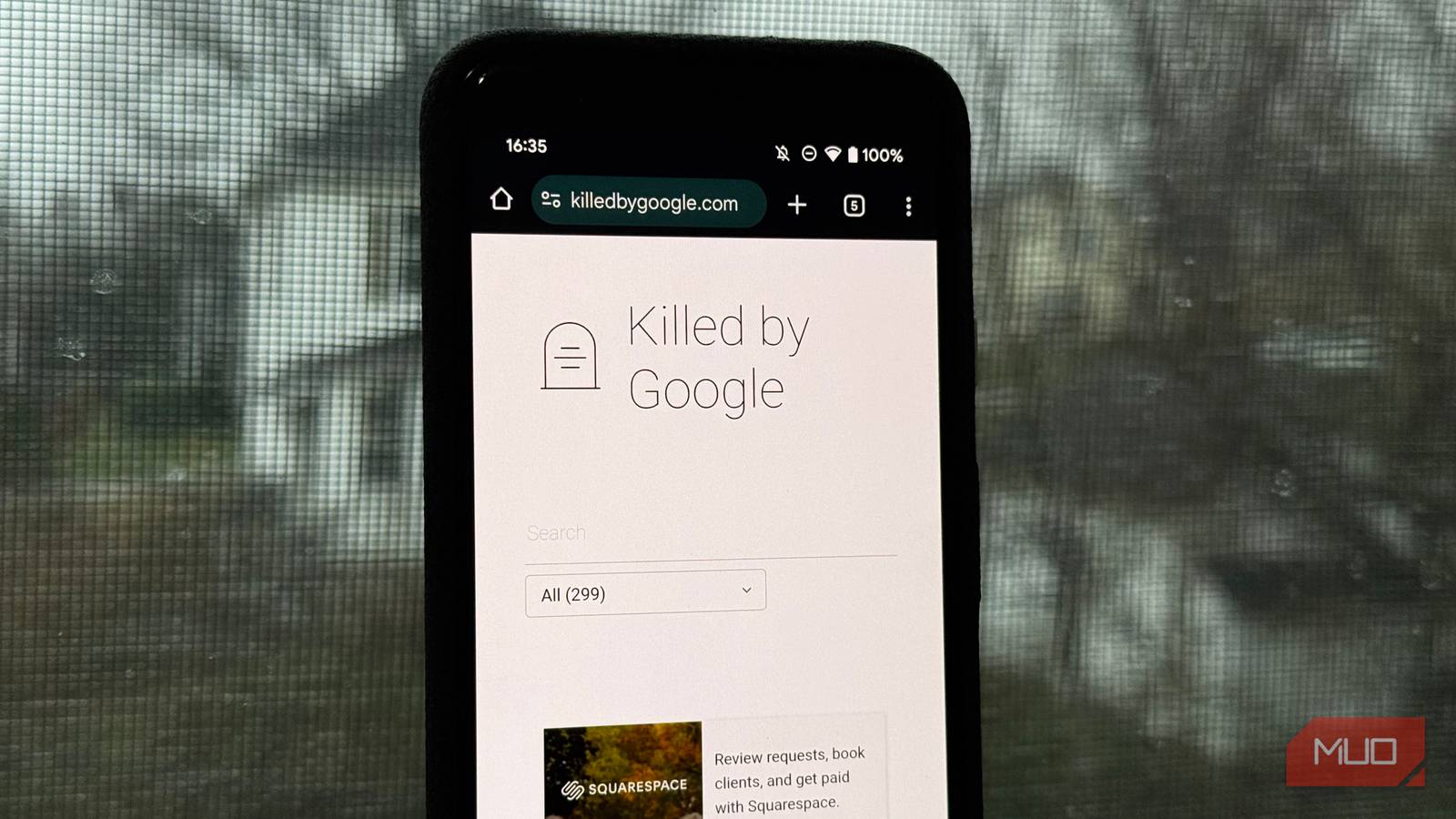
With a business as dominant as Google with its hands in so many areas, it’s no surprise that the company has killed off tons of services. However, Google is infamous not only for shutting down services, but for doing so to many tools beloved by their users.
Many of Google’s shutdowns make sense or had a direct successor step in, but others stung at the time and continue to even today. While there are always alternatives, Google acted too quickly in exterminating these.
Inbox by Gmail (2014–2019)
Better-organized email
In 2014, Google began rolling out an email app (and web tool) called Inbox, which was different than what Gmail offered at the time. It was a “smarter” inbox that sorted your mail for you so you didn’t have to do it yourself.
Rather than showing your inbox as an endless list of emails, it bundled similar messages into groups like Shopping and Travel so you could step through them at once. It would pull vital details from a message, such as shipping estimates or flights, in the preview.
Inbox also combined task management features into your inbox. You could create reminders, pin emails that you hadn’t dealt with yet, snooze emails until later, accept calendar invites, and much more.
While lots of people loved the service, if you already had a detailed method of email management, Inbox could feel like something you had to fight against. Google killed Inbox in 2019, though many of its best features moved to Gmail. Snoozing, suggested follow-ups, and automatic smart replies are all part of Google’s main email offering now.
While it makes sense that Google would only want to manage one email app, nothing ever really carried the Inbox torch after its demise.
Google Cache (2000–2024)
Access the past with one click
Google Cache was a part of Google Search that let you view the version of a website last taken by a web crawler. When a website was temporarily down, had recently changed, or otherwise wasn’t available, viewing the cached results was incredibly helpful.
Cached results weren’t a true archive utility like the Internet Archive. Instead, they let you see the “last good version” of a page. Google and Bing both stopped supporting cached pages in 2024, saying that the web is more reliable now and many pages aren’t optimized for viewing this way.
While viewing cached pages wasn’t always pretty, it was an important service to let people check on recent site changes. For example, if a page initially published false information but then corrected it, being able to confirm that is important.
The Wayback Machine is the best alternative to Google Cache. It’s now “integrated” with Google search results, but this requires you to click the three-dot button next to the result, followed by More about this page, scrolling down, and clicking See previous versions on Internet Archive’s Wayback Machine.

I tested this with MUO’s homepage and it loaded a copy of the site from five days ago, with no way to adjust the date.
Google Hangouts (2013–2022)
The closest Google ever came to unified messaging

I recently examined Google’s troubled history with messaging apps. Since 2005, the company has released and later discontinued an absurd number of messaging platforms. It’s thus not surprising that Google killed Hangouts, but it was the best shot the company had at providing one messaging tool that worked for all purposes.
Hangouts supported text chat along with voice and video calls, and was even the default SMS app on Android for a while. It worked for both personal and business use, and had the core features people expect from a messaging app. But Google threw all that away in favor of two replacements that didn’t last long (Allo and Duo). Then we got a confusing mess of business apps that later became consumer-focused, all with redundant names.
While Google’s chat apps are relatively stable now, I don’t know many people who use Google Chat or Google Meet for non-business purposes. Google missed its chance to compete with WhatsApp and other now-dominant platforms.
Google Reader (2005–2013)
The epitome of “gone too soon”
If you ask people to name their favorite terminated Google product, Google Reader would be a common answer. It was one of the most-used RSS readers, allowing you to view new articles from many sources all in one place. Over time, it became more mature with features like handy keyboard shortcuts, various view options, and powerful search.
Google unceremoniously shut it down in 2013. The company said that Google Reader had a “loyal following” but declining usage, and recommended that people go elsewhere.
Feedly was a popular news aggregator replacement, which is still around today and does much of what Google Reader offered. However, some of its functions are locked behind a subscription, which Google Reader never had.
Many people have speculated why Google shut Reader down; it was likely to push people toward sharing on Google+ (which is also not around anymore). At any rate, it acted as yet another step toward the web becoming less open and more centralized around major companies.
Authorized captions only

YouTube used to allow viewers to contribute subtitles to videos. If the uploader didn’t add their own subtitles and the automatic ones were poor, someone could take the time to caption the video in its original language or translate it into another.
In 2020, YouTube scrapped this, citing low usage and abuse problems. Lots of people were upset, since automatic subtitles can be finicky and machine translations often fail to capture nuances. If people took the time to add subtitles and the creator approved them, why not leave the option there?
While this feature’s removal was mourned by many, YouTube’s default tools for this have improved in the interim to fill the gap (somewhat). YouTube’s automatic captions have gotten much better, and the platform even offers automatic dubbing into other languages.
These are great options to make videos accessible to more people, but they’re another way YouTube has lost the human element over time. A person handling these can sidestep many of the common issues with subtitles.
Honorable mentions of the Google Graveyard

The above tools are the ones that stand out most, but the Google Graveyard catalogs dozens of other services that Google has taken out back over the years.
Google Cloud Print (2010–2020) was akin to Apple’s AirPrint, making it easy to print from any supported device. Since it was discontinued, built-in printer support has gotten better. If the official apps from printer manufacturers don’t work, then you have to turn to third-party options like PaperCut MobilityPrint.
Picasa (2002–2015) was Google’s desktop image organizer and viewer, which was discontinued in favor of the more modern Google Photos.
I enjoyed Songza (2007–2016), which offered curated music for moods depending on the time of day. Its features were folded into Google Play Music and later YouTube Music. Tools like Spotify’s Daylists are a successor to Songza, too.
How big will this cemetery get?
Lots of tools in the Google Graveyard were killed off because they were replaced by an equivalent, like Google Now giving way to Google Assistant, Google Play Music shifting to YouTube Music, and many others. But several others never had a true successor, meaning they’re missed even today.
What will be next on Google’s hit list? Will it be time for yet another set of messaging apps soon? If I had to guess, my money would be on Google Fit and Fitbit being merged, Google Voice finally being abandoned, or perhaps either Google Fi or Google Fiber will meet an untimely demise.
