


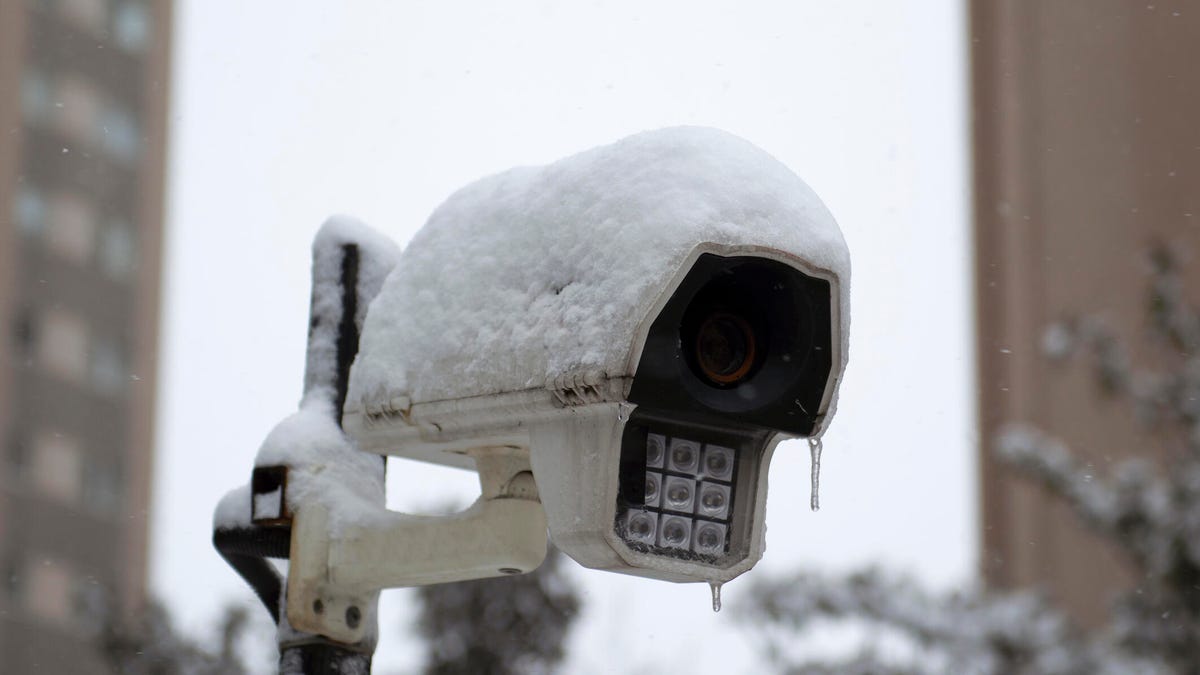
Winter storms aren’t always kind to home security devices like cameras, especially with high winds and temperatures that drop well below freezing. How do you know if your security cam or video doorbell will survive?
The good news is that app-connected devices like these often have warnings if temperatures get too low and start affecting performance, so you won’t be caught entirely off guard. However, in my years of testing security tech, I’ve learned a few tricks to make sure that my cameras stay working during freezing, snowy winters. Here’s what you need to do.
Check the weather resistance rating on your devices
Outdoor security cameras and similar devices come with a handy cheat code to show what kind of weather resistance they have, known as IP ratings. Product info right on the product page or box should have the IP rating listed somewhere, usually under specifications. If a camera does not have an IP rating, it’s not meant to be used outside and won’t survive in the rain at all.
IP ratings have two numbers, as in “IPXX.” The first number is dust protection, an important consideration but not as important for the weather as the second number, a 1 through 9 rating of how the camera deals with water. The higher the rating, the better the camera has tested at surviving more water, water jets, powerful water jets and so on. Look for cameras that offer IPX5 or IPX6 ratings for reliable outdoor protection in winter weather conditions. Finding more than that on devices is rare, but it shouldn’t be less.
The Blink Outdoor 4 has an adjustable mount that’s sturdy enough to stay at the right angle.
Product info sections should also have temperature limits to show the safe operation conditions of the camera. The Nest Outdoor Cam, for example, has an operating range of -4° to 104°F, a common range should be fine for most climates but may struggle if your area is known for particularly cold winters. Some cameras may even include humidity ranges for tropical users.
Mount cams under eaves or awnings
Even a high weather resistance rating doesn’t make outdoor cameras invincible. You still want to give them what protection you can, especially against direct precipitation. That’s even more important in cold winters where accumulating rain or snow can freeze against the camera.
When placing your cam, choose a comfy spot under rooftop eaves or a nearby awning. Think about where you’d like to stand during heavy rain and that’s a good spot for your camera, too. Fortunately, most homes have plenty of covered areas that will work, so you shouldn’t have trouble finding a spot that still gets all the right angles.
Don’t tilt security cameras upward
With the right placement, you should never have to tilt a security cam up anyway, especially with today’s reliably wide fields of view. But there’s another reason to resist the urge to tilt a camera up — perhaps to watch a bird nest or an uphill fence gate — and that’s the rain.
Rain can collect on a tilted-up camera lens and blur it, staining the lens over time. It’ll also deposit lots of gunk that will dry out and become very difficult to remove. For clear picture and easy maintenance, keep cameras pointed ahead and slightly down if possible.
Today’s latest security devices have many advantages that old systems can’t provide.
Keep the camera out of wind gusts
All parts of your home are probably a little windy during a storm, but direct, powerful wind gusts cause two key problems. First, they can blow a whole lot of dust and debris into a camera, which is very bad for the lens and not great for the casing, either. Second, in snow and rainstorms, direct wind can blow a whole lot of precipitation onto a camera that would otherwise be protected.
So, if you know of any especially gusty corridors or corners around your home, avoid putting security cams in those spots.
Find a full camera enclosure
You can also consider a full camera enclosure, a bit like a birdhouse but with a transparent window in front. The camera goes inside and is safe from all kinds of elemental pounding. Also, the enclosure is warmer and you can even add a heating device to keep the camera away from freezing conditions.
Since enclosures cost extra, are a pain to set up and require frequent maintenance or cleaning, we don’t suggest them unless conditions are very extreme. If winters drop below 0 degrees in your region and are infamous for huge blizzards, an enclosure may be worth your time. Otherwise, it’s probably not necessary.
This Tapo cam can fit nearly anywhere and includes local storage options.
Use protected, waterproof cables
If you’re using wired security cams, PoE cameras or similar models, check that your cables are rated for outdoor use and firmly attached. You can usually identify outdoor-rated cables because they’ll have an extra silicone cap or connector shield for security, a sign that the cable is ready to withstand some moisture.
In some cases, you may also want to install a protective junction box to handle the wiring or outlet that a camera needs, which is usually a job for an electrician.
Bonus tip: Mount security cams firmly if you get bad winter weather
Outdoor security cams come in all shapes and sizes these days, including wireless options and model that have adhesive mounts. Technically, there are 3M adhesive stickers designed for outside use that can even support security cameras, but you don’t want to use them if you get bad winter weather. Stick to screw-in mounts for these conditions.
Want more information on how to care for your security cameras? Take a look at our guides for the best overall security cameras and how to choose one, the spots you should never install a security camera and how to place a camera the right way.
