


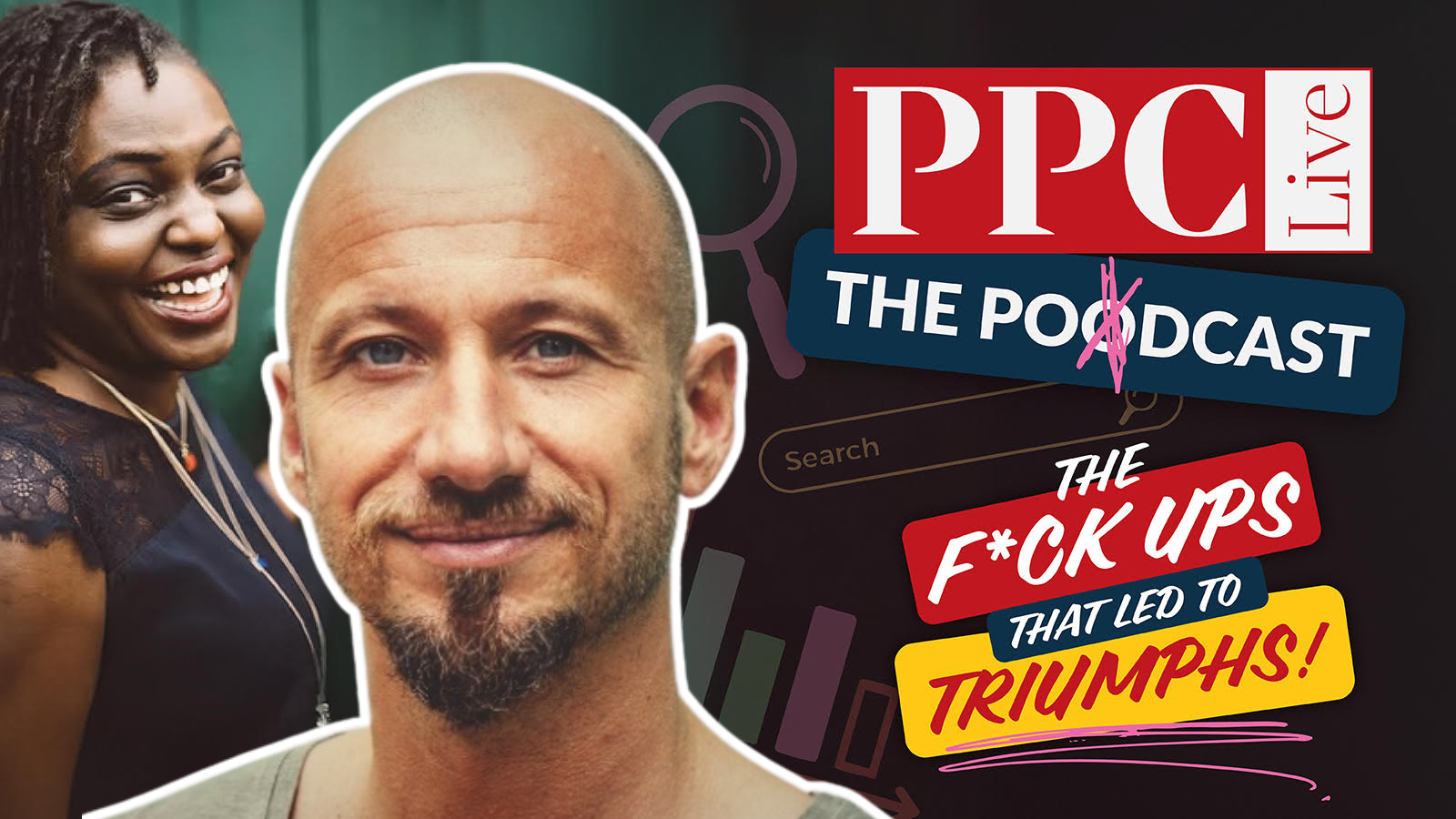
On episode 333 of PPC Live The Podcast, I speak to Nils Rooijmans, a renowned Google Ads script expert and top 10 PPC influencer, where she shares the experience of a costly error that serves as a valuable lesson for anyone managing paid search campaigns.
The Setup: A quick account onboarding gone wrong
The trouble began when one of Rooijmans’ existing clients acquired another company in the airport parking services industry. The acquired company was already running a small Google Ads account, and the client wanted Rooijmans to manage it without paying additional fees for proper onboarding.
Against his better judgment, Rooijmans agreed to a compromise: they would slowly migrate the new account to their existing setup over time. The new account would be left largely unmonitored during this transition period.
The fatal mistake: Ignoring Google’s warnings
After six weeks of minimal attention, disaster struck. Clicks and conversions dropped dramatically, eventually falling to zero. When investigating, Rooijmans discovered that Google had sent multiple emails warning that the consent management platform wasn’t implemented correctly. The emails threatened to stop allowing conversion tracking if the issue wasn’t resolved.
“We were very ignorant. We didn’t read the emails from Google, and we were relatively slow in responding to the issue,” Rooijmans admitted. The result? Google stopped processing conversion tracking data for that specific domain entirely.
The cascading effect of lost conversion data
Without conversion data, Google’s smart bidding algorithm made a logical but devastating decision: if clicks aren’t converting, reduce CPC bids to avoid wasting budget. Traffic gradually decreased, actual conversions were still happening but going unrecorded, and the campaigns scaled down to nearly nothing.
The website continued to receive bookings from other sources, which initially masked the severity of the problem. By the time the issue was fully identified, significant revenue opportunities had been lost.
The root cause: skipping proper onboarding
Through a detailed root cause analysis, Rooijmans identified the fundamental problem: allowing a client to bypass the standard onboarding process. Without proper setup, several critical safeguards were missing, including monitoring scripts for conversion tracking, assigned team members to check account emails, and standard processes for account health checks.
“During this root cause analysis, I always ask myself the why question five times,” Rooijmans explained. This technique, borrowed from quality management practices, helps identify the underlying cause rather than just treating symptoms.
The client conversation: managing expectations
Breaking the news to the client proved complicated. The business owner, Rooijmans’ primary contact, was relatively understanding since ad spend had also decreased. However, a meeting with the company’s CFO took a different turn.
The financial executive expected compensation for the lost revenue opportunity, even though actual bookings were still occurring and not all revenue was truly lost. To maintain the relationship, Rooijmans reduced his invoice, though he noted that the client had agreed to a slower migration process with limited oversight.
The technical fix: Working around Google’s limitations
Fixing the conversion tracking proved surprisingly challenging. Google support couldn’t resolve the issue despite multiple contacts with different departments. The problem was technical: Google had flagged the specific domain name, returning HTTP 400 errors for all conversion tracking requests instead of the normal HTTP 200 responses.
The workaround involved either importing conversions from Google Analytics (GA4) or setting up new conversion tracking through the manager account. “Don’t expect any help from Google,” Rooijmans warned based on this experience.
In the short term, switching from smart bidding to manual CPC bidding restored traffic levels while the conversion tracking issue was being resolved.
Key lessons for PPC professionals
Never skip onboarding
Regardless of client pressure or budget constraints, proper account onboarding is non-negotiable. Standard processes exist for good reason and protect both the agency and the client.
Monitor conversion tracking religiously
Rooijmans runs automated scripts that monitor conversions and conversion values, alerting him immediately to significant changes. In the era of smart bidding, conversion tracking is the foundation of account performance.
Don’t be arrogant about Google communications
While many Google emails are promotional or contain unhelpful suggestions, some contain critical compliance information. The challenge is distinguishing between noise and genuine warnings.
Implement the “Fail Fast, Fix Fast” culture
When mistakes happen, the priority sequence should be: take a deep breath and assess the situation calmly, fix the immediate issue to restore performance, communicate transparently with the client, perform root cause analysis, and document learnings in a post-mortem.
Use the five whys technique
Asking “why” repeatedly helps uncover root causes rather than surface-level symptoms. This prevents the same mistake from occurring in different forms.
Additional Common PPC Mistakes to Avoid
Black Friday budget management
During high-traffic events like Black Friday, Google may spend significantly more than usual. While the platform allows spending up to twice the daily budget, exceptional circumstances can push spending even higher. Monitor spend closely during peak periods and be prepared to adjust budgets to capture opportunities.
Double-counting conversions
One audit revealed a freelancer had set up both imported Google Analytics conversions and native Google Ads conversion tracking, both marked as primary. This inflated reported results by roughly 100%, creating unrealistic expectations that had to be carefully managed when corrected.
Building a mistake-tolerant team culture
For agencies and teams, Rooijmans recommends several practices including implementing a second pair of eyes to review all work, encouraging experimentation with clear hypotheses and measurement plans, anticipating both positive and negative outcomes before testing, and maintaining detailed documentation of lessons learned.
“We learn through mistakes, and that’s part of the process,” he emphasized. The key is creating systems that catch errors quickly and turn them into learning opportunities.
The bigger picture: Remote work and PPC success
Interestingly, Rooijmans credits his PPC career with enabling his digital nomad lifestyle. Working from locations like Curaçao in the Caribbean or his Amsterdam houseboat, he’s built what he calls a “10-hour PPC week” through extensive automation and systematization.
This lifestyle was inspired by Tim Ferriss’s “The Four Hour Work Week,” which Rooijmans discovered at a conference in 2004. The lesson? Proper systems and automation not only prevent mistakes but also create freedom.
Final thoughts
Even experts who have built their careers on automation and efficiency make mistakes. The difference between a career-ending error and a learning opportunity often comes down to how quickly problems are identified, how transparently they’re communicated, and how thoroughly the root causes are addressed.
For PPC professionals at any level, Rooijmans’ experience offers a clear reminder that shortcuts in processes eventually become obstacles to success. Whether it’s ignoring certain types of emails, skipping onboarding steps, or failing to monitor conversion tracking, these seemingly small oversights can cascade into significant problems.
The good news? With the right monitoring tools, clear processes, and a culture that treats mistakes as learning opportunities, even serious errors can be resolved while maintaining client relationships and professional growth.
Search Engine Land is owned by Semrush. We remain committed to providing high-quality coverage of marketing topics. Unless otherwise noted, this page’s content was written by either an employee or a paid contractor of Semrush Inc.
