


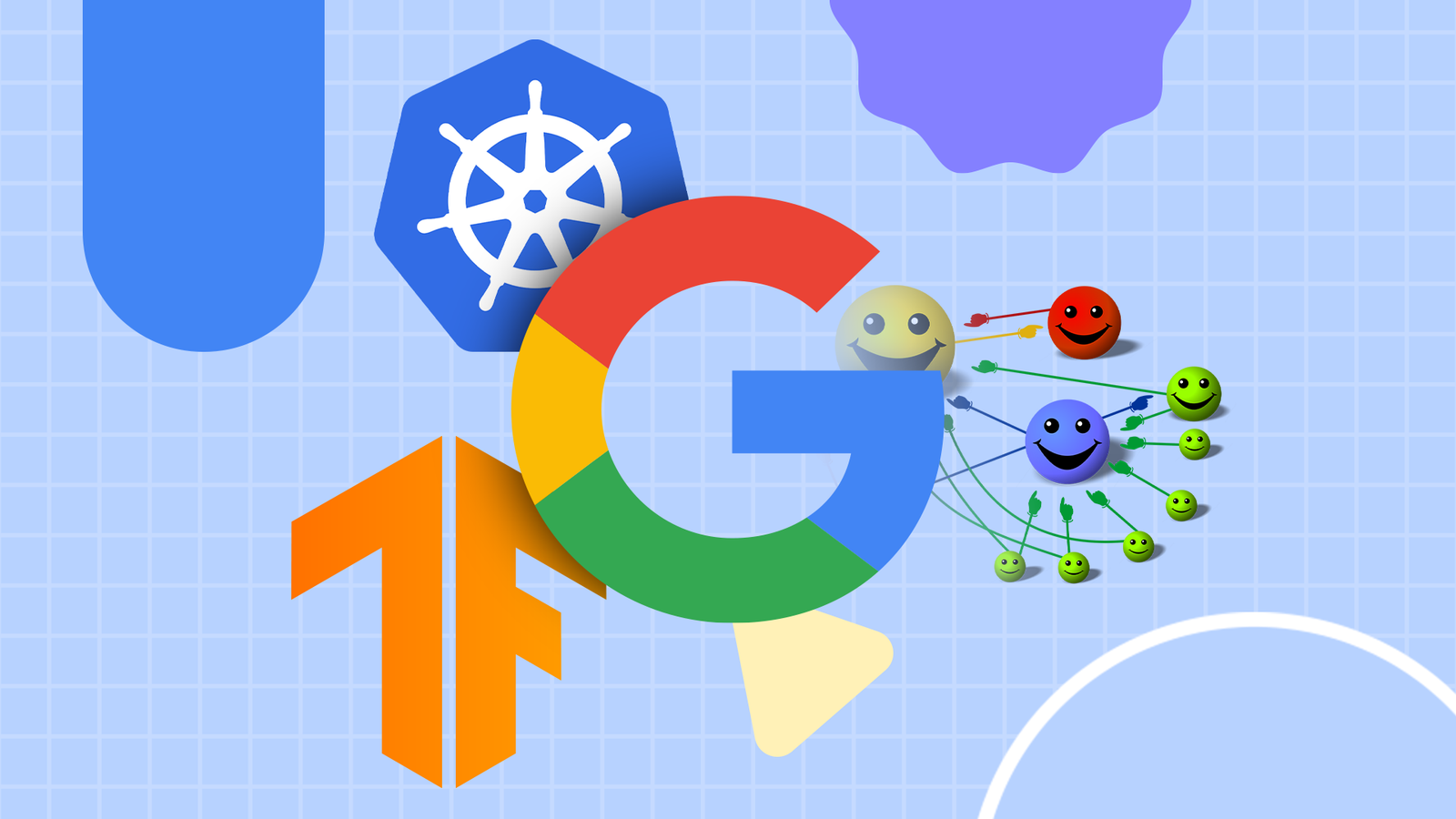
Most people think of Google as a consumer company, best known for products like Search, Android, Gmail, and Maps. These are useful tools, but they are mostly things you interact with directly. What often gets overlooked is how much of today’s internet runs on technology Google invented long before it became a household name, not features or apps, but deep infrastructure that shapes how the modern web works every day.
Some of Google’s most important contributions are things you never see. An algorithm that decided which pages deserved attention. A system for running software at a massive scale across thousands of machines. A framework that helped turn machine learning from an academic exercise into something developers could actually use. All of them started as internal Google projects, were released into the wider world, and became foundational pieces of the modern internet working unseen in the background. These are three of the most important examples, and chances are you use all of them every day without realizing where they came from.

PageRank was Google’s original breakthrough, and if you have ever cared about SEO, you have spent time thinking about it whether you realized it or not. Before Google, search engines mostly ranked pages based on on-page signals like keyword density and basic metadata, which made results easy to game and often frustrating to use. Remember keyword stuffing? PageRank changed that by treating the web like a network of recommendations, using links as a signal of trust and authority. A link from a reputable site mattered more than dozens from low-quality ones, and suddenly search results started to feel smarter.
I’ve spent years trying to improve PageRank without chasing it directly, because that was always the rub. You could not brute-force or keyword stuff your way to success. You had to earn it by publishing useful content, building real credibility, and attracting links naturally over time. Even though Google no longer talks about PageRank publicly and its ranking systems are far more complex today, the core idea never went away. The web is still judged by who links to whom and why, and that single insight did more to shape modern SEO and the structure of the internet than almost any algorithm that came after it.
Kubernetes: The Google idea that now powers the cloud

Kubernetes didn’t start as a product Google set out to sell. It grew out of a problem Google had already solved internally at a scale most companies never reach. For years, Google was running containers at enormous scale across massive data centers, and it needed a reliable way to deploy, scale, and heal applications automatically. That internal system was called Borg, and it shaped how Google ran its own services long before the rest of the industry caught up.
When Google released Kubernetes as open source, it wasn’t just sharing a tool. It was exporting a way of thinking about infrastructure. Instead of managing servers directly, you described what you wanted your applications to look like and let the system handle the rest. That idea caught on fast. Today, Kubernetes sits underneath nearly every major cloud platform and countless internal systems, whether developers realize it or not. If you’ve deployed a modern web app, used a managed cloud service, or interacted with software that scales seamlessly in the background, there’s a good chance a Google-born idea is doing the heavy lifting.
TensorFlow: The framework that helped kick-start modern AI development

TensorFlow came out of a very practical need within Google. The company was already using machine learning everywhere, from search ranking to image recognition, but the tools were fragmented and hard to scale. TensorFlow unified those efforts into a single framework that could run on everything from a developer’s laptop to massive clusters of specialized hardware. When Google released it as open source, it lowered the barrier to entry for machine learning in a way few tools ever had.
Suddenly, developers didn’t need a PhD or a million-dollar lab to experiment with neural networks. TensorFlow made it possible to prototype, train, and deploy models using the same tools Google was relying on internally. Even as the AI landscape blew up and newer frameworks have gained traction, TensorFlow’s impact is hard to overstate. It helped move machine learning out of academic papers and into real products, and in doing so, it played a major role in setting the stage for the AI-driven software and features that are popping up everywhere.
What ties all of these together isn’t just that Google built them, but that Google released them and let the rest of the internet run with the ideas. PageRank reshaped how information is discovered, Kubernetes redefined how software is deployed at scale, and TensorFlow helped push machine learning into the mainstream.
None of them are flashy consumer features, and most people never interact with them directly, but that’s the point. They sit underneath the tools and services we rely on every day, doing the heavy lifting so everything else feels fast and reliable. That kind of impact is easy to miss, but it’s hard to overstate.
