



Open-source software development is driven by global communities, and, in accordance with human nature, those communities will disagree, form factions, and push their own agendas. When two or more groups have a difference of opinion on something, they’re going to compete to become the solution everyone accepts, and sometimes things get messy,
While your clean installation of the latest Linux distro of your choice might seem like the product of peace, that software was forged in the fires of battle for the minds and market share of users like you. These are three of the most important Linux wars that have shaped the OS that runs the world today.
The Holy War over freedom

The first great conflict in the history of Linux and all free and open software was about the fundamental question: What does “free” mean in this context?
That’s where the whole “free as in freedom, not as in beer” idea comes from. The Free Software Foundation or FSF (the organization behind the GPL license scheme) felt that this was a moral issue. Code should stay open forever, and if a for-profit company writes new code to improve or expand open software, they owe the community that code under the same terms the original code was released.
The Open Source Initiative (OSI) had a different view. Formed in 1998, the OSI were the ones to coin “Open Source”, and the overall goal was to get businesses to adopt FOSS.

Linux Mint vs. Ubuntu: How Different Are They, Really?
Which is the better pick for a complete beginner? Is there even a difference?
In practice, licensing generally allowed for both philosophies, but with the release of the GPLv3 license by the FSF. This included language and provision to prevent companies from locking down GPL software in consumer devices, as in the case of TiVo. Obviously, few companies would agree to a license that would prevent them from locking down a device, so GPL3’s release has been somewhat controversial.
Tellingly, the Linux kernel has remained GPLv2, and it would obviously be an issue for all the millions of devices that run on Linux if there was no legal way to lock them down. Either way, this is an ongoing debate that shapes Linux and every piece of open-source software to this day.
Desktop wars without end

After all these years, the big choice of desktop environment is still between KDE and GNOME. A major reason that GNOME even exists is primarily that KDE relies on the Qt framework, which raised concerns about licensing. Today, the Qt framework offers a dual-licensing model, and the KDE desktop environment uses the open-licensed version of the software. So KDE is in fact completely open-source, but at GNOME’s inception that was still a point of concern.
In another timeline, GNOME was never developed and KDE might have ruled as the only choice, but today that ideological split has resulted in two main desktop environment options, and, of course, further splits and schisms are still happening within each camp.
Systemd vs. the old guard: the init war that tore Debian apart and split the community in two

To date, the “init war” is probably the one that’s been the most dramatic. The “init system” is the first program to run after the kernel is loaded, and it manages services, logging, devices, and startup behavior. Systemd arrived with a promise to unify and integrate this function in a way that fixed problems with buggy shell scripts and gnarly situations like race conditions.
That sounds great, so what’s the issue? The problem people have with systemd isn’t so much that it doesn’t work or do a good job, but that it’s philosophically opposed to how Unix and Unix-like OSes should work. It concentrates a lot of control in one place.

5 pioneering Linux distros that quietly faded into history
Explore the rise and fall of these groundbreaking Linux systems, and how their legacies live on.
When Debian Linux—on which a massive number of Linux distros are built—decided to make systemd as its default, all hell broke loose. Of course, the FOSS community being what it is, the answer was to say “fork it” and so we now have Devuan. A systemd-free Debian fork. However, if you aren’t arguing with people about init systems on forums until the small hours of the night, you’re probably using a systemd distro, and it seems that this is modern Linux for better or worse.
These are just three major and important conflicts that have shaped Linux, and what’s interesting to me about this is how open it all is beyond just the code. When it comes to a closed source OS like Windows, exactly these sorts of conflicts and arguments happen, but they happen behind closed doors. By the time the OS ships, everyone’s publicly toeing the line.
With Linux, we don’t only get to see all the dirty laundry aired, it’s also that nothing stops you from participating and helping steer things one way or another. Whether that’s a good thing is a question for another day, but no one can argue that it isn’t fun to watch!
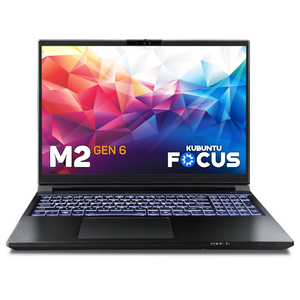

8/10
- Operating System
-
Kubuntu 24.04 LTS
- CPU
-
Intel Core Ultra 9 275HX (2.7GHz up to 5.4GHz)
- GPU
-
NVIDIA GeForce RTX 5070 Ti (dGPU), Intel Graphics (iGPU)
- RAM
-
32GB Dual-Channel DDR5 262-pin SODIMM (5600MHz)
