



Summary
- Agentic AI and generative search are guiding product discovery and decision-making.
- Social commerce is maturing with native shopping tools and enhanced product discovery.
- Search engines are adapting to conversational searches with answer engine optimization.
- Consumers are engaging with video and livestream content featuring interactive elements.
- Businesses are switching to a headless architecture to streamline omnichannel experiences.
AI-led discovery and social shopping tools haven’t just changed the landscape; they’ve rewritten the rules. It has moved past the post-pandemic stabilization and into the era of “Agentic Commerce,” hybrid social shopping, and hyper-efficiency.
For marketers, keeping a pulse on the latest social media trends and ecommerce stats is necessary to adapt to these changes.
The global ecommerce market is projected to exceed $6.8 trillion in 2026, largely driven by mobile shopping, social commerce and AI integrations. And if you want a share of the market, these latest ecommerce trends and stats will help you keep up with the times.
Top social media ecommerce trends shaping the industry in 2026
The ecommerce industry has witnessed a massive shift thanks to the rise of social media ecommerce and AI-led buying. With speed and convenience being major factors influencing the online shopping experience, AI and in-app shopping features are shaping trends.
Let’s look at some of the biggest social commerce trends to pay attention to right now.
1. The rise of agentic AI and generative search
When it comes to the latest ecommerce trends, hyper-efficiency is the name of the game with AI speeding up how consumers discover and buy products.
Simple customer service chatbots out. Agentic AI is in, autonomously facilitating entire checkouts and buying decisions. From anticipating recurring purchases to comparing prices across multiple retailers, AI agents are creating more seamless buying experiences with minimal user intervention.
Morgan Stanley estimates that agentic shoppers could account for up to $385 billion in ecommerce purchases in the US by 2030.
Aligning with the increasing use of AI in customer journeys, zero-click searches and AI-led customer interactions are moving from support functions to primary revenue drivers. People are letting AI-powered search engines and generative summaries streamline product discovery and buying decisions.
Bain & Company’s research even found that 80% of consumers use zero-click results in at least 40% of their searches.
2. Social commerce maturity and the creator-affiliate hybrid
Social commerce is thriving as platforms jack up their search and shopping features. With in-app checkout features and shoppable creator content, social platforms are making it easier than ever for users to discover and buy products directly.
So instead of being a brand awareness tool, social media has evolved into a transactional layer in the buyer journey.
This social media ecommerce trend is even more prevalent among younger consumers, with 44% of Gen Z shoppers having bought something on social media platforms.
Platforms like TikTok are particularly effective for driving product discovery. Sprout Social’s 2026 Content Strategy Report found that 49% of Gen Z consumers use the platform to find their next purchase.
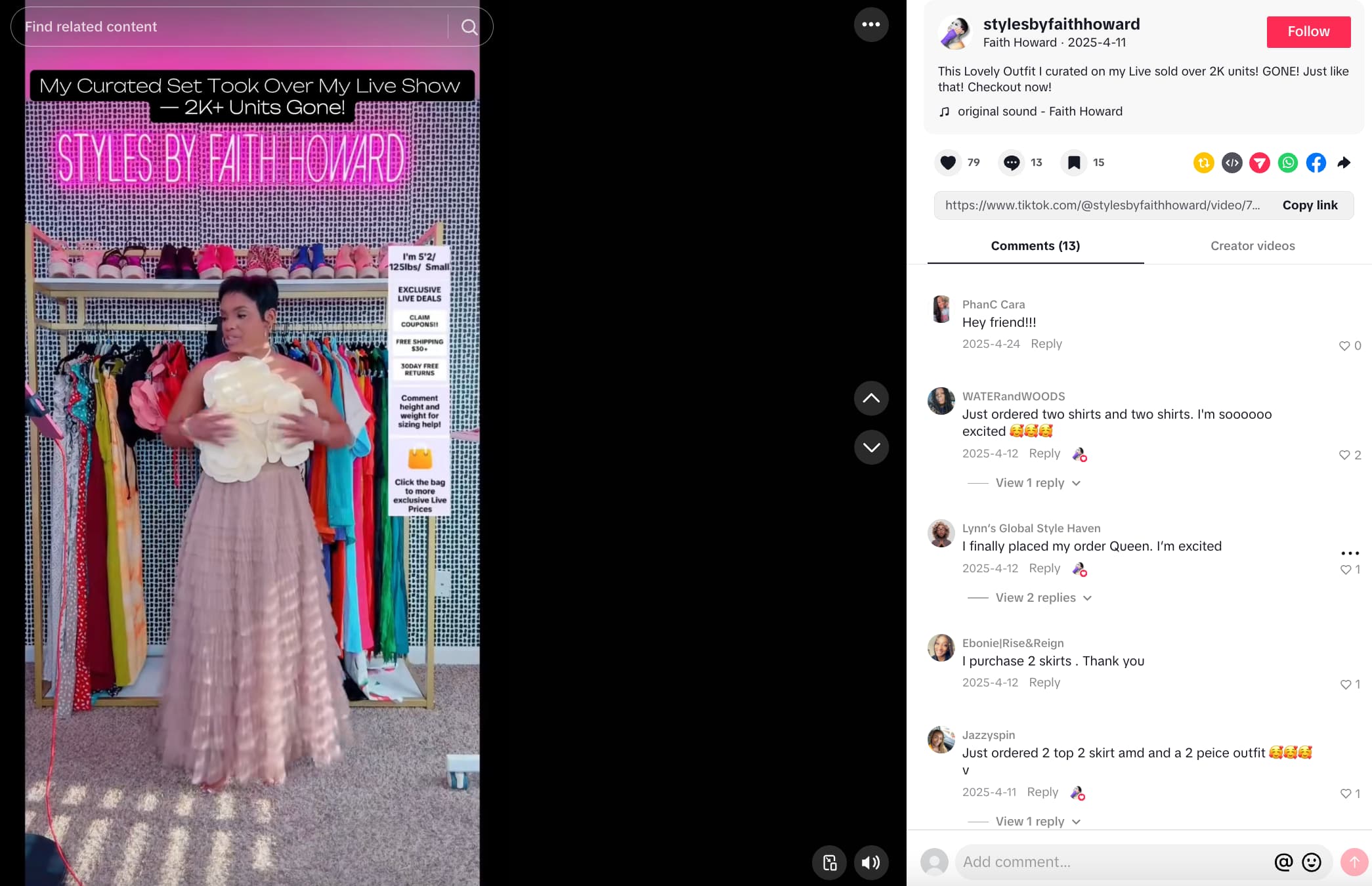
And TikTok is capitalizing on this with affiliate tools that let creators create shoppable posts and LIVE streams. So it’s easy for users to instantly buy products after seeing them in creator content. Ecommerce brands can combine these social commerce features with creator marketing to drive instant sales.
Source: TikTok
3. Answer engine optimization (AEO) replaces traditional SEO
Search is changing, and with it, how search engines are delivering results.
Consumers are increasingly turning to social media platforms for product discovery over traditional search engines. In fact, Sprout Social’s Q2 2025 Pulse Survey found that social media is the first place Gen Z consumers search when looking for information. And 37% of consumers turn to social media first for product reviews and recommendations.
Additionally, it’s not just where consumers are searching that’s changing but how they’re searching.
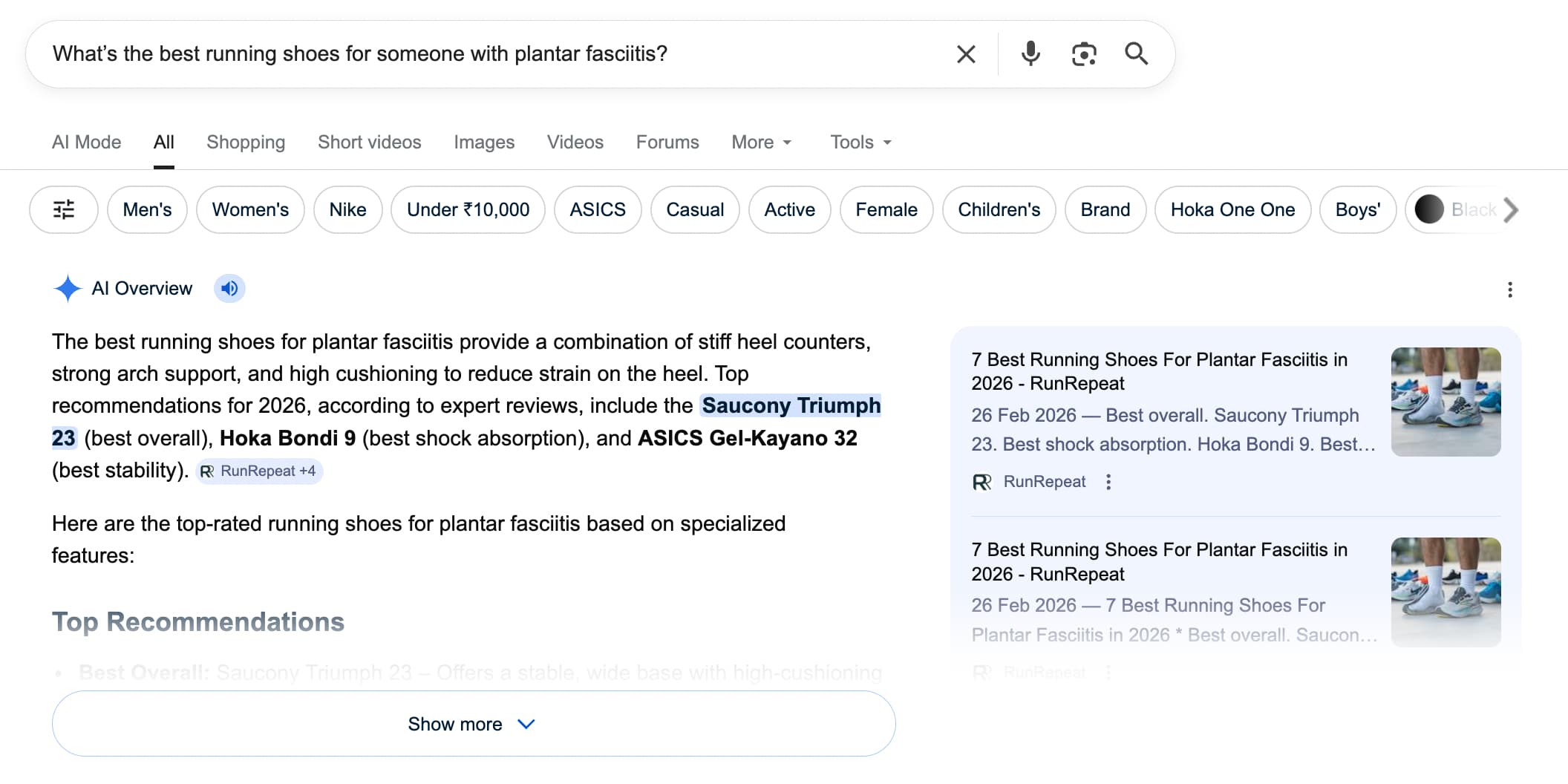
Large Language Models (LLMs) are enabling consumers to use natural human language to search for products instead of relying on traditional search terms. For instance, they can now ask, “What’s the best running shoes for someone with plantar fasciitis?” and get AI-powered recommendations.
This saves them the trouble of doing additional research after searching for “running shoes for plantar fasciitis.”
Source: Google
Bain & Company even found that 30% to 45% of consumers in the US use generative AI for researching and comparing products.
Pro Tip: Rank in relevant LLM and social searches by using Q&A formats. Structure your social captions and product descriptions so they’re easier to scrape and cite for AI bots.
4. Interactive video and Livestream Shopping
Consumers are increasingly watching videos across various social platforms. Whether it’s for entertainment or education, this behavior is also contributing to the rise of video commerce.
The audio-visual nature of videos makes it easier for consumers to understand how the product works and what it looks like. So they can be very effective for gaining trust and guiding purchase decisions.
According to Bazaarvoice, 46% of shoppers prefer short-form video like Reels, TikTok and YouTube Shorts for product discovery and evaluation. And 23% actively look for product demo videos.
Pro Tip: Repurpose high-performing videos into shoppable ads to get the most out of your video content without reinventing the wheel.
And it’s not just short-form video that drives social ecommerce. Formats like shoppable livestreams add an interactive element to your video content, allowing shoppers to ask questions in real time and buy products instantly—all while watching the stream.
In 2025, the global live commerce market was estimated at $172.86 billion, which speaks volumes about the impact of this format. TikTok also reports that 76% of consumers who engaged with TikTok Shop made a purchase from a livestream.
LIVE shopping can even boost platform visibility because the TikTok algorithm favors sessions where users remain engaged.
5. Headless commerce and the omnichannel standard
Omnichannel shopping continues to be the standard in 2026 as consumers seamlessly switch between social, mobile and web across their buying journeys. In fact, about 91% of retail consumers are omnichannel shoppers.
For ecommerce brands, there’s a need to maintain a consistent digital storefront across these different touchpoints.
This is the driver behind the shift toward flexible, API-first stacks. Headless adoption continues to grow, with 73% of businesses now relying on headless architecture.
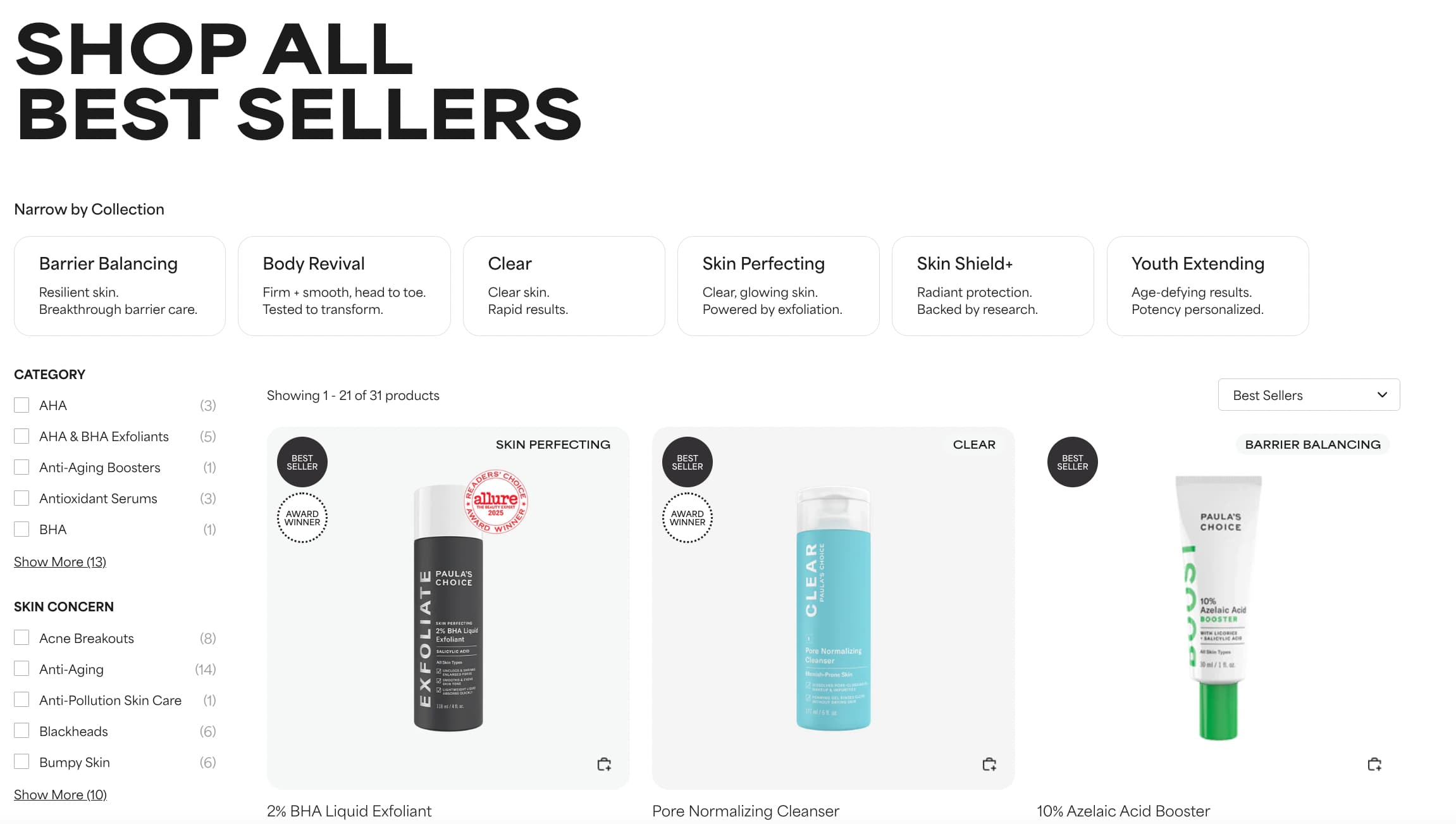
Headless commerce solutions allow ecommerce brands to take omnichannel experiences to the next level. This goes beyond simply having a visually similar storefront and extends to frictionless experiences as shoppers move from one channel to another.
From targeted promotions:
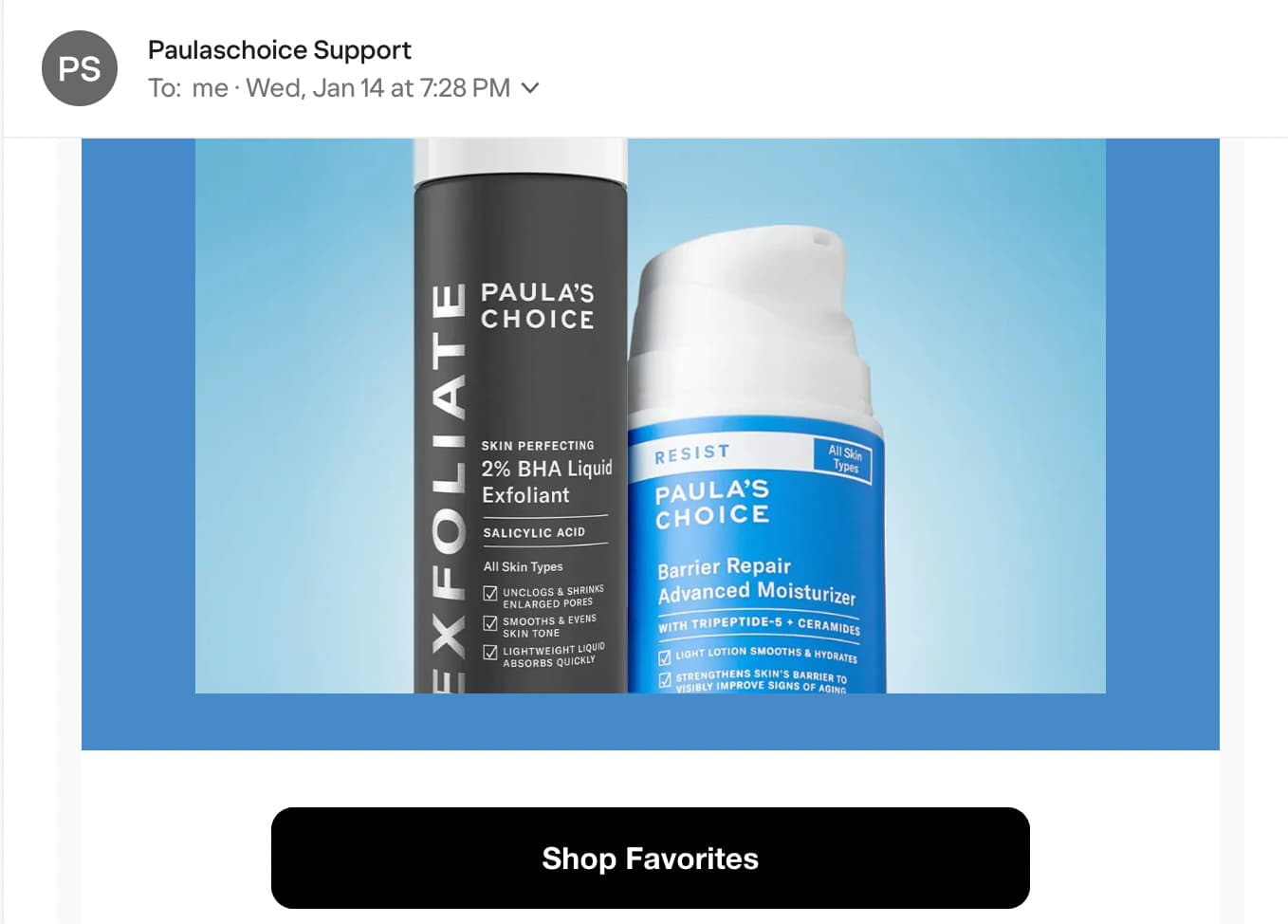
And corresponding landing pages:
Source: Paula’s Choice
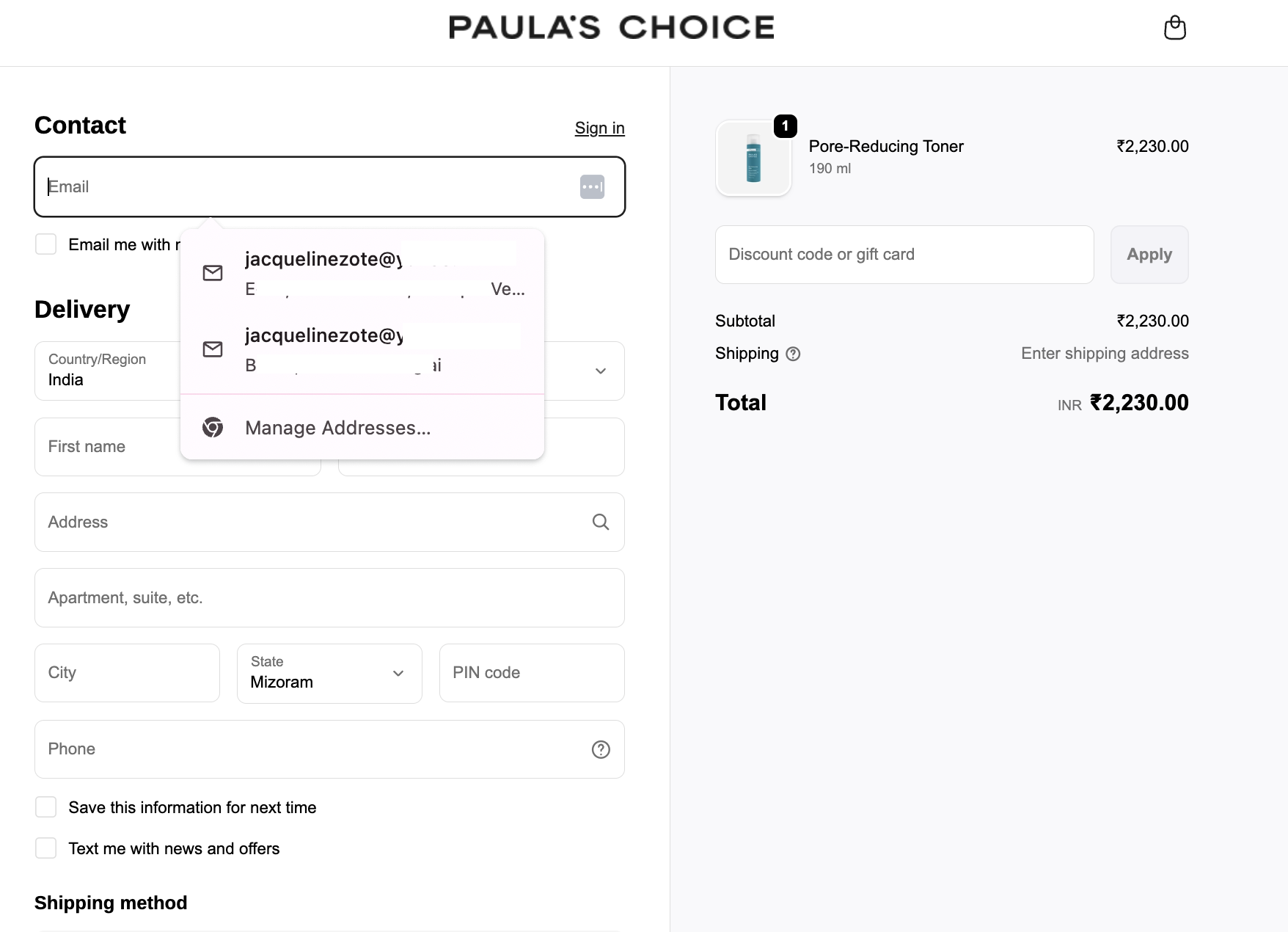
To saved addresses and payment information:
Source: Paula’s Choice
Ecommerce businesses are redefining the omnichannel user experience. Brands like Paula’s Choice, for instance, increased conversion rate by 53.6% with a headless commerce architecture that optimized the user experience.
Essential ecommerce statistics you need to know in 2026
Knowing how consumers shop online, where they shop and what influences their buying decisions is essential to building a solid ecommerce strategy. Beyond general ecommerce stats, you also need to look at the latest social media statistics since social commerce is becoming bigger than ever.
General ecommerce growth and revenue statistics
- According to EMarketer, global ecommerce sales are forecast to grow by 7.2% in 2026, surpassing $6.8 trillion. These numbers highlight a continuous growth for the ecommerce market in spite of economic uncertainties and trade hostilities.
- Ecommerce sales are projected to make up over 21% of total retail sales in 2026—a slight increase from 2025, when ecommerce accounted for 20.5% of total retail sales. This speaks to the growing contribution of online sales channels toward retail sales.
- Statista projects that the number of ecommerce shoppers in the US will grow by around 60 million between 2024 and 2029. And the number is estimated to reach 301 million in 2026, showing a consistent increase in people who use ecommerce shopping channels.
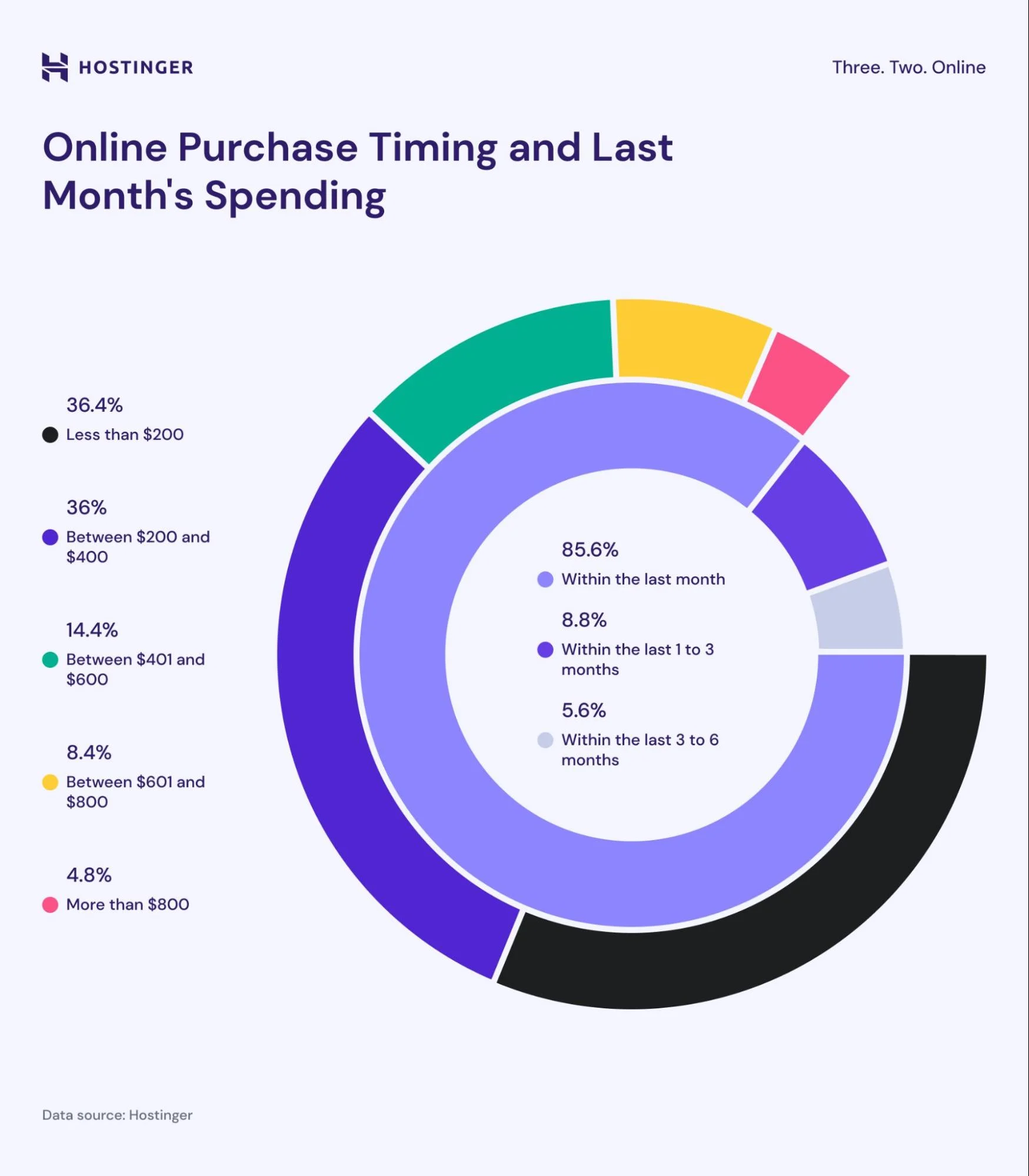
- In fact, Hostinger found that 86% of people had bought something online in the last month. This highlights the sheer volume of consumers buying something through ecommerce stores.
- And social media plays a vital role in these purchases, with 82% using it to discover and research products. This makes it all the more important for brands to show up on social media to educate and inform audiences.
Source: Hostinger
Social commerce and mobile shopping statistics
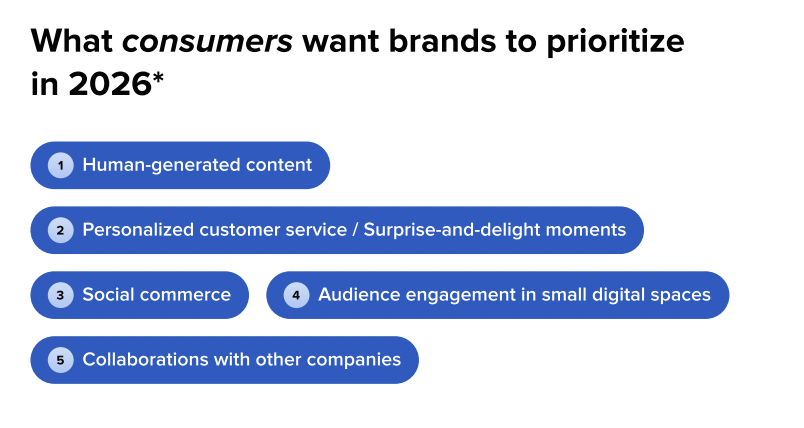
- Sprout’s 2026 Content Strategy Report found that social commerce is one of the top five things consumers want brands to prioritize on social media in 2026. This aligns with the previous ecommerce stat that highlights how a huge portion of consumers are using social media for product discovery and research.

- According to Hostinger’s data, about 58% of US shoppers bought something after seeing it on social media. This shows that consumer use of social media doesn’t just end at finding and researching products. There’s also a transactional element, with social media driving actual purchases.
- As a result, there’s a steady rise in retail social commerce sales in the US. Emarketer projects the number to surpass $102 billion in 2026—equating an 18% increase from the previous year.
- In particular, TikTok Shop is seeing a significant increase in usage among US social buyers. Emarketer projects that about 51% of social buyers in the US will use the platform in 2026.
- The growing use of social media apps for online purchases is part of a larger shift toward mobile commerce. According to Statista, about 70% of retail orders now take place on smartphones. This makes it all the more important for ecommerce brands to invest in seamless omnichannel experiences across social media apps and mobile devices.
Consumer behavior and payment trends
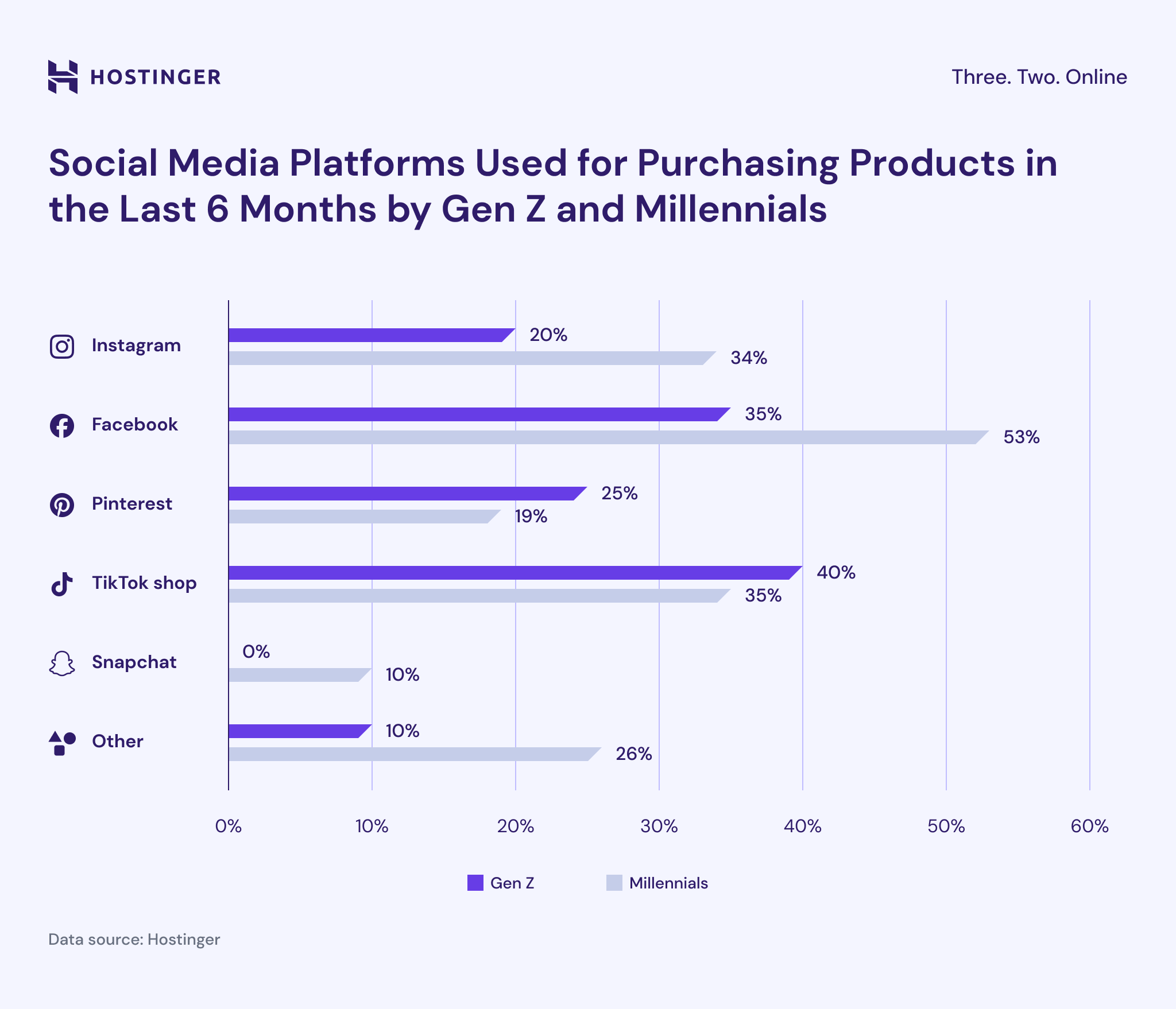
- Gen Zs and Millennials frequently use platforms like Facebook, TikTok Shop and Instagram to buy products. With built-in shopping tools and enhanced product discovery, these platforms are a great place for brands to promote and sell their products.

Source: Hostinger - According to Hostinger, credit and debit cards continue to be the most preferred payment method, with 62% of consumers using them. PayPal comes next, with 24% of consumers using the payment method. And 10% use digital payment platforms and digital wallets to pay for their online purchases. Brands need to offer more flexible payment options to create seamless checkout experiences.
- In fact, 48% of consumers consider multiple payment options and secure payment methods to be the most important elements in online shopping.
- But even more than that, fast and reliable shipping is the top priority for consumers. About 58% say it’s the most important element in online shopping.
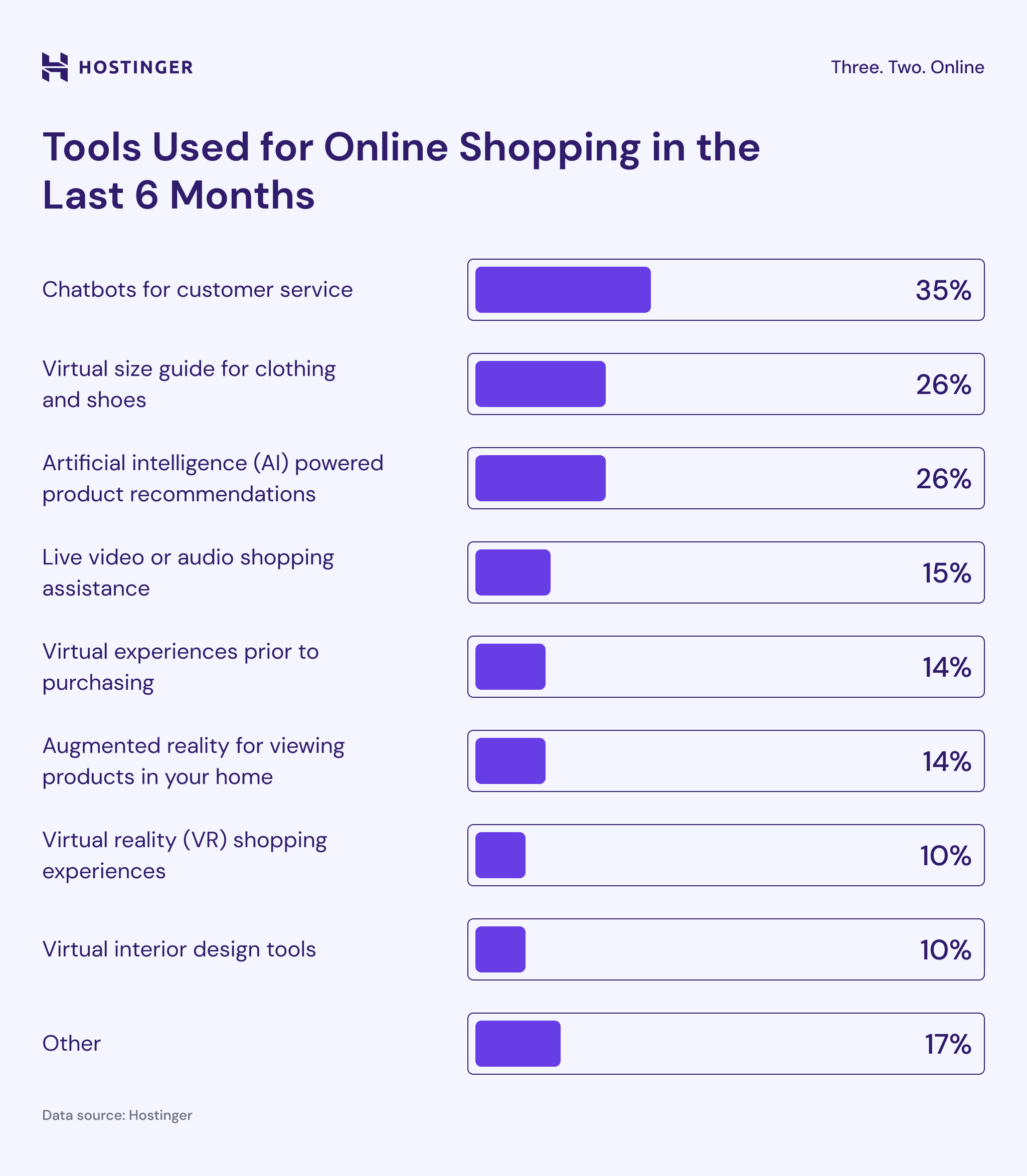
- Various AI-powered tools are guiding consumers as they shop online. Chatbots for customer service (35%), virtual size guides (26%) and AI-powered recommendations are the most popular tools.

Source: Hostinger
B2B ecommerce statistics
- The global B2B ecommerce market is projected to reach $36 trillion in 2026. This indicates that B2B consumers are increasingly making their purchases online, which makes it an excellent channel to reach them.
- It’s no wonder that B2B suppliers with a high digital commerce maturity have an advantage over their low-maturity counterparts. Deloitte reports that they exceed annual sales goals by a 110% greater margin.Seamless buying experiences play a key role in these digital commerce strategies, as B2B buyers now expect B2C-level digital experiences. Suppliers are expanding their commerce channels and making use of agentic AI to take the customer experience to the next level.
- To reflect this shift, there’s a high level of AI adoption among B2B commerce companies. Statista reports that 56% of B2B ecommerce companies were experimenting with AI in 2023. And 25% had fully implemented it into their operations.
How to adapt your strategy for the future of ecommerce
The above ecommerce trends and statistics give us a fair idea of how AI and social media are shaping ecommerce in 2026. Let’s break down some actionable steps to adapt your ecommerce strategy accordingly.
Unify your social data and digital storefront
As omnichannel experiences become the new standard, it’s essential for businesses to seamlessly connect social media with various aspects of their digital presence. This goes beyond simply using native social shopping tools and involves breaking down operational silos between ecommerce performance and social media management.
From using social media conversations to anticipate product demand to identifying the social posts that actually lead to purchases, brands need a unified view of their social and ecommerce data.
Sprout’s social listening tools let you tap into the pulse of social media conversations. This allows brands to predict inventory demands based on shifts in engagement patterns and sentiment. For example, a viral influencer content could lead to sharp demand spikes for a particular item, and brands could restock accordingly.
Or they could look at trending conversation topics to identify emerging product trends. Is there a high demand for a specific color right now (e.g., phthalo green)? Are people currently into a certain type of workout (e.g., Pilates)?
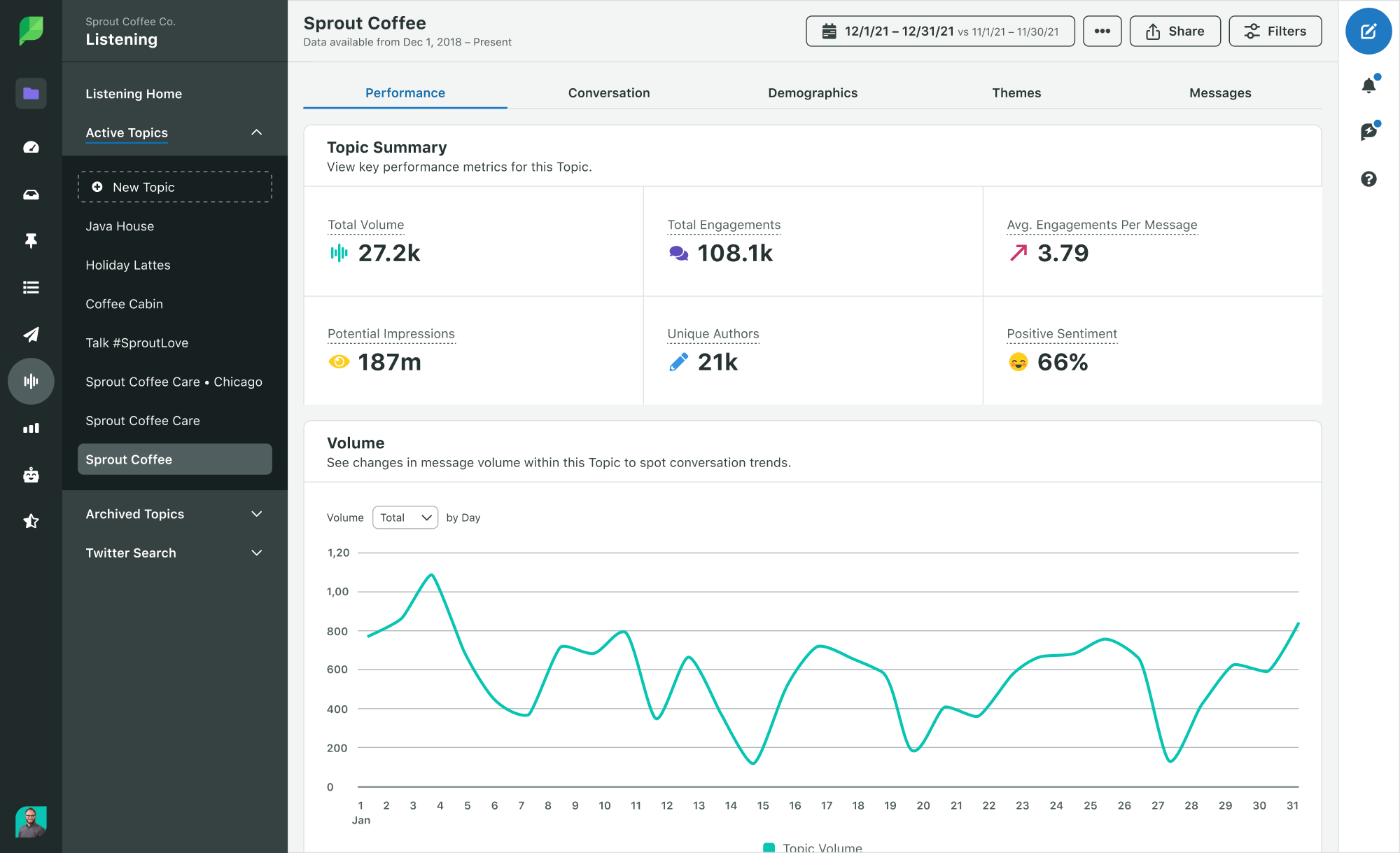
Sprout also offers a Shopify integration that pulls product catalogs directly into the Smart Inbox and publishing tools.
This empowers social teams to respond to customer inquiries with direct product links. It also allows them to track the exact social posts that drove bottom-line sales, proving concrete social commerce ROI. So it seamlessly bridges the gap between social engagement and revenue.
Invest in authentic video and UGC
As brands ramp up their social media presence, maintaining the human element is essential to engage consumers.
According to Sprout’s 2026 Content Strategy Report, human-generated content is the biggest thing consumers want brands to prioritize. And not just any content would do. Short-form video reigns supreme as the content format users are most likely to interact with across various social networks.
Sharing authentic UGC and creator-led videos will help brands keep the human element intact as they scale their social media presence.
You could work with creators to produce informative tutorials and entertaining promos. Back it up with discount codes that give customers an incentive to buy. Sprout’s Q4 2025 Pulse Survey even found that promo codes shared by influencers or companies on social media have the greatest impact on holiday purchase likelihood at 28%.
Optimize for the “zero-click” social shopper
If the rise in in-platform shopping and zero-click searches tells us anything, it’s that consumers want ease and efficiency. Brands can meet this demand with strategies for zero-click social shopping, where customer journeys begin and end right within the app.
Shoppable ads let you deliver targeted content to capture attention from the right audience. And instead of letting customers go through a whole new process of visiting your website, the shoppable element lets you close sales natively within the app.
On platforms like TikTok, you can even have creators promote your products on their TikTok Shop. Have them host LIVE shopping sessions or create shoppable videos that will drive in-app sales for your brand.
Evolve your emerging social commerce strategy
In 2026, ecommerce operations no longer exist in a silo. The growing use of AI and social shopping features has changed the way people are discovering, researching and buying products online.
This makes it essential for brands to integrate all these elements for a successful ecommerce strategy. Sprout’s ecommerce integrations and social media management tools let you do just that, helping you track customer engagement and social ROI. Try it free for 30 days to see how it helps you convert social engagement into revenue.
